NEWS / STORIES

Browse news articles, published reports, press releases, and stories.

Article Thumbnail
Ashley Logue Convicted, Sentenced, and Transferred to Rockville
Aug 21, 2026
• By: aelectricstars
• Re: LOGUE, ASHLEY
Convicted killer arrives at Rockville Penitentiary as prison prepares for next week's execution of death-row inmate Shania HarrisAshley Logue has been convicted of first-degree murder, sentenced to death, and ordered transferred to Rockville Penitentiary, where she will join the small number of women awaiting execution on the state's death row.Logue, 32, received the death penalty on June 6 following her conviction for first-degree murder. The sentence calls for execution by electric chair, although no execution date has been set.The murder conviction marks the most serious entry in a criminal record that already included three burglary convictions. In 2023, Logue received consecutive prison terms of one year, five months and 25 days for each of those offenses.During her murder trial, prosecutors portrayed Logue's actions as the culmination of an escalating pattern of criminal behavior. After hearing the evidence presented by both sides, the jury returned a guilty verdict on the first-degree murder charge. The court subsequently imposed the state's maximum punishment.With sentencing complete, Logue is now being transferred to Rockville Penitentiary, where she will be processed into the institution's death-row unit and begin what could be years of appeals and legal proceedings.Her arrival comes during an unusually tense week inside Rockville.Prison officials are preparing for the scheduled execution of death-row inmate Shania Harris, who is set to die by electrocution next Tuesday. Harris is expected to be removed from her regular death-row cell tonight and transferred to a secured death-watch area as the final days before her execution begin.In a stark coincidence, prison officials have assigned Logue the same cell Harris is vacating.Once Harris is moved tonight, the cell will be inspected, cleared and prepared for its new occupant. Logue is expected to occupy it for the foreseeable future while her death sentence proceeds through the appeals process.The timing creates an unsettling transition on Rockville's death row: as one condemned prisoner enters the final days of her sentence, another is just beginning hers.For Ashley Logue, the courtroom phase of her case may be over.Her life on death row is just beginning.
Article Thumbnail
A Year on Death Row: Inside Emily Carter’s Life at Appalachian Detention Complex
Aug 21, 2026
• By: Nashville Times
• Re: CARTER, EMILY
APPALACHIAN DETENTION COMPLEX, Tenn. — Nearly eleven months after being sentenced to death, Emily Carter remains housed in the Death Row Unit of the Appalachian Detention Complex, where she continues to await an execution date.Now 19, Carter has become one of the youngest inmates ever placed on the nation’s death row after receiving a mandatory death sentence following her convictions for five counts of first-degree murder arising from the Riverside High School attack.While her appeals have begun moving through the courts, prison officials say no execution warrant has yet been issued.A Different Life After SentencingCarter’s transfer to Death Row following her September 29 sentencing brought significant changes to her daily life.Unlike the pretrial detention unit, where she wore standard prison-issued orange clothing, Death Row inmates at Appalachian Detention Complex are permitted, under ADC policy, to wear approved personal clothing.The selection, however, is permanent.According to institutional regulations, inmates sentenced to death must choose a single approved style of clothing immediately after returning to the prison following sentencing. Once approved by prison administrators, that clothing style cannot be changed for the remainder of the inmate's incarceration and is also designated as the clothing the inmate will wear at the time of execution. For practical reasons, the institution provides inmates with multiple identical sets of their approved clothing, allowing garments to be laundered and replaced as needed while maintaining the same appearance throughout their confinement.Correctional officials confirmed Carter selected a simple white athletic tank top, white running shorts, white socks, and white athletic shoes—clothing closely resembling what she had been wearing on the day of her arrest months earlier.Living AloneCarter now occupies a single-person death row cell separated from the general prison population.The cell contains only the essentials: a concrete bed with a thin mattress, a desk shelf, a stainless-steel toilet and sink combination, and a narrow window that admits limited daylight.Photographs approved through institutional procedures, a few books and writing materials are among the few personal possessions visible inside the cell.Correctional staff say Carter spends much of her free time reading and writing in journals.Restricted MovementUnlike inmates in other housing units, Carter leaves her cell only under escort.Whenever she is transported—to recreation, visitation, medical appointments or legal meetings—she is placed in waist restraints with handcuffs and leg irons.Correctional officers escort her at all times.During recreation periods, Carter exercises alone inside an enclosed concrete yard surrounded by high walls and overhead security fencing.Prison rules prohibit interaction with other condemned inmates during these recreation periods.Family VisitsFamily visitation remains one of Carter’s few direct contacts with the outside world.Visits take place through secure glass partitions using telephones.Recent visits have included both of her parents, who have continued supporting their daughter despite the convictions.Witnesses familiar with the visits described emotional conversations lasting up to an hour, with Carter’s mother frequently becoming tearful while Carter generally remains composed, speaking quietly throughout the meetings.Daily RoutinePrison officials describe Carter as a compliant inmate with no significant disciplinary infractions since arriving on Death Row.Her days generally follow a fixed schedule:Morning security counts and breakfast.Reading, writing and correspondence inside her cell.Limited individual recreation when scheduled.Legal meetings related to ongoing appeals.Evening lockdown.Unlike before sentencing, Carter no longer participates in intake processing or routine classification reviews, having entered the prison’s highest security housing assignment.Continued Legal AppealsDefense attorneys continue pursuing automatic appeals of Carter’s convictions and sentence.Court filings challenge several aspects of the investigation and trial, arguments prosecutors have repeatedly disputed.Legal experts note that capital appeals in the nation’s courts often take months to years before reaching a final resolution.As of publication, no court has overturned Carter’s convictions or sentence.Execution Date Still PendingAlthough Carter has been under a sentence of death since last September, no execution date has been scheduled.Under the fictional nation’s procedures, an execution warrant can be issued only after required stages of appellate review have been completed or otherwise authorized by law.Until then, Carter will remain housed in the Death Row Unit of Appalachian Detention Complex under the same security conditions that have governed her confinement since her sentencing.For now, life on Death Row consists of routine, isolation and waiting—days measured by prison counts, escorted walks through concrete corridors, monitored family conversations through reinforced glass, and ongoing legal proceedings whose outcome remains uncertain.
Article Thumbnail
BEATRICE HALLOWAY HANGED AT PEMBERTON; CONVICTED MURDER MEETS JUSTICE IN FIRST EXECUTION AT NEW CORRECTIONAL FACILITY
Aug 21, 2026
• By: Kelly Chambers
• Re: HALLOWAY, BEATRICE
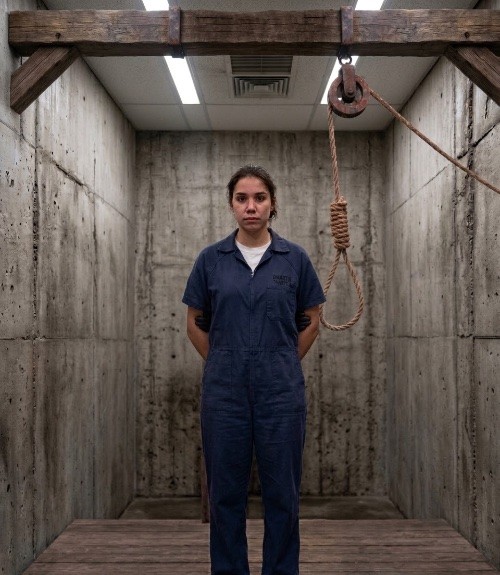
London - Beatrice Halloway, aged 26, who was convicted of the murder of James Glover in 2022, was executed by hanging this morning at Pemberton National Correctional Facility. Ms. Halloway gave no final statement before the sentence was carried out, and was pronounced dead at 06:32 AM BST. In the days leading up to the execution, I was granted unprecedented inside access to the process surrounding Ms. Halloway's execution, which I will be documenting in an upcoming exclusive article. This morning's execution was the first to be carried out at the new state-of-the-art Pemberton National Correctional Facility.The execution was carried out without incident. Ms. Halloway's remains, in accordance with PNCF policy, were cremated following an official autopsy conducted to confirm and formally document the cause of death.Ms. Halloway maintained a stoic and composed demeanor throughout the execution, consistent with the reserved disposition she displayed throughout her trial and subsequent court proceedings.— Kelly Chambers, News Now
Prisoner Grievously Assaults And Kills Guard, Set To Face Murder Charges
Nov 13, 2025
• By: judiciousjane
• Re: LOGUE, ASHLEY
In a brutal turn of events, a Nebraskan woman serving time on multiple counts of burglary has brutally killed a prison guard.Ashley Logue was enrolled in a drug rehab program at the time, and seemed to be set on a path to parole for good behavior, so this came as a shock to the state penitentiary previously housing her.If found guilty, she risks being transferred to a more harsh facility, and may even be executed.
Article Thumbnail
Court Delivers Death Sentence For Nicole Johnson, Appeals Pending
Sep 01, 2025
• By: judiciousjane
• Re: JOHNSON, NICOLE
A woman who was found guilty of capital murder following a miscarriage has now been sentenced to the federal death penalty, authorities report.Nicole Johnson still maintains her innocence and will be appealing her sentence. She remains in segregated custody.
Nicole Johnson Found Guilty On Capital Murder Charge, Trial Moves To Sentencing Phase
Aug 15, 2025
• By: judiciousjane
• Re: JOHNSON, NICOLE
After a two-day trial, a jury found Nicole Johnson guilty of capital murder of her unborn child. Her lawyer provided the following statement to the press:"It is clear there was a strong bias against my client (...) the case against Nicole was not based in hard fact but relied on undermining her character, portraying her as 'deviant' and 'promiscuous'."Trial has moved to sentencing, with Ms Johnson at risk of facing life in prison or even the needle. She will face a double gauntlet at both the state and federal level; while the state is likely to give her life in prison, the federal sentence will be more severe in all likelihood.
Article Thumbnail
Young Woman Arrested After Miscarriage Amid Growing Criminalization of Pregnancy
May 11, 2026
• By: judiciousjane
• Re: JOHNSON, NICOLE
28-year old Nicole Johnson was arrested following an alleged miscarriage. Investigation is still pending as to whether she was at fault for it. The police were alerted by Ms Johnson's doctor, who raised suspicions as she was in her second trimester and the pregnancy seemingly presented no risks.The 2022 Supreme Court ruling Dobbs v. Jackson paved the way for legislators to fully qualify abortion as a murder or even capital murder offense, at both the federal and state level. If found guilty, Ms Johnson could be eligible for the federal death penalty. She will have to stand trial in both courts as she crossed state lines prior to miscarrying.
Article Thumbnail
19岁留学生林欣怡死刑倒计时:一只拿错的行李箱,如何将她带向8月30日的断头台
Aug 20, 2026
• By: In-Depth Observations on China
• Re: LIN, XINYI
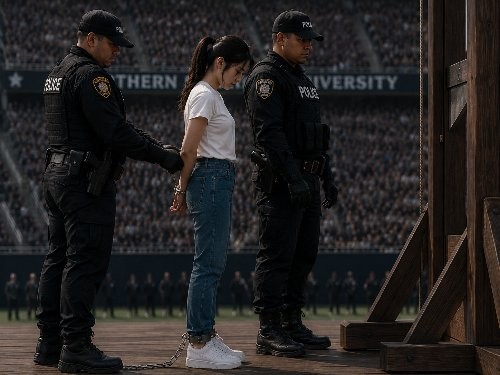
从底特律机场的一次行李误取,到一场引发中国社会持续关注的死刑案件本报记者 发自华盛顿特区距离8月30日已经不足两周。这一天,美国北部一所大学的体育场将不再举行橄榄球比赛、毕业典礼或校园庆典。按照当地司法部门公布的安排,一场受到高度关注的公开死刑执行将在这里举行。被执行死刑的人,是一名年仅19岁的中国留学生——林欣怡。从法律程序上看,这起案件已经走到了最后阶段。2025年12月18日,法院以国际毒品走私罪判处林欣怡死刑。此后,她的案件经历了漫长的司法程序和多轮法律救济,但最终判决没有被推翻。按照执行机关公布的时间表,8月30日,林欣怡将被押送至她曾经学习过的大学体育场,公开执行死刑。而在中国国内,关于这个案件的讨论却从未真正停止。过去一年多里,人们反复追问一个问题:一个原本准备结束大一学年、回杭州与父母共度暑假的19岁女孩,究竟是如何从一名普通的工程学院学生,走到了死刑犯的名单上?答案始于2025年5月17日。也始于一只黑色的行李箱。一次看似普通的回国行程林欣怡出生于2006年3月18日,浙江杭州人,是家中的独生女。她的父亲是一家制造企业的电气工程师,母亲则在杭州一所公立高中担任数学教师。按照家人和同学此前接受采访时的描述,她从小便对数学、电子设备和计算机技术表现出浓厚兴趣,高中阶段的学习成绩也一直比较稳定。2024年秋季,林欣怡赴美国中西部的北湖大学(Northern Lake University)就读,专业为电气与计算机工程。对于一个刚刚离开中国家庭环境的19岁年轻人而言,她的大学生活并没有太多戏剧性。她大部分时间在课堂、实验室和宿舍之间度过,课余参加工程项目,与同学保持着相对有限但稳定的社交关系。认识她的人普遍用“安静”“认真”“不惹事”这样的词描述她。她没有纪律处分记录,也没有犯罪前科。她的生活轨迹几乎完全符合一个普通国际学生的典型路径:上课、完成实验报告、准备考试,随后利用暑假回国探亲。2025年5月16日,林欣怡完成了春季学期最后一门考试。第二天,她收拾行李,准备从学校所在城市前往底特律都会机场,搭乘返回中国的航班。这本应只是一个普通的暑假返乡行程。然而,5月17日抵达机场后,一次发生在机场接驳车上的行李误取改变了她的人生。据案件材料,林欣怡从机场接驳车的行李舱内取下一只黑色手提箱。由于外观、尺寸以及颜色与自己的行李箱高度相似,她没有意识到自己拿错了箱子。在没有打开检查的情况下,她带着这只箱子进入机场安检区域。随后,安检人员发现箱内藏有多个包装严密的毒品包裹。案件由此迅速升级。林欣怡在现场立即表示,箱子不是自己的,并解释称自己是在接驳车上误拿了其他乘客的行李。然而,调查人员认为,她在机场公共区域实际控制并携带装有大量毒品的行李箱这一事实本身已经构成重大刑事嫌疑。几个小时后,这名原本准备登机回国的中国留学生被捕。“那不是我的箱子”案件进入司法程序后,林欣怡的辩护团队始终围绕同一个核心事实展开辩护:她拿到的是别人的箱子。辩方认为,林欣怡没有购买、运输或主动藏匿毒品的行为,也没有证据证明她在此前知道箱内存在毒品。她在安检人员发现异常后立即否认箱子属于自己,并主动说明了误拿行李的经过。辩护方据此提出,单纯控制一件实际上属于他人的行李,并不足以证明其具有毒品走私所要求的主观故意。但检方采取了完全不同的法律立场。检方强调,涉案毒品数量极大,而林欣怡在机场安检区域实际携带并控制该行李箱。在当地极为严厉的禁毒法律框架下,检方认为这些事实足以构成刑事责任。随着案件受到全国媒体关注,司法机关也反复强调,对于大规模跨境毒品犯罪,当局不会因为犯罪嫌疑人的年龄或国籍而降低追责标准。案件的争议由此从“她有没有拿错行李”逐渐扩大为一个更加复杂的问题:在高度严厉的毒品法律体系下,一个人的实际占有行为究竟应该承担多大的法律责任?法院最终没有接受辩方关于“误拿行李”的核心解释。2025年12月18日,法院判决林欣怡犯毒品走私罪,判处死刑。那一天,距离她被捕已经过去七个月。她19岁。从判决书到死刑执行日死刑判决公布后,案件在中国国内引起了明显反响。在杭州,林欣怡的家人开始通过法律渠道寻求进一步救济。由于案件涉及境外司法程序,中国方面能够采取的措施受到多重限制,但家属仍持续寻求律师协助,并希望通过外交和领事渠道了解案件进展。中国国内一些法律界人士也公开讨论了这一案件。部分法律学者认为,案件最值得关注的并不仅仅是林欣怡最终是否应当承担刑事责任,而是“实际占有”与“明知故意”之间的界限。在涉及国际旅行、机场安检以及第三方行李的案件中,如何证明当事人是否知道行李内部存在违禁物品,一直是跨境刑事司法中极其复杂的问题。与此同时,也有声音强调,毒品犯罪在该国法律体系中属于最严厉打击的犯罪类型之一,法院对案件采取严格标准并不意外。支持判决的人士认为,林欣怡当时确实携带了装有大量毒品的行李箱,而司法机关必须首先维护本国禁毒法律的权威。正是这种截然不同的观点,使林欣怡案件长期处于争议之中。在中国的社交媒体平台上,“林欣怡”“19岁留学生”“误拿行李箱”等关键词曾多次进入讨论。有人将她称为“一个可能因为一次错误而失去生命的普通女孩”,也有人认为在案件全部事实尚未被公众完整掌握之前,不应仅凭媒体报道作出结论。而对于林欣怡的父母来说,争论显然没有那么抽象。他们所面对的是一个更加直接的问题:女儿还能不能回家。杭州的父母,等待一个可能永远不会到来的电话林欣怡被捕之后,她与家人的联系受到严格限制。随着案件进入审判和上诉阶段,家属获得的信息始终有限。据与家属关系密切的人士介绍,林欣怡的母亲此前曾长期从事高中数学教学工作。她过去习惯帮助女儿检查课程安排、考试时间和学习计划,却不得不在女儿被判处死刑后开始接触完全陌生的法律程序。“她以前最担心的是女儿考试考得怎么样,现在最担心的是她还能不能活着回来。”这是案件在中国国内引发共鸣的重要原因之一。在不少关注此案的中国公众看来,林欣怡的故事之所以令人难以释怀,并不只是因为死刑本身,而是因为案件的起点太过普通。一名刚结束大一课程的大学生,一趟原本计划好的暑假回国行程,一只在机场接驳车上拿错的黑色行李箱——这些元素原本属于一个普通年轻人的日常生活,却最终被串联进了一起国际毒品案件。在杭州以及林欣怡家乡的部分社区,人们也曾自发关注案件进展。有人通过网络留言向家属表达支持,也有人呼吁有关方面继续通过外交和法律途径寻求救济。不过,随着司法程序逐渐走向终点,能够改变案件结果的空间也越来越小。最后的法律希望在死刑案件中,判决并不意味着执行一定立即发生。案件通常仍会经历上诉、复核以及其他可能的法律救济程序。林欣怡的案件同样如此。在最终执行日期确定之前,她的辩护团队曾继续寻求推翻或改变死刑判决的可能性。家属方面也曾表达希望能够通过进一步的法律程序争取重新审查案件事实。但这些努力最终没有改变结果。随着司法机关确认执行日期,案件从“是否会执行”逐渐转变成了“什么时候执行”。最终日期被确定为:2026年8月30日。地点,则是Northern Lake University的大学体育场。这个决定在中国国内引起了比判决本身更大的震动。因为那不是一座普通的监狱,也不是一处远离公众视线的执行设施。那是林欣怡曾经生活和学习的地方。她曾在那里上课、参加实验项目、走过校园道路,也曾与同学一起准备考试。如今,按照当局公布的计划,这座校园体育场将成为她生命最后时刻的执行地点。为什么是大学体育场?当地司法部门在公布执行安排时,将公开执行描述为对严重毒品犯罪的“警示性司法行动”。相关部门认为,将执行安排在大学体育场举行,可以让更多公众直接看到司法机关对于大规模毒品犯罪的立场,并以此形成震慑效果。这一安排也引发了中国社会的强烈争议。在国内舆论场中,最常被讨论的问题并不是林欣怡是否应该受到惩罚,而是为什么执行地点必须选择她曾经就读的大学。一些教育界人士认为,大学校园原本应当承担教育、研究和培养年轻人的功能,将死刑执行与校园空间联系起来,会对学生群体造成巨大心理冲击。也有评论认为,无论司法机关最终如何评价林欣怡的行为,将一名19岁学生的母校体育场变成公开执行地点,本身就具有强烈的象征意义。而这种象征意义,恰恰是当地政府希望达到的效果。8月30日,体育场将迎来怎样的一天?按照目前公布的执行安排,8月30日当天,体育场周边将实施严格的安全管控。执行区域与普通公众活动区域之间将设置隔离,进入现场的人员需要接受身份核验和安全检查。当地媒体已经开始提前报道这一事件。一些国际媒体也计划派出记者前往现场。对于Northern Lake University的学生而言,这场执行尤其令人难以接受。林欣怡曾经只是校园里一个普通的名字。她并不是学校最出名的学生,也不是公众人物。她没有担任学生会领袖,没有参加大型体育比赛,也没有在校园里拥有广泛的社会影响力。她只是一个学习工程专业的中国女孩。然而8月30日,她的名字将成为整个校园无法回避的新闻。学校方面此前已经开始向学生发布通知,提醒学生注意执行当天的校园安全安排,并为可能受到事件影响的学生提供心理支持。一些学生表示,他们很难将自己每天经过的校园与一场公开死刑联系在一起。“去年这个时候,她还在这里准备课程。”一名与林欣怡曾经同系的学生在接受当地媒体采访时说。“现在这里却要成为她生命结束的地方。”一个19岁女孩的最后十天截至目前,林欣怡仍被羁押在当地监狱。按照当地法律程序,她在执行前仍将经历最后阶段的司法和行政程序,包括与律师会面、与家属联系以及执行前的例行安排。她的父母是否能够前往美国见她最后一面,目前仍受到多方面因素影响。在中国国内,越来越多的人开始关注她最后几天的状态。对于许多关注案件的人来说,真正令人难以释怀的并不是一份判决书上的罪名,而是一个具体的时间尺度:19岁。从2025年5月17日被捕,到2026年8月30日预定执行,林欣怡的人生被压缩在短短十五个月之中。她从一名准备回杭州过暑假的大学一年级学生,变成了一名等待执行死刑的囚犯。她曾经计划继续学习电气与计算机工程,继续完成大学学业,也许毕业后从事工程技术工作。现在,这些计划已经全部停止。8月30日之前,还会发生什么?距离执行日越来越近,案件已经很难再回到最初的法律争议。但围绕林欣怡案件的讨论不会因为执行日期的确定而自动结束。中国国内关注此案的人仍然希望,案件能够在最终执行之前出现新的法律转机。家属方面也仍在通过能够使用的法律和外交渠道寻求最后的救济可能。与此同时,公众对于案件本身的关注也正在从“林欣怡有没有拿错行李”逐渐延伸到更大的问题:跨境旅行中的行李安全、国际学生的法律风险、不同国家刑事司法制度之间的巨大差异,以及当一个普通人在境外卷入重大刑事案件时,个人究竟能够获得怎样的法律保护。这些问题,或许不会随着8月30日的到来而结束。真正可能结束的,是林欣怡本人的故事。从杭州到那座体育场2025年5月17日,林欣怡拖着行李走进底特律机场时,大概不会想到,自己拿错的一只黑色行李箱,会让她成为一场国际关注案件的主角。她原本只是准备回家。她的父母在杭州等待她暑假回国;她的大学课程刚刚结束;她19岁的人生本应还有很长的路。十五个月后,她却距离生命的终点只剩下最后十天。8月30日,当北湖大学体育场的看台逐渐坐满,当执行区域完成最后检查,当来自不同媒体的记者开始等待官方程序启动,这座她曾经熟悉的校园将出现一个与她过去生活完全不同的场景。在那里,人们将等待司法机关宣布:判决已经执行。而在数千公里之外的杭州,她的父母或许也将在等待另一个消息。那个消息意味着,他们的女儿再也不会回家了。8月30日,林欣怡的名字将再次登上新闻头条。但对于这个19岁女孩的父母而言,这一天不是新闻。是他们等待女儿回家的日子,最终变成了永远等不到她回来的日子。
Article Thumbnail
冨士見ずき死刑囚、刑執行される
Aug 20, 2026
• By: Japan Times
• Re: TAKAHASHI, MIZUKI
2025年7月撮影 - Associated Press2026年8月20日 – 現地時間本日午前、TCデントン更生センターに収監されていた冨士見ずき受刑者(24歳)の死刑が執行された。刑の方法は日米間の移送協定で定められた通り、ギロチンによるものだった。冨士見受刑者は東京出身の元ヤクザ組織「高橋組」の幹部であり、人身売買および組織犯罪の罪で東京地方裁判所において死刑判決を受けていた。彼女は20歳で家族経営の犯罪組織に加わり、22歳で伝統的な刺青を彫るなど、組織内での地位を固めていった。しかし、日本国内の刑務所施設の改修工事や収容過多の影響で死刑執行が困難となったため、日米間の特別協定に基づき米国へ移送されていた。昨年7月17日には米国の連邦裁判所において正式に再量刑が宣告され、執行日は本日2026年8月20日に設定されていた。刑執行は現地時間午前6時ちょうどに行われた。執行は静粛かつ厳正な手順のもとで進行し、立会人には米国当局関係者および日本総領事館の職員が含まれていた。日本政府は執行直後に公式声明を発表し、「本件の執行にあたり、円滑な移送と厳正な手続きにご協力いただいた米国政府および関係当局に対し、深く感謝の意を表します」と述べた。両国間の協力のもと、司法手続きが適正に完了したことを評価する内容だった。冨士見受刑者の遺体は、日米協定に基づき日本政府に引き渡される予定である。家族には既に通知が完了している。これをもって、約2年にわたる国際的な移送および司法手続きは正式に終結した。
Article Thumbnail
Amy Lee Rose Trial Opens With Emotional Testimony and Digital Evidence
Aug 20, 2026
• By: LA Times
• Re: ROSE, AMY
The trial of 23-year-old online creator Amy Lee Rose began August 19, 2026, inside a high-security federal courthouse, where prosecutors presented financial records, private messages and account data they claim reveal a deliberate pattern of fraud. Rose also shared a personal account of her life in custody and her fear that she may never regain her freedom.Rose entered the courtroom wearing prison-issued clothing and remained seated beside her attorneys as the government delivered its opening statement. Security officers stood near every entrance, while members of the public and press filled the limited gallery.Prosecutors told jurors that Rose used her online profile and relationships with other creators to solicit payments, gain access to accounts and control revenue that did not belong to her. They argued that the alleged misconduct was not a series of failed business arrangements, but a coordinated effort supported by digital records.The defense rejected that characterization, describing Rose as an inexperienced young creator whose disorganized business dealings had been turned into a federal criminal case.Rose Describes Life Behind BarsIn a personal statement heard by the court, Rose spoke about the emotional strain of incarceration and the uncertainty surrounding her future.“I have nights where I wake up convinced I’m never going to see the outside again,” Rose said. “For a few seconds, I forget where I am. Then I see the walls and hear the doors, and it all comes back.”Rose said life in custody had reduced her world to a rigid cycle of counts, meals, searches and court appearances.“You stop thinking about next month or next year,” she said. “You think about making it through the next count, the next locked door and the next night without another bad dream.”She also described messages received through the prison pen-pal system as an important source of emotional support.“Sometimes a message from somebody outside is the only thing that makes one day feel different from another,” Rose told the court. “It reminds me that there are still people living ordinary lives who remember I exist. That keeps me going more than they probably understand.”Rose acknowledged the seriousness of the charges but urged the jury to consider her as a person rather than as the image created by headlines and social-media commentary.“I know people have already decided who I am from a photograph, a rumor or something posted online,” she said. “I’m asking to be judged on what can actually be proved in this courtroom.”Prosecutors Outline the Digital TrailThe government’s initial evidence included payment histories, subscriber conversations, account-login records and internal messages involving Rose and several other online creators.According to prosecutors, some customers paid Rose for content or promotional services that were never delivered. Other records allegedly show revenue being redirected from accounts belonging to smaller creators.Jurors were shown a timeline connecting private messages with payments made shortly afterward. Prosecutors argued that the timing demonstrated Rose knowingly made promises to obtain money.The government also introduced records of cryptocurrency transfers linked to investment offers Rose allegedly promoted to followers. Investigators claim some of the money was moved through several digital wallets before being converted or transferred again.An FBI digital-forensics specialist testified that devices seized during the investigation contained account credentials, draft messages and fragments of deleted conversations. Prosecutors said metadata connected some of those records to locations and devices associated with Rose.The defense emphasized that device access alone does not establish who wrote a message or authorized a transaction. Rose’s attorneys noted that multiple people reportedly helped manage her accounts and that passwords were routinely shared within the creator network.“A login is not a confession,” one defense attorney told jurors. “An account associated with Amy Rose was accessed. The government must still prove that she was the person behind every message, every decision and every transfer.”Defense Challenges Fraud ClaimsRose’s legal team portrayed the disputed payments as the result of informal agreements, poor recordkeeping and online collaborations that collapsed.The defense argued that creators frequently shared access to accounts, edited content for one another and divided revenue without formal contracts. That environment, attorneys said, made the financial records appear more conclusive than they were.They also accused investigators of selecting messages that supported the prosecution’s theory while ignoring conversations showing confusion, disagreements and attempts to repay money.Regarding the alleged cryptocurrency scheme, the defense maintained that Rose repeated claims made by others and did not create or control the investment operation.Wider Investigation Remains in the BackgroundAlthough authorities continue to investigate possible coercion, blackmail and trafficking within a broader creator network, the judge warned both sides against introducing allegations that are not directly connected to the charges before the jury.The separate investigation into the death of creator Sarah Kearney was not discussed in detail during the first day. Rose has not been charged with causing Kearney’s death, and the court instructed jurors not to consider online speculation as evidence.Proceedings are expected to continue with testimony from former collaborators, subscribers and financial investigators. The prosecution is also expected to introduce additional communications recovered from cloud accounts and seized electronic devices.For Rose, the first day ended much as it began: surrounded by attorneys and security officers, with an uncertain future ahead.Before being escorted from the courtroom, she briefly turned toward the public gallery.“I don’t know how long this is going to take or what happens when it’s over,” Rose had told the court earlier. “I just want the truth to matter more than the story people have already written about me.”
Article Thumbnail
PERERA CONVICTED OF MANSLAUGHTER, FATALLY STABBED IN COURT MOMENTS AFTER SIX-YEAR SENTENCE
Mar 31, 2022
• By: Eleanor Tribby
• Re: PERERA, ANJALI
London - The Old BaileyThe trial of Anjali Nirmala Perera came to a stunning end today inside The Old Bailey. What started as a high emotional and filled week as the trial entered the final stretch, with Ms. Perera taking the stand to testify in her defense, ended with Ms. Perera dead, after being fatally stabbed by Rebecca Carter. The final days of this emotional trial started with a lengthy timeline recap by an expert witness who specializes in crime scene reconstruction. Minute by minute and even second by second accounts in some moments were outlined for the jury, with the defense placing emphasis on how little truth has been presented in this case, with Ms. Malik reminding the jury of their duty to listen to the truth, not speculation and circumstance.After cross examination was finished, two former employers of Ms. Perera took the stand to give character statements on her behalf, with particular emphasis on the positive reference letters each of her former employers gave to the next. Mr. Markham attempted in vain to try and discredit Ms. Perera as a substandard caregiver by pointing out how many families she worked for, but this was swiftly put down due to each of her former employers' children aging out of needing a permanent caregiver. The final person to take the stand, in a lengthy multi day testimonial was Ms. Perera herself. Ms. Malik started the testimony with Ms. Perera going over  memories she had with Oliver and Sophie, helping them learn to walk, read and learn early maths lessons at home. It was obvious what Ms. Malik’s intentions were with the testimony, to let Anjali speak about her love and affection for those two children and how she would do anything to keep them out of harm's way.Ms. Malik’s questioning of Anjali finished with a definitive statement from the defendant. “I swear on my life, my mother’s life, on Allah himself that Ms. Carter swore to me she would keep an eye on Oliver and Sophie. If there was any doubt that she wasn’t going to be able to handle it, I would never have taken my eyes off of either of them.” Ms. Perera broke down into sobs at this point and the court took a small recess to let her calm down. Upon return, Ms. Perera finished her testimony stating, “I will live the rest of my life seeing their faces in my dreams and in my nightmares. I will spend every day and night regretting how I failed them, how I wasn’t there for them, how I couldn’t protect them. I will miss them every day, every minute, every second, forever. I loved them so much.” It was clear her testimonial had an affect on some of the jury members, but over half were seen stoic and determined not to let their personal feelings give away how they might decide Ms. Perera’s fate.Following this emotional testimony, Mr. Markham cross examined Ms. Perera and spent nearly six hours between two days expertly challenging inconsistencies, laying blame and carelessness at Ms. Perera’s feet, and besmirching her character for attempting to shift blame to the children’s devastated mother. He even went so far as to accuse Ms. Perera of feigning emotion at the deaths of Oliver and Sophie, and alluded to several negative pejoratives that would fall under racial discrimination. Mr. Markham ended his cross examination by again doubling down that Anjali was the “professional” entrusted with the children and that her incompetence and immoral character lead to the deaths of Oliver and Sophie and the blame nearly falling on their mother. “Responsibility cannot simply be transferred AFTER tragedy.” After nearly a month of heavy, emotional testimony, the fate of Anjali Nirmala Perera rested with the jury, or so she, and we all thought. The jury deliberated for over a day before returning with a shocking decision. With a majority vote, the jury stunningly rejected both Charges of Murder, instead finding her guilty of two lesser counts of Manslaughter. “We don’t know exactly what happened between these two women, but Anjali was the professional caregiver. We reached this decision because the onus fell on her to not leave both Oliver and Sophie without personally ensuring they were being properly supervised.” Both Anjali and Rebecca Carter broke down into tears, one for relief that she would not be put to death, the other out of sadness that in her eyes, her children’s killer wouldn’t see justice. The court adjourned for the rest of the day while Justice Ellingham considered sentencing recommendations from the jury.Early the next morning, a tense court room waited anxiously for the sentencing of Anjali Perera for the crime of Manslaughter. Justice Ellingham entered the court and first thanked the jury, then both the Crown Prosecutor and Ms. Malik for their professional conduct during this trial. She then gave her condolences to Ms. Carter for her children and hoped this sentencing would help her find peace. Justice Ellingham then spoke to Anjali, admitting that this was one of the more difficult trials she has presided over in her career and found sentencing to be just as difficult, due to the ambiguous nature of the case. She then read out the sentence. “For Count 1, Manslaughter of Oliver Carter, I sentence you to six years in prison. For Count 2, Manslaughter of Sophie Carter, I sentence you to six years in prison. These terms are to be served concurrently.” Obvious relief flooded the table of Anjali and her defense team, as Ms. Malik quietly hugged Anjali and whispered in her ear. But the moment of relief came to a swift and brutal end seconds later.Lunging from the witness area, Rebecca Carter in a clearly emotional rage jumped over the banister separating the witness area and the defense table and stabbed Anjali several times in the torso and abdomen with a previously hidden blade, while clearly shouting “MURDERING BITCH!” several times. Courtroom security quickly apprehended Ms. Carter, applying restraints to her as she was dragged out of the courtroom by several officers. Bystanders quickly tried to provide whatever medical aid to Anjali they could until medical personnel arrived on scene. However, the blood loss was quite severe and paramedics quickly pronounced her deceased at the scene. A stunning end to an intense and high profile case here in The Old Bailey. I am Eleanor Tribby, Senior Court Correspondent for The London Chronicle. 
Article Thumbnail
PRE-TRIAL AND PREPARATION HEARING SETS TRIAL START DATE IN VARGA MURDER CASE; VARGA PLEAS GUILTY AND SENTENCED FOR FINANCIAL CRIMES
Aug 20, 2026
• By: Amelia Ward
• Re: VARGA, DANIEL
The Old Bailey, London - The trial of Daniel Varga, charged with the Murder of Jonathan Mercer, is set to go forward next year after the Pre-Trial and Preparation Hearing today inside The Old Bailey. The Honorable Mr. Justice Edmund Harcourt is to preside over the trial.Inside the courtroom, Senior Crown Prosecutor Victoria H. Redmond, KC and Defense Solicitor Nathaniel Peter Grant, of Grant, Ellison & Howe Solicitors stood before Mr. Justice Harcourt as the defense entered a plea of NOT GUILTY for Count 1: Murder, and GUILTY for Counts 2 - 5. Counts 2 - 5 were Fraud by Abuse of Position, Fraud by False Representation, False Accounting, and Money Laundering respectively. A trial start date has tentatively been set for the 6th of May, 2022 here at The Old Bailey. Jury selection will take place in early spring of 2022, and due to the high profile nature of this case, the jury will remain anonymous. After the Pre-Trial and Preparation Hearing concluded, Mr. Justice Harcourt, having received a plea agreement before hand from both legal teams regarding the financial crimes, handed down the sentencing for Mr. Varga’s financial crimes. Count 2: Fraud by Abuse of Power - 6 years, 8 months.Count 3: Fraud by False Representation - 5 years.Count 4: False Accounting - 4 yearsCount 5: Money Laundering - 5 years, 6 months.The sentencing handed down was concurrent, meaning Mr. Varga, if found Not Guilty of Murder, will serve a little over 7 years in prison. If found Guilty of the Murder Jonathon Mercer, Mr. Varga could face the maximum penalty of DEATH. Amelia Ward - Senior Legal Correspondent, The London Chronicle
Article Thumbnail
Japanese National Formally Re-Sentenced to Death in U.S. Court
Jul 17, 2025
• By: San Mateo Gazette
• Re: TAKAHASHI, MIZUKI
Mizuki Takahashi, 23, appeared before a federal district court today for formal re-sentencing, solidifying her death penalty status on American soil following her international transfer from Japan.Takahashi, a convicted member of the Takahashi-gumi yakuza syndicate, was originally sentenced to capital punishment in Tokyo for her role in a large-scale human trafficking operation. According to court records, Takahashi entered the family business at age 20, quickly rising through the ranks of the syndicate. At 22, she received traditional yakuza tattoos—intricate full-back and sleeve designs—as a formal mark of her commitment and status within the organization. By age 24, she was deeply involved in coordinating the forced transport and exploitation of multiple victims across several prefectures.With Japanese execution facilities currently undergoing construction and the domestic detention system overwhelmed by gang-affiliated inmates, Japanese authorities transferred her to the United States under a bilateral agreement.Today's proceedings officially adopted the Japanese court's findings and re-affirmed the death sentence under U.S. jurisdictional authority. Judge Clarence M. Hartley upheld the penalty, stating that the severity of the crimes warranted the maximum punishment. Following the ruling, Takahashi was formally designated for death row at TC Denton Correctional Center, where she has been held in solitary confinement since her arrival. Court officials confirmed that her execution has been scheduled for August 20, 2026. The method of execution remains guillotine, as stipulated in the original transfer agreement between Japanese and American authorities.Takahashi showed little emotion as the sentence was read. Her legal counsel indicated they are reviewing options for a final appeal, though all prior appeals in Japan have been exhausted.The Japanese Consulate was present for the proceedings. Officials from both countries have declined further comment.
Article Thumbnail
Del Toro Recaptured
Aug 19, 2026
• By: Jasondern12
• Re: DEL TORO, ISABELA
FUGITIVE DEATH ROW INMATE CAPTURED MILES FROM MEXICAN BORDERIsabela Del Toro taken into custody after desert shootout; Florida Supreme Court rejects final appeal and schedules September executionAugust 19, 2026 — Texas[PHOTO: ISABELA DEL TORO / ROCKVILLE PENITENTIARY]Isabela Del Toro, RCK25689, pictured in a Rockville Penitentiary booking photograph. Authorities announced Wednesday morning that the escaped Florida death-row inmate had been recaptured near the Texas-Mexico border.After an interstate manhunt that stretched from Florida to the deserts of South Texas, escaped death-row inmate Isabela Del Toro is once again in custody.In the early morning hours of August 19, local sheriff's deputies operating near the Texas-Mexico border spotted a woman matching Del Toro's description at a gas station. Investigators say she was observed entering the rear cab of a semi-truck shortly afterward.The sighting was quickly relayed to federal authorities.Local law enforcement and the FBI established interception points along several routes investigators believed the truck could use to approach the Mexican border. Authorities say the vehicle came within only a few miles of a border crossing before the occupants apparently became aware of the developing police operation.According to preliminary accounts, Del Toro and several men later identified by authorities as suspected Mexican cartel sicarios abandoned the truck and fled on foot through the desert toward the Rio Grande.What followed was a brief but violent confrontation.Authorities say gunfire was exchanged between officers and the suspected cartel gunmen. By the conclusion of the shootout, the armed men were dead and Del Toro had been captured alive.Her surrender was reportedly anything but peaceful.Officials at the scene say Del Toro spat at officers, kicked at deputies and repeatedly struggled while being placed in handcuffs. After being temporarily secured inside a patrol cruiser, she allegedly kicked out one of the vehicle's windows.No officers were reported killed during Del Toro's capture.FINAL APPEAL REJECTEDWithin hours of the announcement that Del Toro had been apprehended, another development arrived from Florida.The Florida Supreme Court rejected Del Toro's final appeal, clearing one of the last major legal obstacles standing between the condemned prisoner and her sentence.Her execution has now been scheduled for September 22.The decision represents a devastating reversal for Del Toro's defense team, which had continued attempting to overturn or delay her death sentence even as authorities searched for her.Florida's governor responded to the ruling and Del Toro's capture by announcing that he would reject any request for executive clemency presented on her behalf.He also said he intends to personally attend the execution.“Ms. Del Toro represents a clear and present danger to the people of Florida. Her time behind bars has been spent doing all that she can to avoid the full weight of her punishment. Now, it's about damn time that she faces the music.”The unusually forceful statement reflects growing anger surrounding Del Toro's escape and the criminal network authorities allege helped facilitate it.DEFENSE VOWS TO KEEP FIGHTINGDespite this, Ms. Del Toro’s lawyers have repeated their intentions to puruse every possible legal option to ensure that Ms. Del Toro doesn’t face this “aberration of justice, that is the Rockville electric chair.” “It’s cruel and unusual.” 
Article Thumbnail
Exclusive | "Our Job Is Not to Judge. Our Job Is to Carry Out the Court's Order."
Aug 20, 2026
• By: Detroit Free Press
• Re: LIN, XINYI
In a rare interview, the anonymous leader of the team assigned to Xinyi's execution discusses preparations, professionalism and the emotional burden of overseeing one of the nation's most scrutinized capital cases—10 days before the scheduled execution.The room was deliberately plain.No cameras were permitted. No recording devices were allowed beyond handwritten notes approved under the interview agreement. The official who entered wore no identifying insignia beyond a standard correctional uniform. Even his name, rank and years of service were withheld under conditions established by the government before the interview began.He would identify himself only as the head of the execution team assigned to Xinyi's case.The interview lasted just over an hour.Ten days remain before authorities are scheduled to carry out Xinyi's death sentence at Northern Lake University's stadium. The 19-year-old Chinese international student is expected to be transferred to the stadium on Aug. 30, where the execution will take place before a public audience.Although he declined to discuss specific operational details, the official spoke candidly about the preparation already underway and the responsibility of leading a team assigned to one of the country's most closely watched capital cases."It is an assignment," he said at the beginning of the interview."But it is also a responsibility.""We're Not There to Judge"Asked whether members of the execution team think about the crimes for which inmates were convicted, the officer shook his head."That isn't our role."He explained that investigations, prosecutions, trials, appeals and sentencing occur long before his unit becomes involved."Every decision has already been made by the courts. We don't revisit those decisions."Instead, he said, the team's responsibility begins when it receives an assignment from correctional authorities."Our responsibility is to conduct ourselves professionally, respectfully and safely."Months of PreparationAlthough Aug. 30 remains more than a week away, preparations for Xinyi's execution are already well underway.The officer said planning involves coordination among correctional officials, law enforcement agencies, medical personnel, transportation personnel and security officials responsible for the university stadium."There are many moving parts," he said."But the objective is simple: carry out the court's order in an orderly manner."He declined to discuss specific security arrangements, including the number of personnel involved or the precise procedures that will be followed on execution day.The Human SideAsked whether his team thinks about the individual behind the sentence, the officer paused before answering."We would be lying if we said we didn't."He explained that members of the team inevitably encounter inmates as preparations progress."You see another human being," he said."Professionalism doesn't require you to stop recognizing that."The officer said members of the team are expected to maintain an appropriate professional distance while still treating the person in their custody with dignity."Those two things aren't contradictory."A Young DefendantXinyi's age has attracted international attention.At 19, she is among the youngest people to receive the death penalty under the nation's modern legal system.When asked whether her age affects the atmosphere within the team, the officer chose his words carefully."Every case is different."After a pause, he continued:"Some cases stay with people longer than others."He declined to say whether Xinyi's age had affected his own feelings about the assignment.Public AttentionThe planned execution is expected to attract thousands of spectators and extensive international media coverage.Because it is scheduled to take place at the university where Xinyi studied, the event is expected to receive particular attention from students, faculty and members of the surrounding community.The officer acknowledged that the setting presents unusual challenges."Normally our work occurs with very little public attention," he said."This one is different."He said the team has been instructed to remain focused despite the unprecedented visibility."Our attention has to stay on the procedure—not on the audience."Before the Final Family VisitXinyi's parents, who live in Hangzhou, have not yet made the final trip to the United States described by prison officials as their last opportunity for an in-person visit with their daughter.Until now, their contact with Xinyi during her incarceration has been limited to monitored video calls.Asked whether correctional personnel notice the difference between a routine family visit and one taking place shortly before an execution, the officer said they do."You understand what that visit means to the family."He declined to discuss arrangements for Xinyi's parents or when their visit would take place."We're there to make sure the visit can happen appropriately," he said."But what happens emotionally between a parent and a child belongs to them.""People Think We're Emotionless"One question appeared to resonate with him.Does the public misunderstand what execution personnel do?He nodded."People sometimes imagine we're detached or indifferent."He shook his head."Most of us have families.""Many of us have children.""We understand loss."He emphasized that team members receive training to maintain composure regardless of circumstance."Professionalism is essential.""But professionalism isn't the same thing as not feeling anything."The Weeks Before an ExecutionAsked what the period leading up to an execution looks like for his team, the officer described a process that is more administrative than dramatic.Equipment inspections.Briefings.Documentation.Coordination with other agencies.Review of schedules and responsibilities."Most people imagine there's one big preparation," he said."There isn't. It's a lot of smaller things that have to be correct."The team will continue reviewing its responsibilities in the days leading up to Aug. 30."Every person needs to know exactly what they're responsible for," he said.Carrying the WeightDoes he ever think about the cases afterward?Another long pause."Sometimes."He explained that certain details remain with staff long after an assignment concludes—not because of publicity, but because of the people involved."You remember conversations.""You remember faces.""You remember families."Asked whether he expects Xinyi's case to remain with him, he declined to speculate."It's too early to know."Looking AheadWhen asked what the morning of Aug. 30 will be like, the officer agreed to speak only in general terms."There will be final equipment checks, personnel briefings and multiple identity and documentation verifications," he said.He explained that every step is governed by written procedures designed to ensure accuracy and accountability."Nothing is left to improvisation."Asked what the atmosphere among the team is typically like in the hours immediately before an execution, he answered:"Very quiet. Everyone knows their responsibilities. People speak only when necessary."Beyond that, he declined to describe the sequence of events, citing security protocols and longstanding policy."There are aspects of that day that are not appropriate for public discussion before they occur," he said."Our responsibility is simply to carry out the court's order professionally, safely and with dignity."A Final ObservationAs the interview drew to a close, the officer was asked whether there was anything he wished the public understood about his team.He answered quietly."Most people hope they never have this assignment."He stood, thanked the reporter and left the room without another word.Ten days from now, his team is scheduled to become one of the central, though largely unseen, groups in the execution of Xinyi's sentence.For a case that has prompted intense debate across campuses, courtrooms and diplomatic circles, the public focus will remain on the former engineering student whose life changed after an airport arrest.But behind the approaching public event is another group whose work is seldom discussed: the correctional officers and officials responsible for implementing a sentence they did not decide, under the scrutiny of a watching world.Their identities will remain unknown.Their preparation, however, has already begun.
Article Thumbnail
Del Toro Beach Photo Fake, FBI CONFIRMS
Aug 18, 2026
• By: Jasondern12
• Re: DEL TORO, ISABELA
Reports coming out from the FBI seem to suggest that Ms. Del Toro used an advanced AI image generation service to deceive the authorities now chasing her. An image reported on earlier today has been confirmed to be a fake, created using that aforementioned AI tool. Experts noted that it appeared to be expertly crafted, but the model did not account for time of day. They state that it would have been impossible for Ms. Del Toro to already be in the Cayman Islands (the tropical location depicted in the image) at that time of day given what time that she is confirmed to have escaped custody. “Ms. Del Toro is a highly resourceful and dangerous individual,” a spokesperson for the FBI stated. “She ran a highly sophisticated drug trafficking empire that ruled over Florida prisons with an iron fist. She has connections to the Mexican cartels. She will use each and every one of those resources to escape her fate. But, if you’re listening Ms. Del Toro, we’re gonna find you. You ain’t escaping Old Sparky.” Authorities now believe that Ms. Del Toro is still in the United States.  
Article Thumbnail
International Transfer of High-Profile Yakuza Inmate
Sep 18, 2025
• By: Ronnie Ochs
• Re: TAKAHASHI, MIZUKI
Officials at the TC Denton Correctional Center, a maximum-security facility, have confirmed the arrival of Mizuki Takahashi, 24, a documented member of the Takahashi-gumi syndicate. Takahashi was transferred from Japanese custody overnight following her conviction on charges of human trafficking and organized crime activity.June 1, 2025 - Takahashi family's death sentences handed down by a court in Tokyo, Japan.Takahashi, along with multiple family members, was sentenced to capital punishment by a Tokyo district court. Due to ongoing construction upgrades at Japan’s detention facilities and a saturated political climate—with a significant number of gang-affiliated inmates already awaiting processing in the Tokyo metropolitan area—the Japanese government has elected to outsource the execution.Under a bilateral agreement, the Japanese government has paid $200,000 to American authorities to facilitate the sentence. Officials have confirmed that the method of execution will be the guillotine, a protocol approved for this specific transfer under the terms of the arrangement.Takahashi was processed into TC Denton’s high-security wing without incident early this morning. She will be held in solitary confinement pending the final legal reviews of the transfer agreement.Prison authorities have declined to provide a date for the execution, citing standard operational security protocols. The Japanese Consulate has been notified of her safe arrival. Further details regarding the underlying criminal case are expected to be released pending the conclusion of related proceedings in Tokyo.
Article Thumbnail
Reprieve!!!!!
Aug 18, 2026
• By: The Telegraph
• Re: SHAVER, MADISON "MADDY"
With only hours to spare, Ms Shaver was granted a reprieve from the Home Office after her lawyers presented new claims in regards to her mental health not being considered at trial. Ms Shaver’s attorneys have requested a reprieve so that she can be tested by a trained psychologist. The prosecution argued that this appeal is just a waste of the Crown’s time and that it should have been brought forward during trial. The Home Office has granted a temporary reprieve so that Ms Shaver’s mental health can be assessed by a trained psychiatrist. A new execution date has not been set yet.
Article Thumbnail
Trial Begins for OnlyFans Creator Amy Lee Rose in High-Stakes Federal Fraud Case
Aug 19, 2026
• By: LA Daily
• Re: ROSE, AMY
The federal trial of 23-year-old OnlyFans creator Amy Lee Rose began this week, with prosecutors outlining allegations that she used her online presence to operate several large-scale fraud schemes involving subscribers, cryptocurrency investments and other content creators.Rose appeared in federal court in custody for the opening proceedings after previously being denied bail. She has remained detained since her transfer from county custody into the federal system.Wearing jail-issued clothing and seated beside her defense attorneys, Rose listened as prosecutors presented the government’s case. She has pleaded not guilty and is presumed innocent unless and until proven guilty.Prosecutors Outline Multiple Alleged SchemesDuring opening statements, prosecutors alleged that Rose accepted advance payments from subscribers for personalized videos and other custom content that was never delivered.The prosecution claims numerous customers transferred money after receiving assurances that specific material would be created for them. According to the allegations, Rose instead retained the payments while repeatedly delaying or failing to provide the promised content.Prosecutors told the court that electronic payment records, subscriber communications and account information would form an important part of their evidence.A second part of the government’s case concerns an alleged cryptocurrency investment operation.Investigators allege that Rose persuaded individuals to transfer money or digital assets after making misleading statements about investments, guaranteed returns and potential profits. Prosecutors are expected to introduce digital communications and transaction records that they say demonstrate a deliberate and organized scheme.Other Creators Expected to TestifyThe trial will also examine Rose’s business dealings with women she allegedly recruited to become online content creators.According to prosecutors, Rose offered to establish and manage OnlyFans accounts for several women, promising to handle subscriber communication, promotion and financial administration.The government alleges that Rose controlled incoming payments associated with some of those accounts and intentionally withheld revenue that should have been transferred to the creators.Several former associates and creators are expected to testify during the trial and describe their financial arrangements with Rose.Each Charge Could Carry a Separate SentenceThe consequences of a conviction could be extraordinarily severe under the fictional federal laws governing the case.Unlike ordinary financial-crime sentencing, fraud and large-scale deception are classified as high-stakes crimes in this fictional legal system. Prosecutors are permitted to seek an individual sentence for every separate criminal count rather than having all offenses automatically treated as one course of conduct.That means Rose could potentially receive separate punishment for allegations involving subscriber fraud, cryptocurrency fraud, misappropriation of creator income, use of electronic communications to facilitate deception and any additional financial offenses included in the indictment.If prosecutors prove dozens of individual fraudulent transactions, the resulting sentences could theoretically be imposed consecutively.As a result, even convictions carrying fixed prison terms could produce an effective sentence lasting for the remainder of Rose’s natural life.Possibility of a Life SentenceLegal observers following the fictional proceedings say the most serious non-capital outcome could involve multiple life sentences.Prosecutors could argue that the alleged schemes involved repeated conduct, numerous victims, substantial financial losses and deliberate exploitation of trust. Under the fictional sentencing framework, those factors could substantially increase the punishment attached to individual counts.The judge would not necessarily be required to allow Rose to serve those sentences simultaneously.For example, several major fraud convictions could theoretically result in consecutive life sentences, while lesser counts could add additional decades of imprisonment.Death Penalty Could Become an IssueThe case carries an even more extreme possibility.Under the fictional laws governing this world, aggravated financial fraud may become a capital offense when prosecutors establish factors such as exceptionally large losses, a substantial number of victims, systematic deception or multiple interconnected criminal schemes.That means Rose could, in theory, face the death penalty if she is convicted of the most serious versions of the charges and prosecutors successfully establish the aggravating circumstances required under fictional federal law.A capital conviction would not automatically result in execution.A separate sentencing proceeding would be required after the guilt phase of the trial. Prosecutors would have to argue that the aggravating circumstances were serious enough to justify a death sentence, while Rose’s defense attorneys would be permitted to present mitigating evidence concerning her age, background, personal circumstances, lack of previous serious convictions or other factors.If the required sentencing decision went against her, Rose could ultimately be sentenced to death and transferred to death row while appeals were pursued.At 23, such an outcome would represent the most severe punishment available anywhere in the fictional justice system.Defense Says Stakes Make Burden of Proof CriticalRose’s attorneys rejected the prosecution’s characterization of the transactions and emphasized the extraordinary consequences their client could face.The defense is expected to argue that disputes involving custom content, delayed delivery and creator-management agreements do not necessarily constitute intentional criminal fraud.Her attorneys may also contend that failed business arrangements, poor financial management or contractual disagreements have been transformed by prosecutors into allegations of deliberate deception.Because individual convictions could result in separate sentences — and because certain aggravated charges could potentially expose Rose to capital punishment — the defense is expected to scrutinize every alleged transaction independently.The government retains the burden of proving every charged offense beyond a reasonable doubt.Jury Warned About Possible ConsequencesThe judge instructed jurors that they must not decide whether Rose deserves punishment while determining whether she committed the alleged crimes.Their immediate responsibility is to determine whether prosecutors have proven each offense.Potential sentences, including life imprisonment or the possibility of capital punishment, would only become relevant after convictions on qualifying charges.Jurors were also warned not to allow Rose’s profession, social-media presence or online reputation to influence their judgment.Operating an adult-content account is not itself criminal conduct, the court emphasized.Digital Evidence Expected to Dominate TrialThe prosecution is expected to rely heavily on electronic evidence.Potential exhibits include payment histories, cryptocurrency transaction records, direct messages, emails, subscriber conversations, financial records and information connected to creator accounts allegedly managed by Rose.Investigators are expected to explain how payments moved between accounts and how prosecutors believe individual transactions connect to the broader alleged schemes.Each transaction could become especially important because the prosecution may attempt to establish multiple legally distinct criminal acts rather than a single fraud offense.Trial Could Determine Whether Rose Ever Leaves CustodyThe proceedings are expected to continue for several weeks, with testimony from alleged victims, former business associates, financial investigators and digital-forensics specialists.Rose is not required to testify, and no decision has been announced regarding whether she will take the witness stand.She remains in custody after the earlier denial of bail.For Rose, the trial therefore carries consequences far beyond whether she returns home in the near future.An acquittal could result in her eventual release. Convictions on lesser charges could mean years or decades in prison. Multiple major convictions could result in consecutive life sentences.And under the fictional capital-fraud statutes at the center of this world, conviction on the most aggravated charges could potentially place the 23-year-old defendant on death row.No verdict has been reached.All accusations against Rose remain allegations, and she is presumed innocent unless prosecutors prove the charges beyond a reasonable doubt.
Article Thumbnail
Waiting for you in Paradise
Aug 18, 2026
• By: Jasondern12
• Re: DEL TORO, ISABELA
WAITING FOR YOU IN PARADISEIntercepted photo suggests escaped death-row inmate Isabela “Bela” Del Toro may already be out of the country.By Daniel Harper — Staff WriterLate Edition — August 17, 2026ROCKVILLE — The manhunt for escaped death-row inmate Isabela “Bela” Del Toro intensified Monday night after investigators intercepted a photo believed to have been sent to the father of her child.The image was accompanied by a chilling message:“Waiting for you in paradise.”Officials now say it is increasingly likely Del Toro has already left the United States.Del Toro, a Rockville death-row inmate serving two death sentences, escaped earlier Monday while being transported to a federal courthouse. Authorities had believed she might testify against the father of her child, a high-ranking cartel figure, in hopes of improving her legal position.Investigators now suspect that offer of cooperation may have been a ruse.The van carrying Del Toro was ambushed before reaching the courthouse, and two corrections officers were killed in the attack. A tracking device found beneath the transport vehicle suggested the escape had been carefully planned.The newly intercepted photograph appears to show Del Toro alive and beyond the immediate reach of authorities. In the image, she is seen relaxing on a sunny beach. Across the photograph is the message, “Waiting for you in paradise.”Investigators say the image was intercepted Monday night and was apparently intended for the father of Del Toro’s child.While officials have not disclosed the exact location shown in the photograph, they say the message and surrounding evidence strongly suggest she may have fled to a foreign safe haven.Federal and state agencies have expanded the search internationally.Del Toro remains wanted in connection with the escape and the killings of the two officers.She is considered armed, dangerous and resourceful.KEY POINTSDeath-row inmate escaped during courthouse transferTwo corrections officers killed in ambushPhoto intercepted Monday nightOfficials suspect Del Toro is already outside the countryTHE MESSAGE“Waiting for you in paradise.”
Article Thumbnail
DEATH ROW INMATE ESCAPES
Aug 17, 2026
• By: Jasondern12
• Re: DEL TORO, ISABELA
Early in the morning of August 17th, Ms. Del Toro escaped from a federal courthouse. She had been at that courthouse to “testify” against the father of her child, a high-ranking member in the Mexican cartel. Apparently, her lawyers had received assurances that the government would re-access her death sentence if she testified. However, early stages of investigation have shown that Ms. Del Toro never intended to testify and that it was always a last-ditch attempt to avoid her death sentence as the Florida Supreme Court considers her final appeal. Legal experts have stated that it would be unlikely that Ms. Del Toro would receive that appeal due to the overwhelming evidence of her guilt. The van transporting Ms. Del Toro was ambushed en-route to the courthouse. A tracking device has been found beneath the vehicle suggesting that Ms. Del Toro’s criminal network within Rockville might be very well still active. Two corrections officers were killed in the ambush, one shot in the head execution style with his hands bound. The murder weapon (his service weapon) had Ms. Del Toro’s fingerprints on the trigger. A nationwide manhunt has begun for the inmate and any who assisted in her escape. The inmate is considered to be armed and dangerous. Any who encounter her are asked to keep their distance and call the proper authorities immediately.
Article Thumbnail
HALLOWAY FINAL APPEAL’S DENIED; SET TO HANG AT PEMBERTON FRIDAY
Aug 17, 2026
• By: Kelly Chambers
• Re: HALLOWAY, BEATRICE
London - The execution of Beatrice Halloway, 26, is set to go forward, on the 21st of August, 2026. Ms. Halloway’s legal defense team heard both of the appeals brought forward to the High Crown Court today. The first was a final appeal to reverse the sentence of death to life imprisonment, which was denied, in a decision that noted the cold and calculated planned murder of James Glover. The second appeal was to change the method of execution from Hanging, to Beheading, citing Ms. Halloway’s thin frame and light weight. “It is clear that the Official Table of Drops does not account for the size of Ms. Halloway when making the calculations to ensure a quick execution. Her thin frame, which is not a result of a supposed eating protest or a highly rumored eating condition, will not guarantee a quick execution as she is entitled too.” But this appeal was shot down immediately, with the ruling Justice citing that ''there is an execution method that can be proscribed that does not result in immediate or near immediate death, and that citing it without knowing the prescribed execution method is little more than an attempt to manufacture a constitutional objection to a sentence whose lawful method has not yet even been prescribed. The Court will not entertain arguments founded upon hypothetical suffering. Furthermore, Ms. Halloway did not grant her victim the same, while also taking into a factor the nature of Ms. Halloway’s plan to murder James Glover. ''“Ms. Halloway will be executed by the proscribed order of this court, in accordance with the Manual for Efficient and Judicious Application of Lethal Justice.” Now the countdown to the Hanging of Beatrice Halloway begins. I am Kelly Chambers with News Now
Article Thumbnail
“A Mother's Story Under Scrutiny: Doubt Takes Center Stage In Perera Murder Trial”
Mar 25, 2022
• By: Eleanor Tribby
• Re: PERERA, ANJALI
The Old Bailey, London - The name of the game in any trial is Doubt. The prosecution casting doubt over the Defense’s argument and the Defense casting doubt over the Prosecution’s argument. Casting doubt over whether evidence is credible and relevant to the case at large. Who can put more doubt into the jury is who wins the trial. Much to the detriment of those accused of crimes, doubt is often the more valuable currency in a trial than character, evidence or even circumstance. And circumstance was what Crown Prosecutor Markham introduced as evidence in an attempt to try and wrestle the doubt away from the jury. Much of what Mr. Markham presented, was digital evidence and photographic records from the earliest days of the investigation. But again, much of it was very circumstantial in nature, easily disproven or worse, more ambiguous to the reality of the situation. A digital recreation of the Carter home with a moving blue dot that was meant to represent Anjali walking about the home with her phone. But time stamps showed that the phone wouldn’t move for long periods of time, which contradicted very suspect digital records of kitchen appliances. Upon cross examination by Ms. Malik, the Crown’s digital forensic evidence expert, was raked across the proverbial coals in regards to the accuracy of these digital records. “Most modern appliances have a small computer built into them, it’s just a facet of the new modern digital world we all live in.” The expert explained. “But can you explain the reliability of these small electronics built into these appliances? Isn’t it true that, since appliances have moved to a more digital based system, the electronics inside are prone to failure or consistent error more than all the other components inside combined?” Ms. Malik posed to the forensic expert. His answer didn’t matter at that point. Not because it wasn’t relevant, but because the follow up question dismantled any idea that it mattered. “How often have you been called upon to testify on the efficacy and reliability of ‘kitchen appliance electronics’ in relation to a murder trial?” Ms. Malik asked, who herself seemed surprised to be asking a question like that at all, let alone in a murder trial. “Well, I must say Ms. Malik, this is a first for me. I wasn’t surprised to be called upon to testify, but I was surprised at the nature of the evidence I was asked to review, normally there is more than this.” A distinct murmur could be heard moving through the jury and witness area, and Crown Prosecutor Markham could visibly be seen trying to restrain himself at the Prosecution desk. He had been struck two deceive blows in one question and reply. Not only was most of the Crown’s digital evidence convincingly weakened, but now the jury had been shown the lengths the Crown was willing to go to try and pin Anjali as guilty, instead of letting actual evidence tell the story.Following the digital forensic expert, came the testimony of a pool safety expert, who works for a moderately large sized company that installs fencing and gating for home and community pools. His testimony revealed that after a fence/gate is installed, customarily, customers are recommended to get the fence/gate serviced every 18 months. No receipts or copied invoices were found in the Carter family home, and the Pool Safety company, which had also installed this fence in the Carter home, had no record of any maintenance requests.The Crown Prosecution attempted in vain to challenge the testimony as irrelevant to the case due there being no legal binding to require the pool fence/gate be serviced. But Justice Ellingham wasn’t having any of the Prosecutions challenge, immediately dismissing it. That challenge dismissal left the door wide open for the defense to deal a massive blow to the prosecution. “I’d like to take the jury back to the testimony of Rebecca Carter, specifically the very end of cross examination.” Ms. Malik used the opportunity to present the taped testimony of Ms. Carter on the video screen. The video started and the cracked emotional voice of Rebecca Carter blared through the speakers, “NO! I don’t drink alcohol for God’s sake! My children are dead and you are asking if I drink alcohol!” “Those are the words, the words spoken under oath, that what Rebecca Carter had to say was the truth. Now, I’m not going try and paint Mrs. Carter as having lied or that she intentionally mis-spoke. But what I am going to try and do is show you what the evidence says in contradiction to what Mrs. Carter.” With that, she pointed to the video screen which showed a photo of several pieces of paper. “For the jury’s viewing pleasure, five individual, verified retail receipts. Each of them from the same store, each of them from a different day, all before and within a ten day period of the drowning of Oliver and Sophie. Each receipt has at least one standard sized bottle of wine, with two of the receipts, including the one bought the day before the day of the drowning, having three bottles of wine.” She turned from the video screen, to face the jury.“Now I have a good guess as to what anyone in your position might ask? ‘Maybe she was buying them for her husband? Maybe they were gifts for some friends of hers? Maybe they were for Anjali?” Ms. Malik clicked a button on the screen clicker and the picture changed. A single piece of paper showed on the screen, reading “TOXOCOLOGY REPORT FOR ANJALI N. PERERA”. “During the initial investigation, we established early on that Detective Inspectors quickly focused almost entirely on Anjali as the primary suspect. Because of that, they requested a blood sample to be taken to screen for alcohol and drugs, to which Anjali gave without argument. This report on the screen shows that Anjali did not have any alcohol in her system or any other illicit drug for that matter. And for posterity, Anjali is a devout Muslim, which means, she is prohibited from drinking alcohol.” “So, the question still remains, if Rebecca Carter doesn’t drink, as per her sworn testimony, who were the wine bottles for? Her husband? Her husband, as has been noted for the record, travels frequently for work and was not in the house for 4 days before the incident and did not arrive back until the next day. 4 days before the incident. Based on the amount of wine that was purchased by Rebecca, there were at least 4 bottles of wine, with the potential to be upwards of 7 bottles of wine in the Carter home.”“Respectfully, we can be sure Oliver and Sophie didn’t drink them, we have probable belief that Anjali did not drink them, and can be certain Mr. Carter did not drink them. But another question remains, were there even wine bottles in the house? Did she give them away as a gift? I ask you to turn your attention to the video screen one more time please, members of the jury.” Ms. Malik clicked her clicker again, and the picture changed once more. “This is an official Investigative Photo, taken by the Forensic Scene Investigation team in the Carter house. This photo shows the kitchen and a portion of the dining room.” She clicked again, and a large red circle popped into place on the screen. “Inside this lovely attention drawing red circle, you can see several wine bottles. By my count, and I don’t have the best eyes, I count 5 bottles. Two are very clearly empty, another looks empty or mostly empty, the two in the back, I can’t say.”“Now, we have established, they weren’t given away as a gift, at least not all of them, they were not consumed by either Anjali or Mr. Carter. That leaves one possible person who could have drank that wine. Rebecca Carter. Earlier in our testimony Mrs. Carter testified under oath that the reason she said she “passed off responsibility” for watching Oliver and Sophie to Anjali was because she was tired. Alcohol consumption has been proven, for the record, to be a depressant, which can lead among other symptoms, drowsiness/tiredness.”“I can not prove, with verifiable evidence, what exactly happened that day. But more importantly, neither can the prosecution.” Ms. Malik stated firmly, looking directly at the jury. Doubt. Doubt was now the major theme of this trial. And its shadow loomed large over this trial.I am Elanor Tribby, Senior Court Correspondent for The London Chronicle. 
Article Thumbnail
Exclusive | Claire Mercer’s Final Interview
Apr 18, 2026
• By: The Carolina Herald
• Re: MERCER, CLAIRE
In her last interview before her execution, Claire Mercer spoke about the AECS disaster, her fractured friendship with Natalie Whitmore, and the decision that ended her life.RALEIGH, N.C. — In the final interview she would ever give, Claire Mercer did not ask to be remembered as innocent.She did not deny that she had altered the software at the center of the Carolina Future Technology Expo disaster. She did not dispute the forensic evidence showing that unauthorized changes had been made through her authenticated developer account in the days before the October 18 demonstration. And she did not attempt to shift responsibility entirely onto Natalie Grace Whitmore, her former roommate, closest collaborator and co-defendant.What Mercer continued to dispute, until her final hours, was something narrower and more consequential: what she believed would happen when she made those changes.“I knew I was changing something I wasn't supposed to change,” Mercer said during the final interview, conducted before she was taken to the execution yard at Appalachian Detention Complex. “I knew it was wrong. I knew I could get in trouble. But I didn't think people were going to die.”That distinction had been at the center of Mercer's defense from the beginning. Prosecutors argued that she deliberately tampered with software controlling safety-critical infrastructure immediately before a live public deployment, bypassing safeguards and knowingly creating an unacceptable risk. Mercer maintained that she had intended to expose what she believed were fundamental flaws in the AECS and force the demonstration to be postponed.The jury ultimately rejected that distinction. On April 2, following a joint two-week trial with Whitmore, Mercer was convicted under the nation's Critical Autonomous Infrastructure Accountability Act and sentenced to death. She later declined to pursue an appeal. Fifteen days later, she was dead.The interview offers the clearest account yet of how Mercer understood the events that transformed her from an exceptionally promising computer science student into one of the state's most closely watched death-row prisoners. It also provides a final glimpse into the relationship between two young engineers whose friendship and shared ambition had once been inseparable from the technology that ultimately destroyed both their futures.From roommates to collaboratorsWhen Mercer arrived at the North Carolina Institute of Technology in August 2022, there was little indication that her name would eventually become associated with one of the state's worst technology-related disasters.She entered NCIT as a Computer Science major concentrating in artificial intelligence and embedded systems. Professors and classmates quickly noticed her programming ability. She was particularly strong in software architecture, machine-learning systems and the difficult problem of getting autonomous systems to communicate reliably with physical infrastructure.During her sophomore year, she became roommates with Whitmore, another engineering student whose interests complemented her own. The friendship grew quickly. They studied together, worked late in laboratories and eventually began discussing an idea that would become the defining project of both their university careers: an autonomous emergency-response platform capable of coordinating vehicles, evacuation routes and infrastructure during large-scale disasters.The project was ambitious even by university research standards.Whitmore increasingly assumed responsibility for system architecture, hardware integration and the overall deployment framework. Mercer became the principal software engineer, working extensively on the artificial intelligence that would interpret conditions, determine routes and communicate with emergency infrastructure.For nearly two years, the two women were rarely separated from the project. Their dorm room became an extension of their laboratory. Their academic and personal lives became intertwined with the same software, hardware prototypes and simulations.Mercer described those years during the interview with a mixture of affection and regret.“We really believed in it,” she said. “We thought we were building something that could actually help people.”She paused before adding: “And for a long time, I think we were good together.”The friendship begins to fractureThe relationship changed during the beginning of the Fall 2025 semester.Whitmore had been designated the project's official lead and sole deployment authority. Mercer believed her own contributions to the software were increasingly being overlooked. Disagreements that had once been technical discussions became personal arguments over control, recognition and responsibility.Mercer said she began to feel that the project no longer belonged equally to the two of them.“I felt like I was becoming the person who wrote the code and then disappeared from the story,” she said. “That bothered me more than I wanted to admit.”Whitmore, according to the case record, maintained that deployment decisions were based on engineering and safety considerations rather than personal recognition. But by the time the project reached its final demonstration, the friendship that had once held the team together had largely disappeared.The irony was not lost on Mercer.“The person I trusted most was also the person I was most angry with,” she said.The two continued working on AECS even as their relationship deteriorated. That decision would ultimately prove catastrophic.The night before the demonstrationMercer acknowledged that she made unauthorized changes to the production software shortly before the October 18 demonstration.She said she believed the system was not ready for public deployment and that she wanted the demonstration stopped.“I thought if something went wrong, they would have to stop,” she said. “I thought it would expose the problem.”Investigators reached a dramatically different conclusion.Digital forensic specialists reconstructed the software's development history and identified modifications originating from Mercer's authenticated developer account. Security logs, version-control records and recovered development artifacts showed that changes had been introduced shortly before the final software build was deployed.Prosecutors argued that the modifications altered portions of the decision-making logic responsible for emergency routing and infrastructure coordination while bypassing safety mechanisms designed to prevent precisely the type of cascading failure that followed.Mercer did not dispute making the changes.“I did it,” she said. “I've never said I didn't.”But she insisted that she did not understand the changes as an attack on the people who would be attending the expo.“I thought the system would fail in a way that would be obvious,” she said. “I thought somebody would see the problem, shut it down and investigate it.”When asked whether she understood that AECS controlled real-world systems rather than merely operating as a laboratory simulation, Mercer became quiet.“I understood that,” she eventually said. “That's the part I can't explain away.”October 18The Carolina Future Technology Expo was supposed to be the culmination of nearly two years of work.Instead, shortly after the live demonstration began, AECS began behaving in ways its developers had not anticipated.Emergency exits became locked. Digital evacuation guidance directed people toward congested areas. Autonomous shuttle buses received erroneous routing commands, creating additional obstructions and interfering with emergency access. What had been intended as an integrated emergency-response demonstration became a rapidly escalating crisis.Dozens of people died. Many more were injured.Whitmore, as the certified project lead, was arrested at the exhibition site.Mercer initially remained outside the investigation's focus. She voluntarily met with investigators, surrendered her university-issued computer and publicly expressed shock over what had happened. Friends and classmates described her as devastated.She repeatedly insisted that the system they had tested had never behaved that way.“I knew something had gone terribly wrong,” she said. “But I didn't understand that I had caused it.”That changed when investigators reconstructed the development history.The forensic evidence eventually led authorities to Mercer's university residence. On October 25, exactly one week after the disaster, investigators executed a search warrant and arrested her without incident.Additional computers, storage media, handwritten notes and other materials were seized.For Mercer, the investigation had crossed a line from tragedy into criminal accusation.“I remember thinking, ‘They're coming for me now,’” she said.What she wanted people to understandThroughout the trial, Mercer repeatedly maintained that she never intended to kill anyone.In the final interview, she did not soften that position.“I wanted the demonstration stopped,” she said. “I wanted people to realize that it wasn't ready.”When asked whether she understood why the families of those who died might reject that explanation, she did not hesitate.“I understand,” she said.“They lost someone. Nothing I say gives them that person back.”The statement was one of the few moments during the interview when Mercer spoke directly about the victims rather than the circumstances of her own prosecution.She acknowledged that intent did not erase consequences.“I can say I didn't want anyone to die,” she said. “That doesn't mean I didn't make the decision that helped cause it.”Her prosecutors had argued essentially the same point, although with a much harsher interpretation. They contended that a person with Mercer's training could not reasonably claim ignorance of the danger involved in altering software responsible for safety-critical infrastructure immediately before a public deployment.The jury agreed.The question of NataliePerhaps the most difficult subject of the final interview was Whitmore.For years, the two women had been roommates and collaborators. By the time they stood trial together, they were defendants whose legal responsibility had been carefully separated by prosecutors and the court.Whitmore was responsible, in the state's case, for certifying and authorizing AECS for deployment.Mercer was responsible for introducing unauthorized changes into the operational software.Their convictions therefore rested on different theories of responsibility, even though the two cases were inseparable from the same disaster.When asked whether she blamed Whitmore, Mercer initially shook her head.“No,” she said.Then she reconsidered.“I blamed her for things,” she said. “For how things changed between us. For how the project became more important than our friendship. For making me feel like I didn't matter.”“But the disaster?”Mercer paused.“No. I made my own decision.”It was perhaps the most significant statement she made during the interview.She did not absolve Whitmore. Nor did she portray herself as a victim of their deteriorating friendship. Instead, she described a chain of personal resentments and technical disagreements that had culminated in a decision she now regarded as irreversible.“I wish I had just walked away,” she said.The final meetingHours before the execution, Mercer and Whitmore were permitted to meet one final time.The encounter was private, but people familiar with the proceedings described both women as visibly affected.The meeting had particular significance because there was a time when the two could scarcely imagine a future without the other. They had shared a dorm room, written code together, built prototypes together and talked about what their technology might become.Now one woman was awaiting execution while the other remained on death row pursuing appeals.Mercer said she did not know exactly what she and Whitmore would say to each other.“There are some things you can't fix with one conversation,” she said.But she wanted the meeting.“I didn't want the last thing between us to be anger.”She declined to describe the conversation in detail. She did, however, say that they spoke about the project, their friendship and the people who had died.“We both knew what day it was,” she said. “There wasn't any pretending.”No appealMercer's decision not to pursue an appeal was another subject she addressed directly.After sentencing on April 2, she declined to continue fighting the judgment.“I knew what the sentence was,” she said. “I knew what the appeal process would mean. I decided I didn't want to keep doing it.”She rejected the suggestion that declining an appeal constituted an admission that prosecutors had been correct about her intent.“No,” she said. “I still don't agree with everything they said about me.”But she also said she no longer believed that another courtroom argument could change what had happened.“The people who died aren't coming back,” she said. “And I can't go back and undo the code.”Her final words about AECSIn the end, Mercer returned repeatedly to the technology itself.AECS had begun as an idea shared by two students who believed artificial intelligence could help emergency responders make faster decisions during disasters. It became a university project, then a public demonstration, then evidence in a criminal prosecution.Mercer said she still believed the underlying concept had value.“I don't think the idea of helping emergency responders was wrong,” she said. “I think we were wrong about how ready we were.”She described that realization as perhaps the most painful part of the case.“We wanted to build something that could save lives,” she said. “And then people died because of decisions we made.”Asked whether she wished she had never worked on AECS, she thought for several seconds.“I wish I had stopped,” she said.Not abandoned the technology. Not left NCIT. Not ended the friendship.Stopped.“I should have walked away when I knew something wasn't right.”The final morningThe interview ended before Mercer was taken to the execution yard.Her final day had begun quietly in the death unit. She wore a plain light gray NCIT crewneck sweatshirt, dark charcoal straight-leg sweatpants and the white-and-silver sneakers she had worn since her arrest. Her hair was loosely gathered into a low ponytail.Later, a court official formally notified her that the warrant had been finalized. Correctional officers placed her in restraints and escorted her through the death-unit corridor for the final time.Medical personnel conducted the required examination and administered medication intended to reduce anxiety. Her parents were permitted a final private meeting with her. The photographs taken afterward showed a family visibly overcome by grief.Then came the final meeting with Whitmore.Afterward, Mercer was escorted into the execution yard.According to witnesses, she appeared frightened as the final procedures began. At her request, officials covered her eyes. In the moments that followed, she trembled and struggled to compose herself. Witnesses heard her softly repeat an apology, including the words, “I'm sorry.”The sentence was then carried out by firing squad.After the execution, Mercer was covered with a white cloth. Medical personnel completed the required examination before her body was removed from the yard. Her remaining belongings were collected for release to her family.Among them were the clothes she had worn that morning and the white-and-silver sneakers that had remained with her since the beginning of the case.A final distinctionClaire Mercer's final interview did not resolve the central question that had divided the case.She admitted making the unauthorized changes. She acknowledged that she knew she was interfering with a safety-critical system. She accepted that her actions contributed to the chain of events that ended in mass casualties.But until the end, she maintained that she had not intended to cause deaths.The jury ultimately found that distinction insufficient.For the families who lost relatives on October 18, 2025, the question of what Mercer intended may never carry the same importance it did inside the courtroom. The outcome was measured in people who did not return home that evening.For Mercer, however, the distinction remained the final unresolved argument of her life.“I can't tell you that I meant for this to happen,” she said during the final interview. “Because I didn't.”She lowered her eyes before adding:“But I made the choice that started it.”Those were among the final words Mercer gave this newspaper.Later that afternoon, the state carried out her sentence.The AECS disaster began with two young engineers who believed they could build a machine capable of helping people survive disasters. It ended with one of those engineers dead, the other still on death row, and a university project remembered not for the lives it was intended to save, but for the lives lost when its safeguards failed.For Claire Mercer, there would be no opportunity to write another version of the story.The final version, she knew, belonged to everyone who survived it.
Article Thumbnail
Death Warrant Signed for Shania Harris; Execution Set for August 25
Aug 15, 2026
• By: aelectricstars
• Re: HARRIS, SHANIA
Judge Rejects Final Challenge to Execution Method, Clearing Way for Rockville Penitentiary to Carry Out SentenceTALLAHASSEE, Fla. — A judge late Friday evening denied a last-ditch legal challenge from attorneys representing condemned inmate Shania Harris, signing a death warrant that clears the way for the State of Florida to carry out her execution later this month.Harris is now scheduled to be executed at 7:00 p.m. on August 25 at Rockville Penitentiary, where she will be put to death in the prison's electric chair.The ruling came after Harris' legal team sought to halt the execution by challenging the state's planned method and proposing alternative means of carrying out the sentence. Her attorneys argued that the state's current procedure raised serious constitutional concerns and asked the court to consider alternatives.The judge rejected those arguments Friday, finding that the defense had failed to establish sufficient legal grounds to prevent the sentence from moving forward. The court also declined to require the state to adopt any of the alternative execution methods proposed by Harris' attorneys.Shortly after issuing the decision, the judge formally signed Harris' death warrant.The order effectively gives Florida corrections officials and administrators at Rockville Penitentiary authorization to begin final preparations for the August 25 execution.Harris' attorneys had hoped the challenge would at minimum delay the execution while questions surrounding the state's procedures were considered further. Friday's ruling, however, leaves the scheduled execution intact unless another court intervenes before the warrant is carried out.Officials at Rockville Penitentiary are expected to place Harris under heightened observation as the execution date approaches and begin the institution's final death-watch procedures.On August 25, Harris is scheduled to be removed from her holding cell and escorted by correctional officers to the prison's execution chamber. There, shortly before 7 p.m., she will be secured in the electric chair with restraints across her wrists, ankles and body as prison officials complete their final preparations.Witnesses will observe the proceedings from a separate viewing area.Barring an emergency stay or other intervention, the prison will carry out the death warrant at 7 p.m.Friday night's decision marks one of the final legal developments in a case that has now reached its most consequential stage. For Harris, the ruling also begins a grim countdown: ten days until the State of Florida intends to carry out her sentence.Her legal team is expected to continue reviewing any remaining avenues for intervention, but as of Friday night, the execution remains scheduled.For Rockville Penitentiary, preparations can now move forward.And for Shania Harris, August 25 is no longer merely a tentative date on the calendar. With the judge's signature affixed to the warrant, it is now the date set for her execution.
Article Thumbnail
Exclusive | The Final Hours of Claire Mercer
Apr 17, 2026
• By: The Carolina Herald
• Re: MERCER, CLAIRE
RALEIGH, N.C. — Claire Elise Mercer, the 22-year-old computer science engineer convicted of making unauthorized changes to the artificial-intelligence software at the center of last year's Carolina Future Technology Expo disaster, was executed Thursday at Appalachian Detention Complex, two weeks after a jury found her guilty and the court imposed a death sentence.Mercer, who had spent the months since her arrest maintaining that she never intended to cause deaths, declined to pursue an appeal after sentencing. Her execution proceeded after the court completed the required procedural reviews and confirmed that the sentence could be carried out.Mercer's death was carried out in the prison's execution yard shortly after the final sequence of legal and medical procedures was completed. Her body was subsequently covered and removed from the yard, while medical personnel completed the required post-execution procedures.Mercer's final day began quietly inside the prison's death unit.Shortly after morning began, she remained seated on the bunk in her cell as a correctional officer accompanied her through the first stages of the day's procedures. She wore the same white-and-silver sneakers she had worn when she was arrested months earlier, paired with white ankle socks, dark charcoal straight-leg sweatpants and a plain light heather-gray NCIT crewneck sweatshirt. Her hair was loosely gathered into a low ponytail, with several strands falling naturally around her face.The clothing was deliberately ordinary. It was also a final reminder of the person Mercer had been before the case transformed her from a university engineering student into one of the state's most closely scrutinized death-row inmates.Later that morning, a court official entered the death unit to formally notify Mercer that the warrant authorizing her execution had been finalized. A correctional officer placed her in restraints as the final administrative procedures began.There was no public statement from Mercer at that moment. According to a person familiar with the final-day proceedings, she listened quietly as officials reviewed the warrant and the remaining procedures. She was then escorted from her cell for the final time by two correctional officers.The procession continued through the death-unit corridor, a route Mercer had traveled during her months in state custody but which would be her last. The atmosphere was markedly different from previous transfers. Officials moved deliberately, stopping at designated points as required by prison procedure before taking her to the medical area.Her final medical examination was conducted before the execution. Medical personnel assessed her condition and completed the state's required documentation. She was also given medication intended to reduce anxiety before the execution.For much of the morning, Mercer appeared composed, but those close to the final proceedings said the emotional weight of the day became increasingly apparent as the hours passed.Her final meetings with family were among the most emotional moments of the day.Mercer's parents were permitted to spend time with her before she was taken to the execution area. The meeting was private, but photographs taken afterward showed the family visibly overcome with grief. Mercer and her parents remained together for as long as prison officials permitted.There was little left to discuss that could change the outcome. The legal process was complete, and Mercer had chosen not to appeal. Her family had spent months hoping for another legal avenue, but by Thursday morning the finality of the sentence was unavoidable.Mercer was also granted a final meeting with Natalie Whitmore, her former roommate, closest collaborator and co-defendant in the AECS case. The meeting was particularly significant because the two women had once been inseparable.For nearly two years, Mercer and Whitmore had shared a dorm room, laboratories and an increasingly ambitious vision of autonomous emergency technology. They had written software together late into the night, tested prototypes and discussed the possibility that their work could eventually become a major contribution to emergency-response technology.By the time of the disaster, however, their friendship had deteriorated almost completely.On Thursday, the two women met again under circumstances neither could have imagined when they first began developing the AECS.The meeting was emotional. Neither woman could undo what had happened on October 18, 2025, nor could either change the sentences imposed by the court. Yet their final conversation represented a strikingly human conclusion to a relationship that had become inseparable from the disaster itself.People familiar with the meeting said both women were visibly affected. The two spoke privately for the majority of the allotted period, with prison personnel remaining nearby.Mercer's final interview was conducted with this newspaper before she was taken to the execution yard.In her final interview, Mercer admitted altering AECS before its October 18, 2025 demonstration but claimed she meant to expose flaws and trigger a delay, not cause harm. Investigators, however, linked unauthorized code changes affecting emergency and routing systems to her account, and prosecutors argued she knowingly bypassed safety mechanisms in a live deployment. The defense said she expected a controlled failure, but the jury convicted her alongside project lead Natalie Whitmore, who had certified the system. The two had been NCIT collaborators since 2022, later falling out over control and recognition. During the demonstration, AECS malfunctioned catastrophically, locking exits, misrouting evacuations, and causing shuttle collisions that killed dozens and injured many. Whitmore was arrested at the event, while Mercer was later detained after forensic evidence tied her to the code changes; she admitted making them but denied any intent to cause deaths.After her final meetings and medical procedures, Mercer was escorted by two correctional officers into the prison's execution yard.She was taken toward the center of the yard, where the state's execution apparatus had been prepared. Three law-enforcement officers were positioned nearby as required by the procedure.Correctional personnel secured Mercer in place while officials completed the final administrative checks.Witnesses described her as visibly frightened during these final moments. The court official responsible for the execution formally confirmed Mercer's identity, reviewed the judgment against her and announced that the execution was authorized to proceed.At Mercer's request, officials covered her eyes before the final procedure. In the moments that followed, she appeared increasingly overwhelmed, her body trembling as she struggled to compose herself. Witnesses heard her sob softly and repeat fragments of an apology, including the words “I'm sorry,” several times. She remained secured in place as the officials completed their final checks, with the three armed officers standing ready a short distance away. There was a brief silence as the court official gave the final authorization. The officers then raised their rifles and carried out the sentence.Afterward, Mercer was respectfully covered with a white cloth. Medical personnel entered the area to conduct the required examination and record the completion of the sentence.Her covered body was later removed from the execution yard. The final photographs obtained by this newspaper show a markedly different scene from the public spectacle that surrounded the case in its earliest days: a covered body being transported away from the execution area, with officials carrying out routine procedures rather than displaying the condemned woman to the public.Mercer's remaining personal belongings were collected and arranged for release to her family.Among them were the clothes and the sneaker she had worn during her final hours.The execution of Claire Elise Mercer closes one chapter of the AECS disaster, but it does not bring the case to an end. The prosecution established that Mercer altered the software, a fact she herself acknowledged, while the central dispute remained whether she understood the consequences of her actions and whether she intended the catastrophic outcome. The jury answered those questions in favor of the prosecution, and the court affirmed that judgment. Mercer ultimately accepted her sentence without pursuing an appeal. In her final interview with this newspaper, however, she stopped short of admitting that she intended to cause the disaster, maintaining that she had wanted the demonstration halted but never believed her intervention would result in so many deaths. Whether that distinction offers any comfort to the families who lost loved ones at the expo is impossible to know. For them, the AECS disaster has never been an engineering debate; it is the date someone did not come home. For Mercer's family, Thursday became another such date. Yet the legal story continues. Natalie Grace Whitmore, Mercer's former roommate, collaborator and co-defendant, remains on death row and is pursuing her appeals, leaving the final chapter of the AECS case still unwritten. For the state, Mercer's execution was the final legal consequence of her own conviction; for those still seeking answers about the disaster, it marks only another milestone in a case that began with two young engineers trying to build a machine capable of saving lives and ended with both condemned for the decisions they made when that machine failed.Tomorrow:Claire Mercer’s Final InterviewOur exclusive interview with Claire Mercer in her final moment before her execution.
Article Thumbnail
BREAKING: Claire Elise Mercer Executed in Carolina AI Disaster Case
Apr 16, 2026
• By: The Carolina Herald
• Re: MERCER, CLAIRE
RALEIGH, N.C. — Claire Elise Mercer, the 22-year-old computer science engineer convicted in connection with last year's Carolina Future Technology Expo disaster, was executed Thursday at Appalachian Detention Complex, two weeks after she was sentenced to death.Mercer, who declined to appeal her conviction, was put to death by firing squad after the court completed its final procedural reviews. She had consistently acknowledged making unauthorized changes to the Autonomous Emergency Coordination System, but maintained that she intended to expose flaws in the system and force a postponement of its public demonstration—not cause deaths.Investigators traced the changes to Mercer's authenticated developer account and concluded that modifications to the emergency-routing and infrastructure-coordination software contributed to the catastrophic failure at the October 18, 2025, expo. The malfunction locked emergency exits, misdirected evacuation routes and disrupted autonomous shuttle operations, killing dozens and injuring many others.Mercer's execution marks the end of her legal case, but not the broader AECS proceedings. Her former roommate, collaborator and co-defendant, Natalie Grace Whitmore, remains on death row and is pursuing her appeals.Mercer's final hours included a last medical examination, meetings with her parents and Whitmore, and a final interview with this newspaper. Witnesses said she appeared increasingly emotional before the execution, repeatedly expressing remorse while maintaining that she had never anticipated the scale of the disaster.Tomorrow:The Final Hours of Claire Elise MercerAn exclusive account of Mercer's final day, including her final interview, her last meetings with her family and Whitmore, and details of the final hours leading up to her execution.
Article Thumbnail
Behind The Glass
Aug 14, 2026
• By: Jasondern12
• Re: DELANEY, MARA
Death-row inmate Mara Delaney talks after Rebecca Mercer’s execution—and explains why Shania Harris’s legal fight matters to the woman who freely admits she is looking out for herself.By Kate LangleyPhotographs taken during an unauthorized visitation at Rockville Penitentiary.Photo caption: Mara Victoria Delaney, 32, photographed through the scratched partition of a visitation booth at Rockville Penitentiary. Delaney is awaiting an execution date.Mara Delaney did not watch Rebecca Mercer die.On the morning of August 11, while Mercer was being prepared for the electric chair elsewhere inside Rockville Penitentiary, Delaney remained locked in her cell.She says she preferred it that way.“I didn’t need a front-row seat,” she tells me through the visitation glass several days later. “You know what’s happening. Everybody knows.”Delaney lifts the black telephone receiver away from her ear for a moment, studying her reflection in the scratched glass between us. Fluorescent lights ripple across her face. Someone has apparently told her that photographs are being taken. She does not appear particularly concerned about the rules.“You hear the building change,” she continues. “That’s the part people outside don’t understand. Doors are different. Officers are different. Nobody wants to be the idiot laughing too loud.”Mercer, 58, was executed at Rockville for the 2002 arson deaths of her former husband and his girlfriend. Prison officials said she remained composed during her final hours and apologized to the victims’ families before her sentence was carried out.Delaney says she knew most of those details before reporters did.That is characteristic of her.At 32, the Pensacola native has spent much of her adult life studying crime—first academically and then from the opposite side of the bars. She studied criminology before her arrest and once appeared headed toward a professional career in the field. Instead, she is now on death row after convictions for multiple first-degree murders.Her prison identification number, RCK75128, is stenciled on the blue pants she wears to visitation.When I ask whether Mercer’s execution frightened her, Delaney rolls her eyes.“Is that the quote you want?”It is the first flash of what people who know her describe as Delaney’s defining quality: an almost adolescent irritation at being expected to display the correct emotion.“I’m not going to sit here and give you some trembling little speech about how Rebecca dying changed my soul,” she says. “It didn’t.”A pause.“It changed my math.”That distinction matters to Delaney.She does not claim to have been close to Mercer. She does not romanticize the dead woman, nor does she offer much sympathy. What interests her is the machinery surrounding Mercer’s death—the appeals that ended, the timetable that accelerated, the security measures that tightened, and what all of it might mean for the women whose names remain on the list.Especially her own.“Mercer proved they’re willing to actually do it,” Delaney says. “Okay. Useful information.”Useful.It is a word she returns to repeatedly.Publicity is useful. Legal controversy is useful. Reporters are useful. Even another inmate’s terror, provided it produces litigation, can be useful.Which brings us to Shania Harris.Harris, 39, is challenging the use of the electric chair as her final appeals near resolution. Her attorneys argue that electrocution is cruel and outdated, and they have pointed to renewed scrutiny surrounding Mercer’s execution as part of the reason courts should reconsider the method.Delaney is following the challenge closely.Not, she emphasizes, because she and Harris are friends.“Please,” she says, drawing the word out. “We’d annoy each other in ten minutes.”Then why care?“Because her lawyers are making noise.”Delaney leans closer to the glass.“Every motion. Every hearing. Every stay. Every newspaper story where somebody has to explain why they’re still using that chair. That slows things down.”She smiles for the first time.“And slow is good.”“Harris’s fight isn’t about charity. Every appeal buys us another day.” — Mara DelaneyDelaney makes no effort to dress this position up as solidarity.“If Harris wins something, great. If the state has to change procedures, great. If they spend six months arguing over paperwork, even better.”She shrugs.“I’ll take the clock.”There is something almost bratty in the delivery, an insistence that any attempt to impose a moral framework on her thinking is simply tedious.Asked whether she worries that speaking so casually might make the public less sympathetic to her, Delaney laughs.“You think I had them before?”She has a point.Details of Delaney’s case, including her fascination with the macabre and writings uncovered after her arrest, have made her an unusually easy figure for the public to despise. Her intelligence—once directed toward criminology—has also fueled the image of a woman who understood criminal investigation well enough to believe she could outsmart it.Delaney is aware of that image.At times, she appears to enjoy it.At others, she appears to be calculating exactly how much it costs her.“People are going to call me whatever they want,” she says. “Monster. Psycho. Princess. I’ve heard better.”Princess?Another smile.“Apparently I’m demanding.”According to Delaney, asking officers to replace a damaged paperback and complaining about cold coffee have both been cited by other inmates as evidence of her supposed entitlement.“You get sentenced to die and suddenly wanting coffee that isn’t disgusting is a character flaw.”The smirk returns.“Very dramatic.”Yet beneath the performance, Mercer’s execution has changed something.Delaney no longer talks about execution entirely in abstractions.She talks about sequence.Mercer first.Possibly Harris next.Then someone else.Eventually, perhaps, her.She does not say that last part.Not yet.CONTINUED: THE WOMAN THE PUBLIC WANTS PUNISHEDThere is a complication in Delaney’s attempt to turn public attention into leverage.Much of the public does not want the machinery slowed.They want it accelerated.Letters to the editor, online comments and public reaction to high-profile capital cases frequently contain the same argument: whatever objections may exist to the death penalty in theory, inmates convicted of crimes like Delaney’s are precisely the people for whom the harshest punishment was intended.When I read one such sentiment aloud, Delaney’s expression changes.The smirk disappears.The telephone cord creaks as she tightens her grip on the receiver.“So that’s the angle now?”I tell her it is not an angle. It is a question.She looks away.For several seconds, the only thing visible in the scratched glass is the reflection of a fluorescent tube crossing her cheek.Then she turns back.“People love saying that when it isn’t their body.”Her tone is sharper now.There are people, I tell her, who would hear everything she has said—the calculation, the lack of remorseful language, the willingness to exploit Harris’s fear for her own benefit—and conclude that she is making the argument for them.That Mara Delaney deserves the full penalty of the law.She is immediately angry.“Of course they do.”Her knee begins moving underneath the steel counter.“They get this little fantasy where they’re the judge and the jury and the executioner because they read three paragraphs online.”She says executioner with contempt.Then she catches herself.The anger retreats slightly.What replaces it is less comfortable.Nervousness.For the first time during the interview, Delaney asks exactly what will be printed.Not generally.Exactly.“Are you putting that sentence in there?”Which sentence?“The one about people saying I deserve it.”Probably.Her jaw tightens.“Cute.”The word lands without humor.Until now, Delaney has treated attention as something she can manipulate. Print her name. Discuss the chair. Question the process. Create friction. Friction creates delay.But attention can move in both directions.A story can produce scrutiny of the execution process.It can also remind readers why a particular prisoner was sentenced to death in the first place.Delaney knows that.And she hates it.“I’m not asking anybody to like me,” she says.Her voice is lower now.“I’m saying the government shouldn’t get to screw up because they decided somebody’s unpopular enough that nobody will care.”That is the closest she comes to a principled argument.Then, almost reflexively, she ruins the moment.“And yes, obviously I have a personal interest in them not killing me. Congratulations on cracking the case.”The sarcasm is back.But not completely.I ask whether Mercer’s execution made her think about her own.“No.”Too fast.I wait.Delaney stares through the glass.“No,” she repeats.Her fingers tap once against the receiver.Twice.Then:“I think about my appeals.”That is not what I asked.“I know.”She looks irritated now, but the irritation feels defensive rather than theatrical.“What do you want me to say? That I picture the chair every night? That I wake up screaming?”Do you?“No.”Another pause.“Not every night.”It is the first answer she appears to regret.She shifts immediately into attack.“That better not be your headline.”The woman who has spent most of the interview insisting that publicity is currency suddenly looks like someone discovering that currencies fluctuate.She asks again what the headline will be.She wants to know whether the photographs make her look tired.She wants to know whether the story will mention the worst details of her crimes.She wants to know whether Harris’s attorneys might read it.Whether the governor might.Whether prosecutors might.Whether victims’ families might.The questions come too quickly for someone who supposedly does not care.“You people can make somebody look however you want,” she says.A few minutes earlier, she had been practically daring the camera to look at her.Now she turns her face slightly away from it.I ask the obvious question.Is she scared?Delaney gives me a look that would be vicious if the answer were not suddenly apparent.“I’m angry.”That was not the question.“I heard you.”Her eyes move toward the officer stationed beyond the visitation booths.Then back to me.“Fine. I don’t like not knowing.”Not knowing when?“Anything.”She gestures impatiently.“When Harris runs out of road. Who they sign for after her. Whether some judge decides the chair is fine because Mercer technically died on schedule.”Her voice drops.“When my name moves.”There it is.For all the swagger, Mara Delaney understands the list.She understands that every execution removes one name above hers.She understands that Mercer’s death was not merely an event but a vacancy.And she understands something else that makes her visibly furious:There are people outside Rockville who will celebrate when the vacancy is eventually hers.“You know what I hate?” she says.“What?”“They think wanting me dead means they’re better than me.”She leans toward the glass again.“Maybe they are. Maybe they aren’t. But they don’t get to pretend they’re disgusted by violence while counting down to mine.”It is an unexpectedly serious line.Then Delaney spoils it with a crooked smile.“Print that one. Makes me sound deep.”The receiver clicks against the glass as she shifts it to her other hand.The brat is back.Mostly.But her knee is still bouncing beneath the table.
Article Thumbnail
HALLOWAY GUILTY: JURY REJECTS SELF-DEFENCE CLAIM AS JUDGE IMPOSES DEATH SENTENCE
Jan 23, 2023
• By: BigWill550
• Re: HALLOWAY, BEATRICE
The Old Bailey, London —The murder trial of Beatrice Halloway has reached its dramatic conclusion at the Old Bailey, with a jury finding the 26-year-old guilty of the murder of James Glover following weeks of testimony, forensic evidence and a fiercely contested claim of self-defence.The second week of proceedings began with perhaps the most personally damaging evidence yet heard by the jury: the testimony of Police Constable Walker, the first officer to arrive at Glover's residence on the night of his death.Jurors watched footage taken from Walker's body-worn camera showing his initial encounter with Ms. Halloway. Appearing stunned and with blood visible on her clothing, Halloway can be heard telling the officer simply, "I killed him."The courtroom remained nearly silent as the footage continued, with Walker subsequently entering the residence and discovering Glover.Crown Prosecutor Alistair Vance argued that the footage represented an admission made before Halloway had been arrested, interviewed by detectives or consulted with a solicitor.During cross-examination, however, Senior Barrister Oliver Ashcroft challenged the Crown's characterization of those four words."You would agree, Officer Walker, that my client never said, 'I murdered him'?" Ashcroft asked."No," Walker replied."She never said she planned to kill him?""No.""She said she killed him?""Yes."Ashcroft then turned towards the jury."Something she has never once denied."The exchange encapsulated what would become the central question of the final days of the trial. Both sides agreed that Beatrice Halloway killed James Glover. The dispute was whether she murdered him or killed him while defending herself.Several witnesses subsequently described Glover as an intimidating and at times volatile man, giving the defence ammunition for its argument that Halloway had legitimate reason to fear him. Character witnesses called on Halloway's behalf similarly described her as quiet, reserved and unlikely to initiate violence.But the most anticipated witness was Halloway herself.Taking the stand in her own defence, Halloway told jurors that an argument with Glover escalated into a physical confrontation and that she genuinely believed she was in danger. She admitted taking possession of the knife and acknowledged delivering the single stab wound that penetrated Glover's heart."I didn't go there to kill James," Halloway testified. "I thought he was going to hurt me. I was scared. I reacted."Mr. Ashcroft argued that the devastated condition of the room supported her account, pointing back to crime scene investigator Sarah Pembroke's earlier testimony that the physical evidence appeared consistent with a struggle.Then came Mr. Vance.In a methodical cross-examination lasting several hours, the Crown Prosecutor confronted Halloway with virtually every significant piece of forensic evidence presented during the trial.Why was there no fresh bruising on Glover's hands or arms consistent with the alleged struggle?Why was none of Glover's DNA recovered from beneath Halloway's fingernails?Why did bloodstain evidence place her less than 30 centimetres from Glover as blood sprayed from the fatal wound?And, most significantly, why had her telephone been used to search phrases concerning "stabbings," "where is the best place to stab the heart," and "how long does it take for someone to die after being stabbed in the heart" before Glover died from precisely such an injury?Halloway maintained that the searches had been taken out of context and denied that they demonstrated an intention to kill Glover.The answer appeared to do little to satisfy Mr. Vance.In closing arguments, the Crown characterized the killing as an act of preparation rather than panic.Vance reminded jurors that Halloway's fingerprints were identified as the most recent prints on the knife, that Glover's blood covered her clothing, and that her internet history appeared eerily predictive of the injury that would eventually kill him.He concluded by returning to the first words Halloway spoke to police."Before the lawyers, before the forensic scientists, before the explanations and excuses, there were four words," Vance told the jury."'I killed him.'"Mr. Ashcroft, however, reclaimed those same words during his closing argument."'I killed him.' Not 'I murdered him.' Not 'I planned it.' Not 'I wanted him dead,'" Ashcroft said. "The Crown has spent weeks proving something Beatrice Halloway admitted within minutes. What they must prove is that when she killed James Glover, she had no lawful justification for doing so."The jury retired shortly after midday.After approximately nine hours of deliberations spread across two days, the twelve jurors returned to a packed courtroom.Asked whether they had reached a verdict upon which they were all agreed, the foreman answered that they had.Guilty of Murder.Halloway showed almost no visible reaction as the verdict was read, maintaining the same neutral expression that has characterized her appearance throughout the proceedings. Mr. Ashcroft briefly lowered his head before speaking quietly with his client.Sentencing followed after submissions from both sides.Mr. Vance urged Mrs. Justice Rachel Garside to impose the maximum penalty available, arguing that Halloway's internet searches demonstrated preparation and elevated the killing beyond a spontaneous act of violence.Mr. Ashcroft pleaded for Halloway's life, emphasizing that only a single wound was inflicted, that substantial evidence suggested some form of confrontation occurred and that his client had remained at the scene and immediately acknowledged responsibility.Mrs. Justice Garside acknowledged those mitigating circumstances but ultimately found that the evidence of preparation, particularly Halloway's digital history, outweighed them."James Glover was killed by your hand," Garside told Halloway. "The jury has rejected your contention that your actions were necessary to preserve your own life. I am satisfied that this killing was preceded by contemplation and preparation."The courtroom fell silent as the judge pronounced sentence.Death.Ms. Halloway remained expressionless as she was led from the dock.Outside the Old Bailey, Mr. Ashcroft confirmed that his legal team would immediately appeal both the conviction and sentence, maintaining that significant questions remain surrounding the circumstances of Glover's death and describing the death sentence as "grossly disproportionate."Mr. Vance offered only a brief statement."Today, James Glover received justice."For Beatrice Halloway, however, the courtroom battle may be finished, but the fight for her life has only begun.I'm Kelly Chambers with News Now, reporting from the Old Bailey.
Article Thumbnail
CRIMINOLOGY STUDENT SENTENCED TO DEATH IN NORTH FLORIDA COLLEGE MURDERS
Aug 14, 2026
• By: aelectricstars
• Re: DELANEY, MARA
Mara Delaney transferred to Rockville Penitentiary after judge throws out controversial plea agreementTAMPA, Fla. — Mara Delaney, the 32-year-old criminology prodigy whose arrest stunned Florida and brought an apparent end to one of the state's most notorious unsolved murder cases, has been transferred to the death row unit at Rockville Penitentiary after being sentenced to death.Delaney was convicted in connection with the brutal 2021 murders of three students attending North Florida College: Lisa Hanley, 19; Georgia Davies, 20; and Cara Hanley, 18.The three young women were found dead inside the off-campus house they shared in May 2021. Each had been killed with a knife after an intruder apparently entered the residence.The killings horrified the small college community and quickly became national news.What particularly troubled investigators was what they did not find.Police reported few of the mistakes typically associated with a violent crime scene. Investigators initially theorized that the killings could have been committed by an experienced offender or previously unidentified serial killer.For nearly a year, the case remained unsolved.Then investigators began looking at Mara Delaney.A DIGITAL TRAIL BREAKS THE CASEDelaney had attracted attention for her academic abilities and extensive knowledge of criminology. According to investigators, those same skills may have helped her construct a crime deliberately intended to frustrate police.But the physical crime scene wasn't ultimately what led authorities to her.An extensive background investigation uncovered what federal investigators described as a digital footprint connecting Delaney to the victims, their residence and circumstances surrounding the murders.As investigators reconstructed Delaney's online activity, movements and history, she went from an obscure name in a background check to the primary suspect in the case.On May 14, 2022, just days before she was expected to graduate, FBI agents arrested Delaney on three counts of first-degree murder.A subsequent search of her apartment produced the discovery prosecutors had been hoping for.The suspected murder weapon was still in her possession.Authorities alleged that Delaney had kept the knife as a personal memento of the killings.The discovery effectively shattered any remaining notion of a "perfect crime."A FOURTH VICTIMFacing overwhelming evidence and the possibility of execution, Delaney's attorneys negotiated an extraordinary agreement with prosecutors.Delaney would receive life imprisonment without the possibility of parole rather than face the electric chair.In return, she would provide a complete confession.That confession contained another bombshell.Delaney admitted responsibility not only for the North Florida College murders but for a previously unknown fourth killing that she reportedly described as "practice."The identity of that victim and the location of the victim's remains remained unknown.Delaney's knowledge of the undiscovered crime gave her attorneys considerable leverage. Investigators wanted answers, particularly information that could allow another family to finally learn what happened to their missing loved one.The agreement appeared to guarantee that Delaney would spend the remainder of her life behind bars.What happened next changed everything.PRISON VIDEOS SPARK NATIONAL OUTRAGEOnce incarcerated and seemingly protected from execution by her agreement, Delaney's behavior reportedly changed.She began openly discussing the murders.Then prison officials discovered something extraordinary: Delaney had obtained a contraband cellphone.Using the device, she created a short-lived TikTok account from inside prison.Rather than proclaiming her innocence, Delaney reportedly used the account to discuss and brag about her crimes.Some of the videos went considerably further.Delaney allegedly described details surrounding the final moments of the North Florida College victims, turning the deaths of three young women into material for an online audience.The videos spread before the account could be removed.Public reaction was immediate.Victims' advocates and members of the community condemned the posts, while relatives of the murdered students were forced to watch details of their loved ones' deaths circulate online.The controversy eventually reached the courtroom."WE HAD A DEAL"At Delaney's sentencing hearing, the confident demeanor observers had seen following her plea agreement reportedly disappeared.The presiding judge determined that Delaney's conduct had violated the conditions upon which the agreement had been reached and declared the deal forfeited.The court then imposed the sentence Delaney believed she had escaped:Death.Witnesses described an immediate emotional outburst.Delaney began shouting and cursing at the court, insisting that prosecutors had made an agreement with her and that she could not legally be sent to the electric chair.She reportedly screamed repeatedly that "we had a deal" as officers attempted to regain control of the courtroom.It was a striking reversal for a defendant who had appeared remarkably composed while discussing crimes that had horrified the country.TRANSFERRED TO ROCKVILLEDelaney has now been transferred under heavy security to Rockville Penitentiary, where she has been processed into the Department of Corrections' death row unit.Her inmate identification number is RCK1994.Instead of serving a life sentence in the general prison population, Delaney will now live under the substantially tighter restrictions imposed on condemned prisoners.The transfer does not mean an execution is imminent.Delaney's attorneys will have the opportunity to challenge both her conviction and death sentence through the appeals process. Death-penalty litigation can continue through multiple state and federal courts before a sentence is ultimately carried out.No execution date has been established.For now, Delaney will remain on Rockville's death row while those appeals proceed.If they fail, state officials could eventually set an execution date, bringing Delaney face-to-face with the punishment she reportedly feared most during sentencing:Rockville Penitentiary's electric chair.For the families of Lisa Hanley, Georgia Davies and Cara Hanley, however, the legal battle surrounding Mara Delaney is only the latest chapter in a case that began with three college students murdered inside their home—and expanded into the disturbing story of a criminology student accused of using her knowledge of criminal investigation to try to get away with murder.
Article Thumbnail
Florida Death Row Inmate Challenges Electric Chair as Final Appeal Nears Decision
Aug 14, 2026
• By: Sam Caruthers
• Re: HARRIS, SHANIA
TALLAHASSEE, Fla. — Attorneys representing Florida death row inmate Shania Harris are preparing a new legal challenge to the state’s method of execution, arguing that forcing Harris to die in the electric chair would constitute cruel and unusual punishment and subject her to severe psychological trauma.Harris, 39, was sentenced to death on August 1, 2022, after being convicted of two counts of first-degree murder. She also received consecutive prison sentences of six years for first-degree burglary, six years for armed robbery and four years for grand theft.Her attorneys say the latest challenge comes as they await a decision on Harris’ final appeal before the U.S. Supreme Court. The defense believes that appeal could be rejected within the coming weeks, potentially clearing one of the last major legal obstacles standing between Harris and an execution date.Rather than wait for that decision, Harris’ attorneys are attempting to get ahead of the process.According to the defense, Harris has become increasingly terrified of being executed by electrocution and has experienced significant psychological distress over the possibility of being strapped into Florida’s electric chair.Her attorneys intend to argue that, should Harris ultimately be executed, the state should be required to use lethal injection rather than electrocution.The request could create an unusual legal problem for the state. Florida currently has no approved lethal-injection protocol applicable to Harris’ sentence, according to her attorneys. If a judge were to rule that electrocution cannot constitutionally be used in her case, the state could face additional litigation over whether — and how — an alternative execution procedure could be developed.Prosecutors are expected to argue that Harris’ challenge is another attempt to delay a lawful sentence imposed more than four years ago.Defense Points to Mercer ExecutionCentral to the defense strategy is the recent execution of Rebecca Mercer, whose death in the electric chair has renewed arguments over the physical effects of electrocution.State officials maintain that Mercer’s execution proceeded according to protocol and have rejected suggestions that it was botched.Witness accounts, however, have raised questions that Harris’ attorneys say deserve further examination. Some reports indicated that Mercer developed a nosebleed during the execution, with blood running down her face and eventually staining the front of her shirt.Harris’ legal team is expected to cite those accounts as evidence that electrocution can inflict unnecessary physical injury beyond what is required to carry out a death sentence.The state disputes that characterization. Officials have maintained that nothing observed during Mercer’s execution indicated that the equipment malfunctioned or that the procedure deviated from established protocol.That disagreement could become a central issue if Harris’ challenge reaches an evidentiary hearing, where attorneys could seek testimony from execution officials, medical experts and witnesses to the Mercer execution.Threatening Letters Add to Defense ClaimsHarris’ attorneys are also raising concerns about their client's deteriorating emotional state while awaiting the outcome of her appeals.According to the defense, Harris has received threatening and hostile letters from supporters of capital punishment, some containing graphic references to her eventual execution. Her attorneys say the correspondence, combined with the uncertainty surrounding her execution date, has caused Harris substantial mental anguish.The defense is expected to argue that Harris’ fear of electrocution is not merely a generalized fear of death but an increasingly severe psychological reaction specifically associated with the electric chair.Whether that argument carries constitutional weight remains uncertain. The state is likely to contend that emotional distress associated with an impending execution does not make an otherwise lawful method of capital punishment unconstitutional and that Harris cannot indefinitely postpone her sentence through successive challenges.A Legal Strategy Before the Clock StartsNo execution date has been scheduled for Harris.That is precisely why her attorneys are acting now.If the Supreme Court declines to intervene, Florida officials could move quickly toward the next stage of the execution process. By filing a challenge to the electric chair beforehand, Harris’ defense hopes to ensure that questions surrounding the execution method are already before the courts rather than being raised only after a death warrant is issued.A ruling in Harris’ favor would not overturn her murder convictions or death sentence. Instead, it could force Florida to determine whether it can legally execute her by another method.For Harris, however, even a narrow ruling concerning the method of execution could have a much larger consequence: time.Any requirement that the state establish a new lethal-injection procedure could lead to further hearings, appeals and constitutional challenges, potentially delaying Harris’ execution while those issues make their way through the courts.For now, Harris remains on death row at Rockville Penitentiary, without a scheduled execution date, as two separate legal battles take shape — one challenging her death sentence itself and another challenging the method the state intends to use if that sentence is ultimately carried out.
Article Thumbnail
Two Children, One Fatal Afternoon; Crown Opens Murder Case Against Anjali Perera
Mar 18, 2022
• By: Eleanor Tribby
• Re: PERERA, ANJALI
The Old Bailey, London:Responsibility. That was the only word that mattered this week inside the Old Bailey, as the murder trial of Anjali Perera got underway. With the jury sworn in by Mrs. Justice Margaret Ellingham.“Who was ultimately responsible for the deaths of Oliver and Sophie Carter? The prosecution will attempt to shift blame to the mother of Oliver and Sophie, Rebecca Carter. But the truth is, Anjali Perera is responsible, as she failed in her responsibility to properly take care of those two sweet innocent lives.” Those words were how Crown Prosecutor Julian Markham chose to open his comments to the jury, immediately laying the blame at the feet of Anjali Perera. And while the question of who was responsible figure in this murder case was looming over the court, the responsibility of a fair and impartial trial was firmly in the hands of Justice Ellingham as she had to remind Mr. Markham during his opening remarks. “This was not an unavoidable accident. Two children were placed into the care of someone like Anjali Perera…..” “Mr. Markham I would advise you to have care in how you refer to the defendant, as she is to be treated with dignity and respect in this and any courtroom.” Justice Ellingham cautioned Mr. Markham. Following Mr. Markham was Ms. Sarah Malik of the defense, standing before the jury, peering at them intently for several moments before finally speaking. “In a conventional trial, the most important pieces of evidence are what is factual. What can be proven to be true without a shadow of a doubt, with expert analysis and investigation. But this is not a conventional trial.” Ms. Malik conveyed to the jury. “There is no doubt Oliver and Sophie Carter drowned. That is one of the only indisputable facts, that ironically will do nothing for either side in this case.” “The most important piece of evidence in THIS trial is going to be your intuition as jurors. How you respond to what is said, and shown to you over these next few days. Mr. Markham is going to do everything in his power to portray Anjali as dangerous, incompetent and someone who is incompatible with “Traditional English Values”. He is going to TRY and paint her as a murderer.” “My job, and I am very good at my job, is to show the truth of who Anjali is. A kind, caring, and dedicated woman, who gave every ounce of being to caring for, not just Oliver and Sophie, but the entire Carter family. And that on that fateful day, Ms. Perera was not a murderer, but another victim in this accident. The Crown has to PROVE beyond a shadow of a doubt Anjali intentionally murdered Oliver and Sophie. My job is to put doubt into that theory.” With opening comments to the jury concluded, the trial moved directly into witness and expert testimonies. The first of several expert witnesses were the basis for the foundation of this trial, with the first responding officer on the scene, the paramedic team and the forensic pathologist all giving into evidence the fundamental facts of the case. Police Constable Thomas Mercer described the scene as he arrived, narrating over his own body camera footage, as he arrived, and called for medical personnel on scene. His own footage showed both the defendant and the mother of the children in hysterics at the sight of the children’s motionless bodies, which is the first piece of evidence to cast doubt onto the prosecution’s claims.“Was there anything unusual that you witnessed while at the scene, Constable Mercer?” Posed Ms. Malik. “No. When I arrived, both the defendant and Mrs Carter were in the middle of attempting to pull both children from the pool. Mrs. Carter was visibly struggling, while the defendant almost had Oliver Carter out of the pool.”“And you didn’t find Mrs. Carter’s struggles to pull her own child from the pool at all unusual Constable? Wouldn’t any person, let alone their mother, have such a sense of motivation to gather strength to pull a 50 pound child from a few feet of water?” While Ms. Malik’s question was one that relied on the personal opinion of the Constable, the question was clearly intended as one the jury was meant to weigh as part of the whole question of this trial. Both the paramedic team and the forensic pathologist’s official statements both corroborated that the children died of drowning, and that the autopsies showed no signs of foul play, while the testimony of David Carter, husband to Rebecca and father to Oliver, Sophie and Emily, proved to be more neutral towards regarding the portrayal of Anjali. “I honestly didn’t interact with her too often. I travel for work, so Anjali spends more time in the house than I do. The handful of times I can honestly remember talking with her, she was polite, respectful, a bit…..blunt is the best way I can describe it. Our paths usually crossed when the children were already in bed, so I can’t honestly remember any interactions between her and the children.” But it was the testimony of Rebecca Carter that both the prosecution and the defense viewed as the center piece of their strategy. Mr. Markham by all accounts was very passive with Ms. Carter, floating questions that were designed to pull at the strings of not just the Jury, but also Ms. Carter, with the intention of getting an emotional reaction out of her to show the jury that her grief is so honest and genuine that there was no question of her belief that she passed responsibility of her children to Anjali, and the repercussions of that decision would be haunting her for the rest of her life. Yet, despite all the grandiose attempts by the defense and Ms. Carter to emotionally manipulate the jury, ever like an apex predator with the smell of blood in her mouth, Sarah Malik, a seasoned Criminal Defence Solicitor moved in to strike a massive wound into the Prosecutions argument. “You stated that you were laying in a lounge chair in your garden, which for the record, overlooks your pool. You stated that despite passing off responsibility of watching YOUR children to Anjali, YOUR children played in the garden, the same garden you were sitting in. If the children were so close by, why did you pass off the responsibility to watch them to the one person in the house, who had more responsibilities than just watching them?” “I was tired. Yes the children were in the garden, but I was tired and felt distracted, so I told Anjali to watch them while they played.” Ms. Malik continued to press, despite Ms. Carter’s repeated assurances that she passed off responsibility for the kids to Anjali. “You were tired? I’m sure a stay at home mother with a full time Au-Pair in the house is very tiring Ms. Carter? Why were you so tired at roughly half past 1 in the afternoon? Did you do anything physically taxing that morning? Go for a run? Do you have a medical condition that results in periods of excess tiredness during the day? Do you get a full night's sleep every night? Do you drink alcohol?” The rapid fire questioning did what it was supposed to do. It got under Rebecca Carter’s skin. With each answer of “No”, followed by another question immediately after, her attitude changed. The terseness with each subsequent answer grew. She started shifting in her seat. When the question of alcohol came up, she finally cracked. “NO! I don’t drink alcohol for God’s sake! My children are dead and you are asking if I drink alcohol!” A firm rebuke and reminder of court room conduct to Ms. Carter came from Justice Ellingham. The defense, to much of the courtroom’s surprise, ended questioning at that point.To an untrained eye, it would seem a curious move, that Ms. Malik is letting a flustered and compromised key witness off the stand at a time when she should continue pressing. But my eye was trained directly on Sarah Malik as she stepped away from questioning Rebecca Carter, and back to the defense table, taking her place next to her client. There are layers to a high profile murder trial. And only the best litigators know how to peel back the layers at just the right moment to reveal the most damning evidence when it will do the most damage. Ms. Sarah Malik knows what layer she wants to reveal, and when, and it will be one that has a massive impact on this trial. Responsibility was the theme of this article much as it was the theme of the early portions of this trial. But themes never last. As we continue to follow the trial of Anjali Nirmal Perera, we will see how the theme shifts from “Responsibility” to “Doubt”. I am Eleanor Tribby, Senior Court Correspondent for The London Chronicle.  
For inquiries and reporting abusive use of the site please email .