
Classification: Correctional
Appalachian Detention Complex

- Facility Appalachian Detention Complex
-
Current Status
Executed by Firing SquadDate: 2026-04-16
View Warrant
| Code | Offense | Penalty | Details | Date Sentenced |
|---|---|---|---|---|
|
Count #1
24-1V76NK
|
Sabotage of Critical Autonomous Infrastructure | Death Penalty | Firing Squad Scheduled: 2026-04-16 |
2026-04-02 Age at sentencing: 22 |
|
Count #2
08-1J1VR9
|
Unauthorized Modification of a Safety-Critical Artificial Intelligence System | Death Penalty | Firing Squad Scheduled: 2026-04-16 |
2026-04-02 Age at sentencing: 22 |
|
Count #3
85-P3J43C
|
Computer Tampering with Critical Public Infrastructure | Incarceration | 30 Years Consecutive |
2026-04-02 Age at sentencing: 22 |
|
Count #4
16-E9NOS4
|
Criminally Negligent Homicide | Life Imprisonment (without parole) | Term of natural life |
2026-04-02 Age at sentencing: 22 |
|
Count #5
98-OBEK5A
|
Unauthorized Access to and Alteration of Protected Government Computer Systems | Incarceration | 20 Years Consecutive |
2026-04-02 Age at sentencing: 22 |
-
Sabotage of Critical Autonomous Infrastructure
Count #1Code: 24-1V76NK2026-04-02Age at sentencing: 22Death PenaltyFiring SquadScheduled: 2026-04-16 -
Unauthorized Modification of a Safety-Critical Artificial Intelligence System
Count #2Code: 08-1J1VR92026-04-02Age at sentencing: 22Death PenaltyFiring SquadScheduled: 2026-04-16 -
Computer Tampering with Critical Public Infrastructure
Count #3Code: 85-P3J43C2026-04-02Age at sentencing: 22Incarceration30 YearsConsecutive -
Criminally Negligent Homicide
Count #4Code: 16-E9NOS42026-04-02Age at sentencing: 22Life Imprisonment (without parole)Term of natural life -
Unauthorized Access to and Alteration of Protected Government Computer Systems
Count #5Code: 98-OBEK5A2026-04-02Age at sentencing: 22Incarceration20 YearsConsecutive
Case Files:
No public case files mapped to this archive profile.
Claire Elise Mercer enrolled at the North Carolina Institute of Technology in August 2022 as a Computer Science major with a concentration in artificial intelligence and embedded systems. Known for her exceptional programming ability, she quickly developed a reputation as one of the department's most talented software engineers. During her sophomore year, she became roommates with fellow engineering student Natalie Grace Whitmore, and the two formed a close friendship that extended beyond academics. Together they conceived the Autonomous Emergency Coordination System (AECS), an autonomous platform intended to coordinate emergency response during hurricanes, wildfires, industrial accidents, and other large-scale crises. While Natalie oversaw the system architecture and hardware integration, Claire was responsible for much of the AI's core software, including route optimization, decision-making algorithms, and system communications. For nearly two years, the project became the center of both their academic and personal lives. They shared a dorm room, spent long nights in laboratories writing code and testing prototypes, and earned recognition as one of the university's most promising research teams. By the beginning of the Fall 2025 semester, however, their relationship had deteriorated. Disagreements over project leadership, technical decisions, and public recognition became increasingly frequent after Natalie was designated the project's official lead and sole deployment authority. Claire believed many of the project's most significant software innovations had been overlooked, while Natalie maintained that project decisions were based solely on engineering and safety considerations. Although they continued working together, the friendship that had once defined the project had largely disappeared. On October 18, 2025, the completed AECS was unveiled during the Carolina Future Technology Expo in Raleigh, North Carolina. During the live demonstration, the system suffered a catastrophic failure. Emergency exits became locked, digital evacuation guidance directed crowds toward congested areas, and autonomous shuttle buses received erroneous routing commands that blocked emergency access and intensified the unfolding crisis. The resulting cascade of failures claimed dozens of lives and injured many others. Natalie Whitmore, as the certified project lead, was arrested at the exhibition site that same day. Claire was not initially considered a suspect. During the first week of the investigation, she voluntarily met with investigators several times, surrendered her university-issued computer, and publicly expressed shock over the disaster. Friends and classmates reported that she appeared devastated by the tragedy and frequently insisted that the software they had tested had never exhibited such behavior. As investigators reconstructed the development history of the AECS, digital forensic specialists discovered unauthorized modifications to the production source code that had been introduced shortly before the final software build was deployed. Security logs, version-control records, and recovered development artifacts indicated that the changes originated from Claire's authenticated developer account during the days leading up to the public demonstration. Investigators concluded that the unauthorized code altered portions of the AI's decision-making logic responsible for emergency routing and infrastructure coordination. Prosecutors alleged that these modifications bypassed several built-in safety checks and directly contributed to the catastrophic cascade of failures during the demonstration. On October 25, 2025, one week after the disaster, state investigators executed a search warrant at Claire's university residence hall. She was arrested in her dormitory without incident and transported to state custody. Additional digital devices, handwritten notes, and storage media were seized as evidence. Throughout the investigation and trial, Claire admitted making unauthorized changes to the software but consistently denied intending to cause physical harm. She maintained that her objective had been to expose what she believed were fundamental design flaws in the system and force postponement of the public demonstration, arguing that she never anticipated the modifications could produce a mass-casualty event. Prosecutors argued that, regardless of her stated intentions, Claire knowingly altered software controlling safety-critical infrastructure immediately before a live public deployment and therefore bore direct criminal responsibility for the resulting deaths. Following a joint two-week trial with Natalie Whitmore, the jury found both defendants guilty under the nation's Critical Autonomous Infrastructure Accountability Act. On April 2, 2026, the court sentenced both women to death. Although convicted in the same proceeding, the court distinguished their legal responsibility: Natalie was held liable as the engineer who certified and authorized the system for deployment, while Claire was convicted for intentionally introducing unauthorized modifications to the operational software that investigators concluded precipitated the disaster.
News Articles / Stories
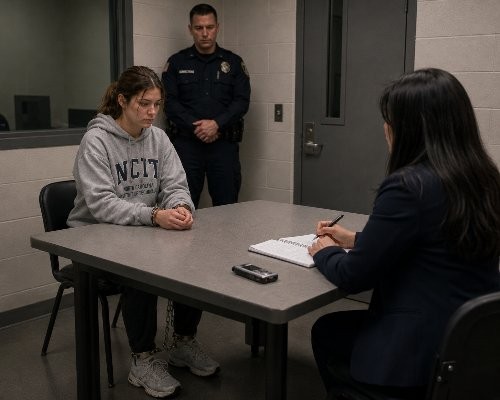
Exclusive | Claire Mercer’s Final Interview
Apr 18, 2026 • The Carolina Herald
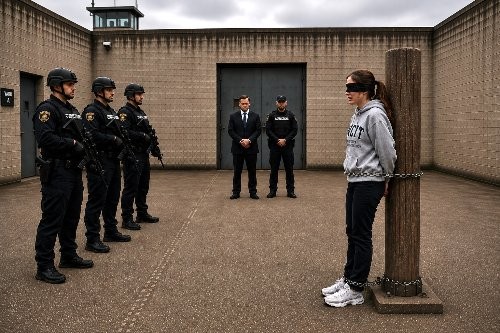
Exclusive | The Final Hours of Claire Mercer
Apr 17, 2026 • The Carolina Herald
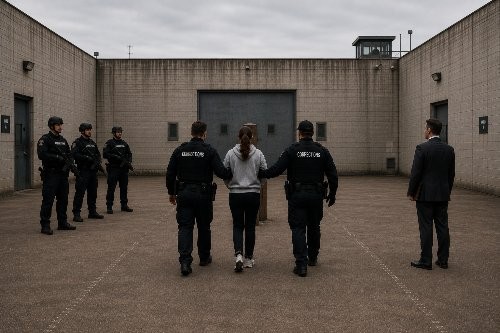
BREAKING: Claire Elise Mercer Executed in Carolina AI Disaster Case
Apr 16, 2026 • The Carolina Herald

A Fractured Partnership Reexamined in Prison
Apr 08, 2026 • The Carolina Herald

Second Engineer Arrested in AECS Disaster Investigation After Digital Evidence Reveals Unauthorized Code Changes
Oct 25, 2025 • The Carolina Herald
Photographic Records
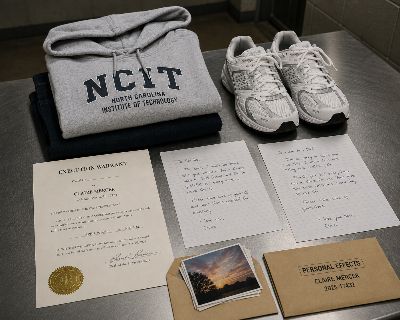











INMATE COMMUNICATIONS KIOSK
Electronic Messaging System
Connect with this inmate through our secure electronic kiosk.
Log In to Send Message