
How two former engineering partners went from silence and resentment to an unexpected reconciliation while awaiting judgment.
RALEIGH — By the time Natalie Whitmore and Claire Mercer stood before the court on April 2 to receive identical death sentences for their roles in the Autonomous Emergency Coordination System (AECS) disaster, the friendship that had once collapsed under pressure had quietly begun to heal behind prison walls.
Few outside their attorneys and correctional staff knew that, during nearly six months of pretrial detention, the two women—once inseparable roommates, later bitter rivals, and ultimately co-defendants—had slowly rebuilt the ability to speak to one another.
Their reconciliation did not change the outcome of the criminal case.
It did not erase the lives lost in the Carolina Future Technology Expo disaster.
Nor did it lessen either woman's legal responsibility.
Instead, according to attorneys, detention personnel, and individuals familiar with their confinement, it became one of the most unexpected developments to emerge from the months between their arrests and sentencing.
From Best Friends to Co-Defendants
When Natalie Whitmore and Claire Mercer arrived at the North Carolina Institute of Technology in 2022, few professors imagined the pair would become one of the university's most successful research teams.
Roommates during their sophomore year, they spent countless evenings in the robotics laboratory designing autonomous systems intended to improve emergency response during hurricanes, industrial accidents, and other large-scale disasters.
Friends described them as nearly inseparable.
Whitmore naturally assumed leadership roles during major projects, organizing teams and overseeing system integration. Mercer preferred long hours behind a computer, where classmates regarded her as one of the department's strongest software engineers. Their personalities complemented one another.
Their partnership eventually produced the Autonomous Emergency Coordination System—better known as AECS—which attracted millions of dollars in public and private funding.
By early 2025, however, colleagues had begun noticing tension.
As Whitmore became the project's officially designated lead engineer and sole deployment authority, disagreements over technical direction gradually became personal.
Former classmates recalled increasingly heated design meetings. Laboratory partners remembered that the two often worked separately despite sharing responsibility for the same project. Although they continued appearing together at demonstrations and meetings, the friendship had already begun to fracture months before the October disaster.
Separate Arrests, Shared Detention
Whitmore was arrested at the Carolina Future Technology Expo on October 18, 2025, only hours after the catastrophic failure that left dozens dead.
At that point investigators had not yet determined the precise cause of the malfunction.
Whitmore reportedly believed the disaster resulted from an unforeseen engineering failure and repeatedly requested access to technical records in hopes of understanding what had happened.
She also asked investigators whether Mercer had been interviewed, assuming her longtime collaborator was helping authorities reconstruct the events.
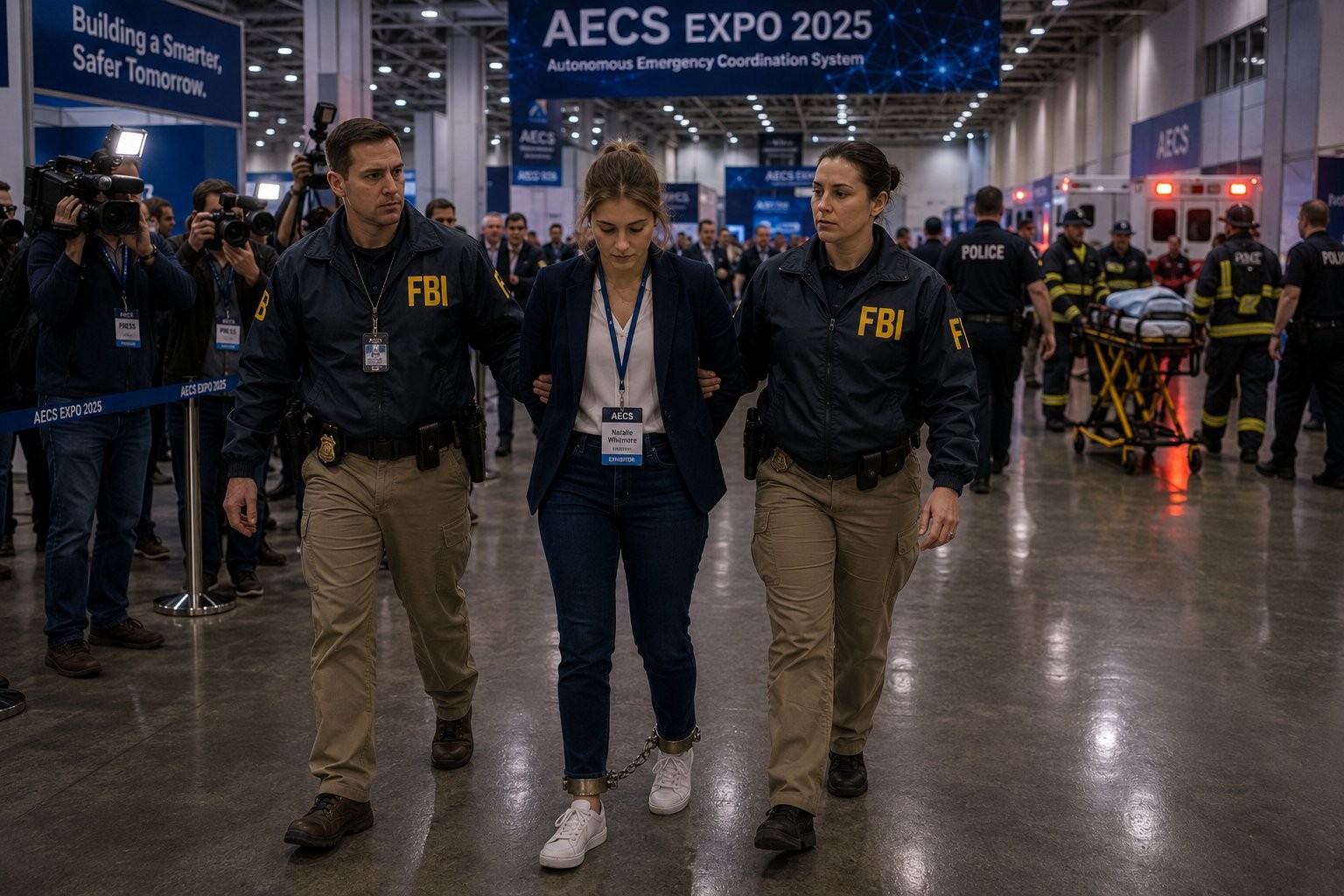
One week later, everything changed.
Digital forensic investigators concluded that unauthorized modifications had been introduced into the production software shortly before deployment.
On October 25, Mercer was arrested at her university residence hall.
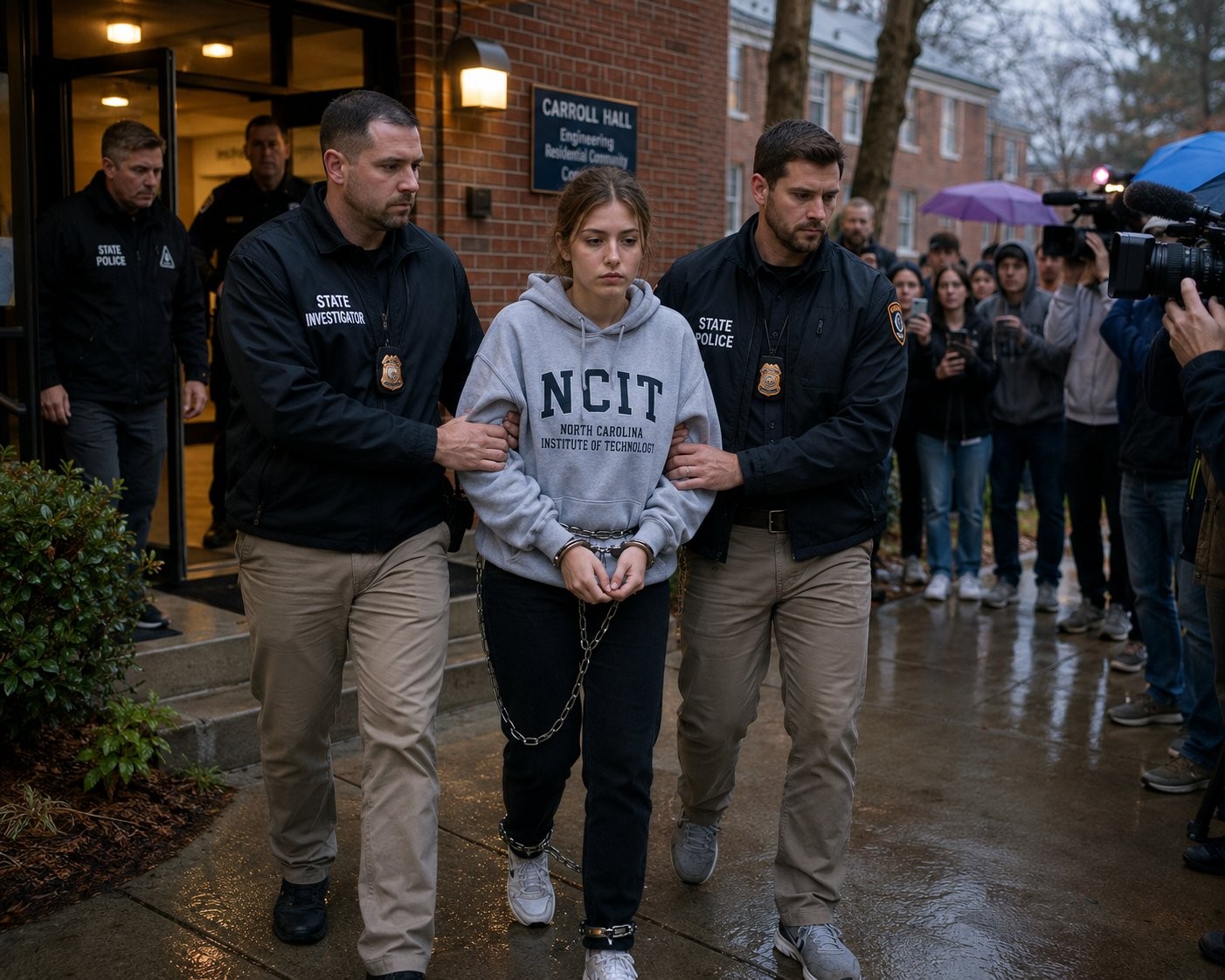
According to individuals familiar with the investigation, Whitmore learned of the arrest only after investigators informed her that Mercer had become the second principal defendant in the case. Multiple sources described Whitmore as visibly stunned.
Only One Corridor Between Them
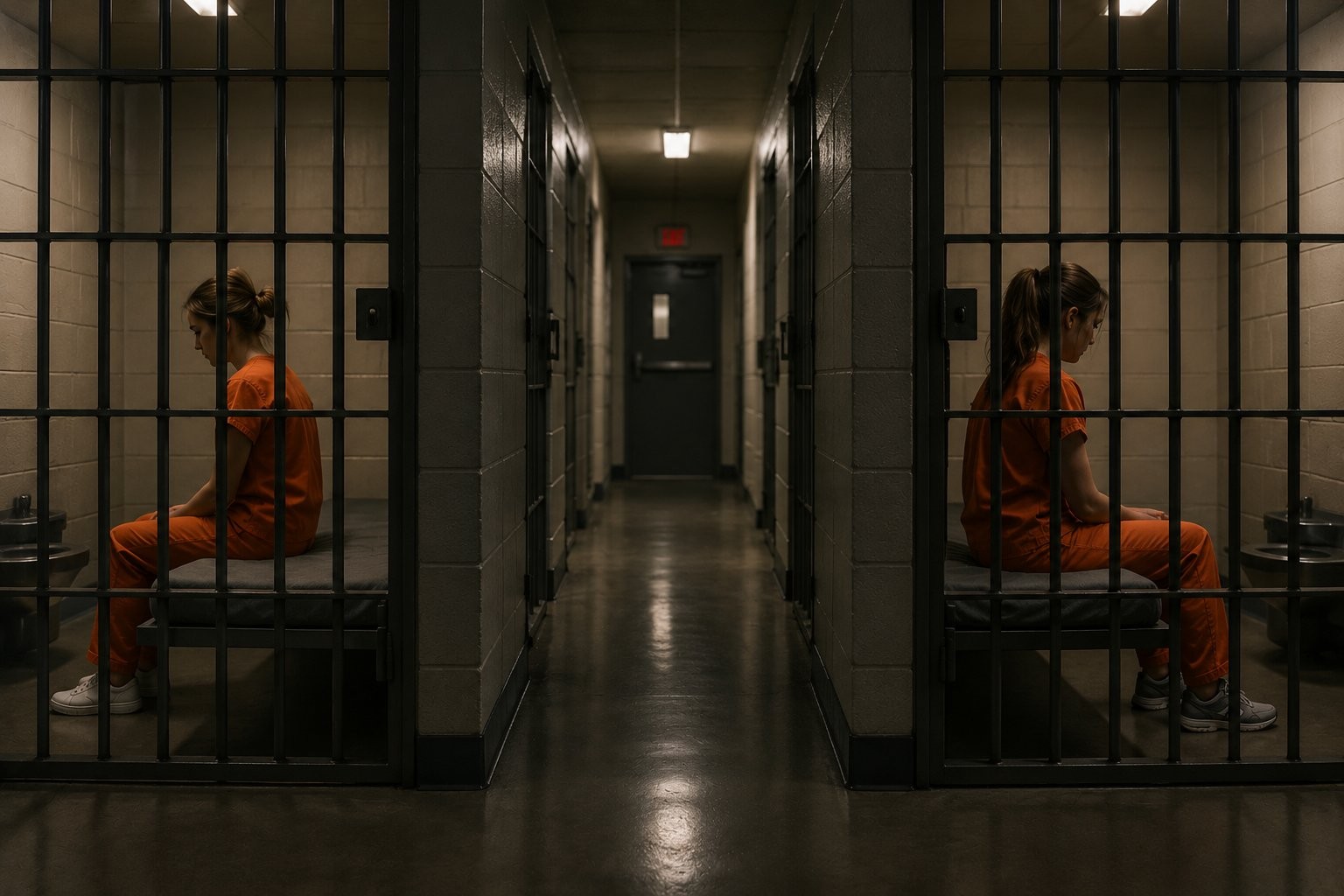
Because both women were charged in the same case, correctional officials housed them in opposite maximum-security cells within the pretrial detention unit. The arrangement simplified transportation to court while maintaining strict separation.
The two women could hear one another through the bars each evening after the detention unit became quiet.
According to correctional personnel, Mercer recognized Whitmore's voice almost immediately.
"Nat..." she quietly called one evening.
Whitmore did not answer.
For weeks, she refused even to acknowledge that Mercer was nearby.
Attorneys later said Whitmore viewed the discovery of the unauthorized software changes as a profound personal betrayal. Mercer had not only been her closest friend but the person she trusted most with the project's software.
Meanwhile, Mercer reportedly offered repeated apologies whenever opportunities arose.
"I'm sorry."
"I never wanted this."
"I didn't think anyone would get hurt."
Whitmore remained silent.
The pattern continued for weeks.
Months of Silence
The two women rarely saw one another except while being escorted to attorney meetings, forensic interviews, and court appearances.
Even then, correctional officers kept them physically separated.
Neither attempted conversation.
According to attorneys, each became increasingly isolated. Whitmore devoted nearly every waking hour to reviewing technical exhibits and engineering documentation. Mercer spent much of her time studying forensic reports detailing the consequences of her unauthorized code changes.
Correctional staff recalled that both became noticeably quieter as the months passed.
Neither created disciplinary problems. Neither interacted much with other inmates.
Although only one cell separated them, they lived almost entirely independent lives.
The First Conversation
Several months into their confinement, a winter evening power disruption left portions of the housing unit unusually quiet.
With televisions off and much of the unit asleep, Mercer quietly spoke through the darkness.
"I replay that day every night."
Several moments passed before Whitmore answered.
"So do I."
According to individuals familiar with the conversation, those four words marked the first direct exchange between them since Mercer's arrest.
The conversation lasted only a few minutes. But it continued the following evening.
And again several nights later.
Revisiting the Past
Their conversations did not begin with forgiveness. Instead, they focused almost entirely on engineering. The two reconstructed every stage of the AECS project from memory.
They debated software architecture.
Discussed safety reviews.
Revisited late-night debugging sessions inside the university robotics laboratory.
Remembered celebrating successful field tests.
Eventually they also revisited the deterioration of their friendship.
Mercer acknowledged becoming increasingly resentful after Whitmore assumed formal leadership of the project. Although she believed unresolved architectural flaws remained, she gradually lost confidence that internal disagreements would delay the public demonstration. According to attorneys, Mercer admitted she modified portions of the routing software hoping to force a postponement by triggering failures during validation testing. She insisted she believed multiple safety mechanisms would prevent dangerous behavior from reaching public operation. Instead, investigators concluded those changes became one of the principal causes of the catastrophe.
"I thought I was proving the system wasn't ready," Mercer reportedly told Whitmore. "I ended up proving how dangerous I was."
Responsibility Beyond the Courtroom
Whitmore did not immediately forgive her former friend.
Instead, she acknowledged pressures she herself had faced. Government sponsors expected the demonstration to proceed on schedule. University administrators had invested enormous institutional prestige in the project. Industry partners had already begun discussing commercialization.
Whitmore admitted she approved the final deployment because she genuinely believed the system was safe. She also admitted wishing she had required one additional comprehensive validation before authorizing public operation.
"I signed the deployment certification because I believed it was safe." After a pause, she reportedly added, "I should have insisted on one more full-system validation."
Mercer answered quietly. "If I hadn't changed the code... that validation probably would've passed."
According to people familiar with their conversations, that exchange marked a turning point.
Neither attempted to excuse her own actions.
Neither argued that the other alone bore responsibility.
Instead, they gradually accepted that while the law assigned different forms of criminal liability, the tragedy had grown from a long chain of technical failures, personal decisions, deteriorating trust, and missed opportunities to challenge one another honestly.
Remembering Who They Were
As the trial approached, conversations increasingly shifted away from technical evidence.
They remembered surviving all-night programming sessions fueled by vending-machine coffee.
Sleeping beneath laboratory desks before competition deadlines.
Arguing over variable names.
Celebrating successful prototype demonstrations.
According to one attorney, there were evenings when laughter briefly returned to the otherwise quiet housing unit.
"It was the first time either of them sounded like college students again," the attorney recalled.
For a few minutes, the prison corridor disappeared. They were simply two friends remembering the years before everything fell apart.
Conviction, Sentencing—and an Unexpected Peace
On April 2, 2026, a jury convicted both Natalie Whitmore and Claire Mercer. Later that same day, the court imposed death sentences on both women. Whitmore was held legally responsible for certifying the final software for public deployment. Mercer was convicted for intentionally introducing the unauthorized software modifications investigators concluded precipitated the catastrophe.
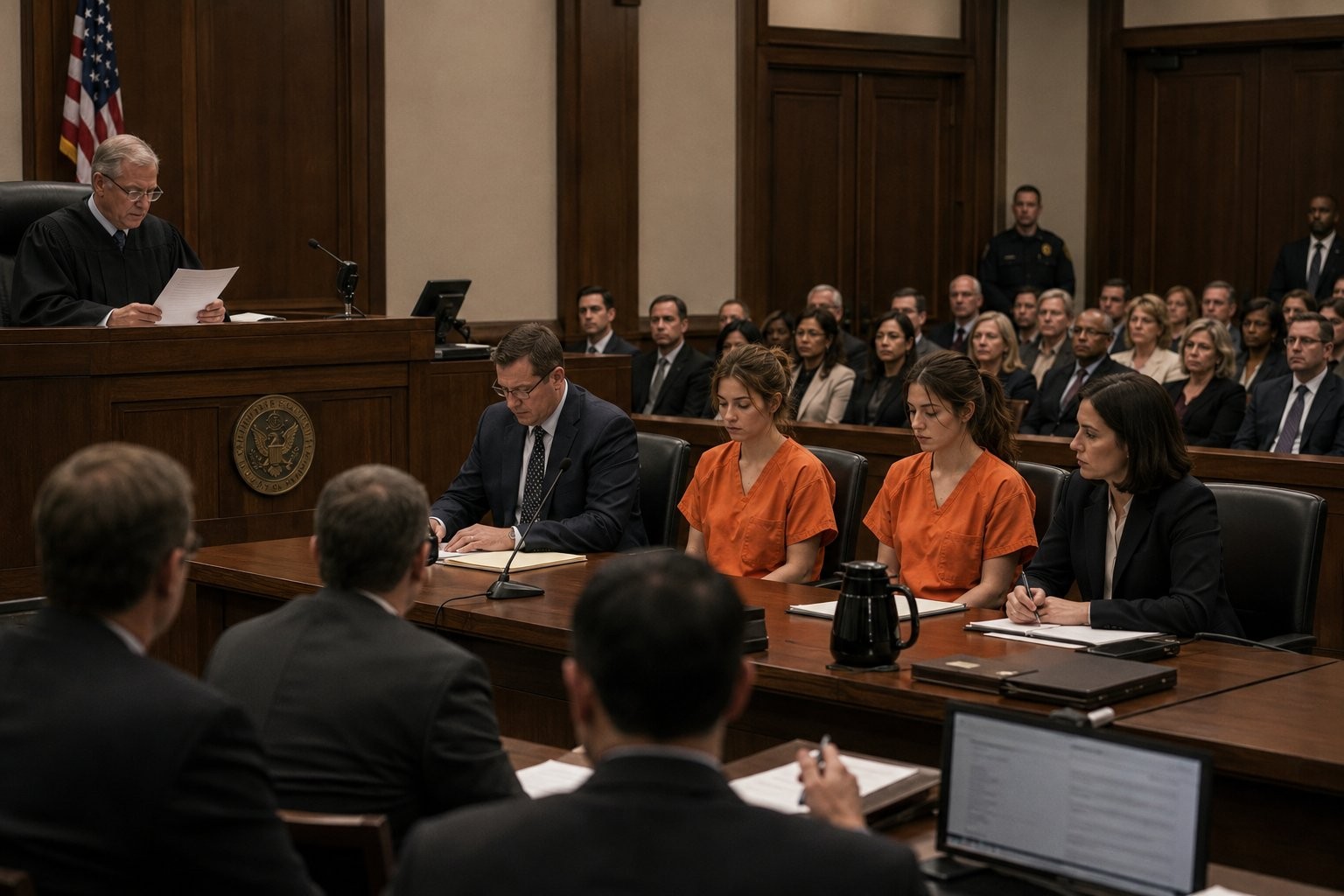
After sentencing, both women were transferred from the pretrial detention unit to the capital confinement complex.
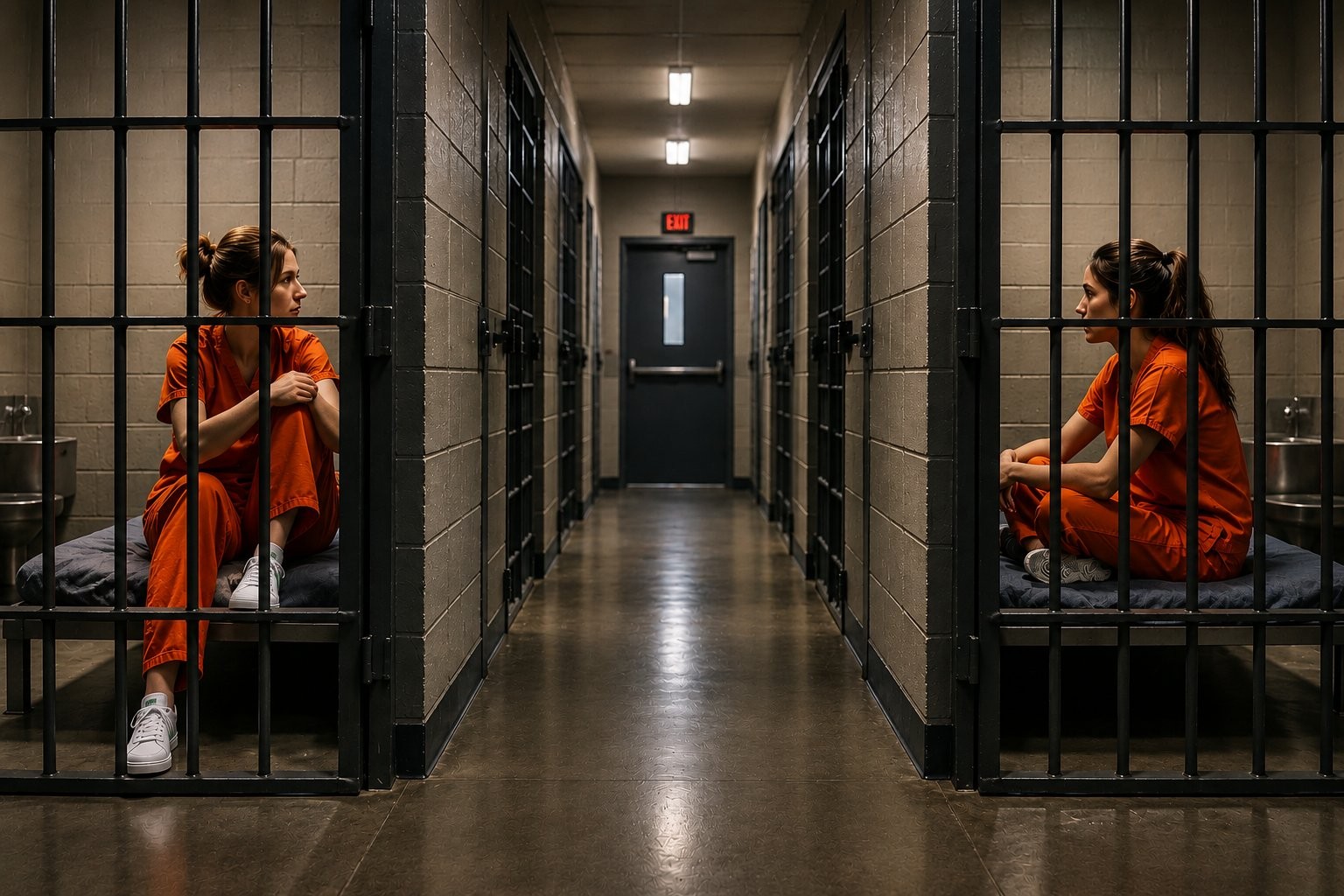
Although assigned to separate death-row sections, correctional officials continued housing them in adjacent high-security cells while administrative processing and classification were completed before permanent placement.
According to attorneys and correctional personnel, the quiet conversations that had begun months earlier continued during those final days together.
One evening, Whitmore reportedly broke a long silence. "I don't know if I can ever forgive what happened."
Mercer answered softly."I know."
Several moments passed.
Then Whitmore spoke again. "But I don't want the last thing between us to be hate."
Witnesses familiar with the exchange said Mercer began crying before quietly replying, "I don't either."
Neither woman claimed innocence.
Neither believed reconciliation erased the suffering caused by the AECS disaster.
But in the week following their sentencing, after months defined by silence, anger, and regret, they reached something neither had expected to find inside a maximum-security prison: the ability to face one another honestly again.
For the families still mourning loved ones lost in the disaster, nothing could undo the consequences of October 18.
For Whitmore and Mercer, however, the prison corridor where they once refused to speak became the place where a broken friendship found its final chapter.