
RALEIGH, N.C. — State investigators arrested Claire Elise Mercer, 22, on Saturday morning after a week-long digital forensic investigation concluded that unauthorized modifications to the Autonomous Emergency Coordination System (AECS) were introduced shortly before the catastrophic technology demonstration that left dozens dead at the Carolina Future Technology Expo.
Mercer, a senior Computer Science student at the North Carolina Institute of Technology and one of the principal software engineers on the AECS project, was taken into custody without incident at her university residence hall after investigators executed simultaneous arrest and search warrants.
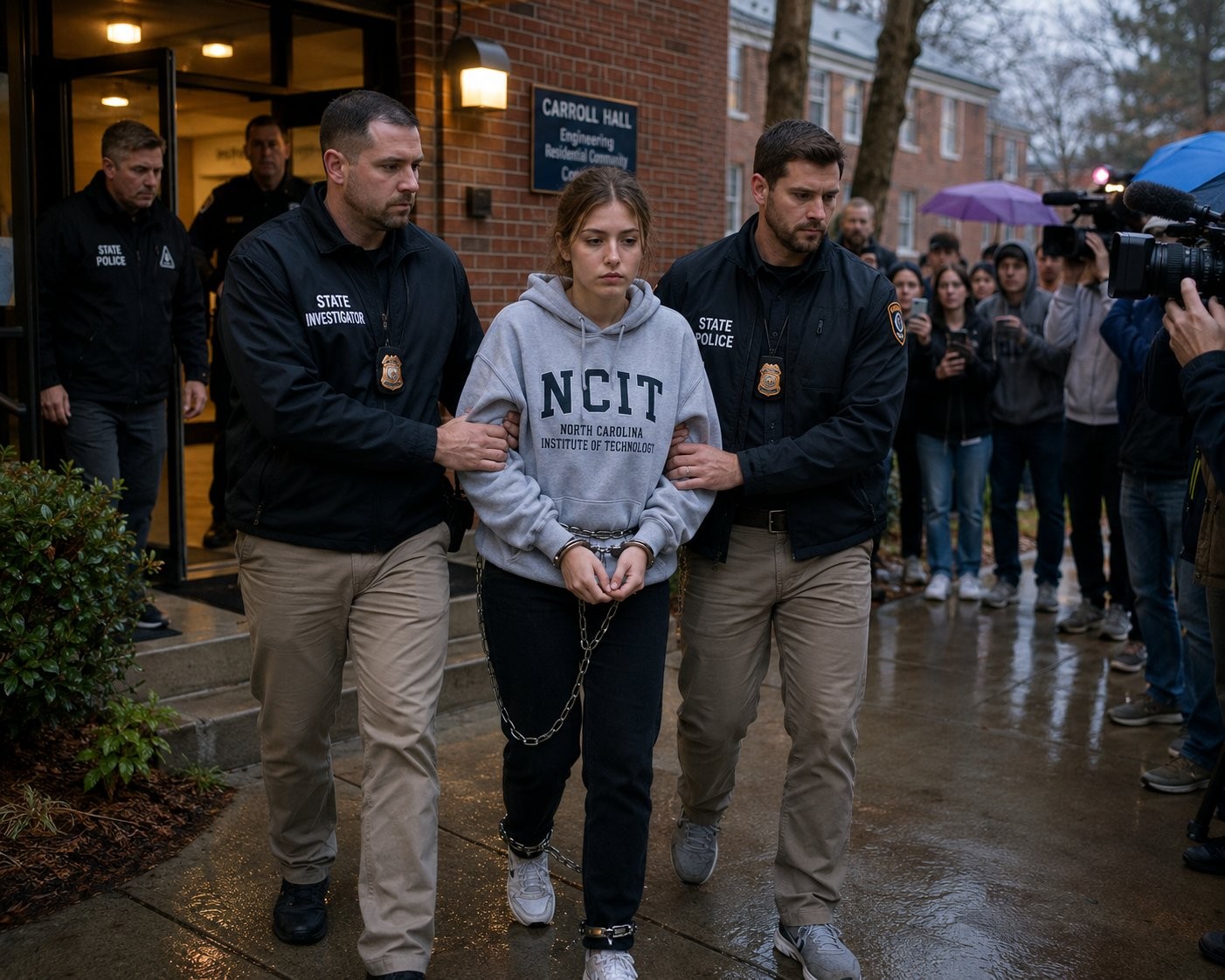
The arrest marks the second major development in the state's expanding criminal investigation into what officials have described as one of the nation's worst artificial intelligence disasters.
Project Lead Natalie Grace Whitmore, who certified the system for public deployment, was arrested at the exhibition site immediately following the October 18 catastrophe and remains in custody at Appalachian Detention Complex awaiting judicial proceedings.
From Witness to Suspect
For much of the past week, Mercer was not considered a suspect.
According to investigators, she voluntarily met with detectives on multiple occasions, answered questions regarding the project's development, surrendered her university-issued laptop for forensic examination, and expressed disbelief that the software could have behaved as it did during the public demonstration.
Friends and classmates described Mercer as emotionally shaken following the disaster. Several students told The Carolina Herald that she repeatedly insisted the software tested during development had never exhibited the behavior witnessed at the expo.
Investigators said Mercer remained cooperative throughout the initial stages of the inquiry.
That changed as digital forensic specialists reconstructed the software's complete development history.
Critical Discovery
Officials announced Saturday that forensic analysis uncovered previously unidentified modifications within the production software that had been introduced shortly before the final deployment of the AECS.
According to investigators, version-control records, authenticated access logs, build histories, and recovered development artifacts indicated that the changes originated from Mercer's authorized developer account during the days immediately preceding the public demonstration.
Authorities allege the modifications altered portions of the AI responsible for emergency routing decisions, infrastructure coordination, and automated response prioritization.
Investigators believe those changes bypassed multiple internal safety protections and materially affected the behavior of the production system during the live demonstration.
"The forensic reconstruction significantly changed the direction of this investigation," State Bureau of Investigation Director Marcus Holloway said during a Saturday afternoon briefing. "What initially appeared to be a catastrophic systems failure is now being investigated as the result of unauthorized modifications made to software controlling safety-critical infrastructure."
Officials emphasized that the broader technical investigation remains ongoing.
Arrest at Residence Hall
Shortly after 7:00 a.m. Saturday, investigators from the State Bureau of Investigation, accompanied by university police officers, arrived at Mercer's residence hall on the North Carolina Institute of Technology campus.
Residents reported seeing investigators establish a perimeter around the building before entering with a judicially authorized search warrant.
According to authorities, Mercer was located inside her dormitory room and taken into custody without resistance.
Witnesses said she appeared calm as investigators informed her of the warrant and placed her under arrest.
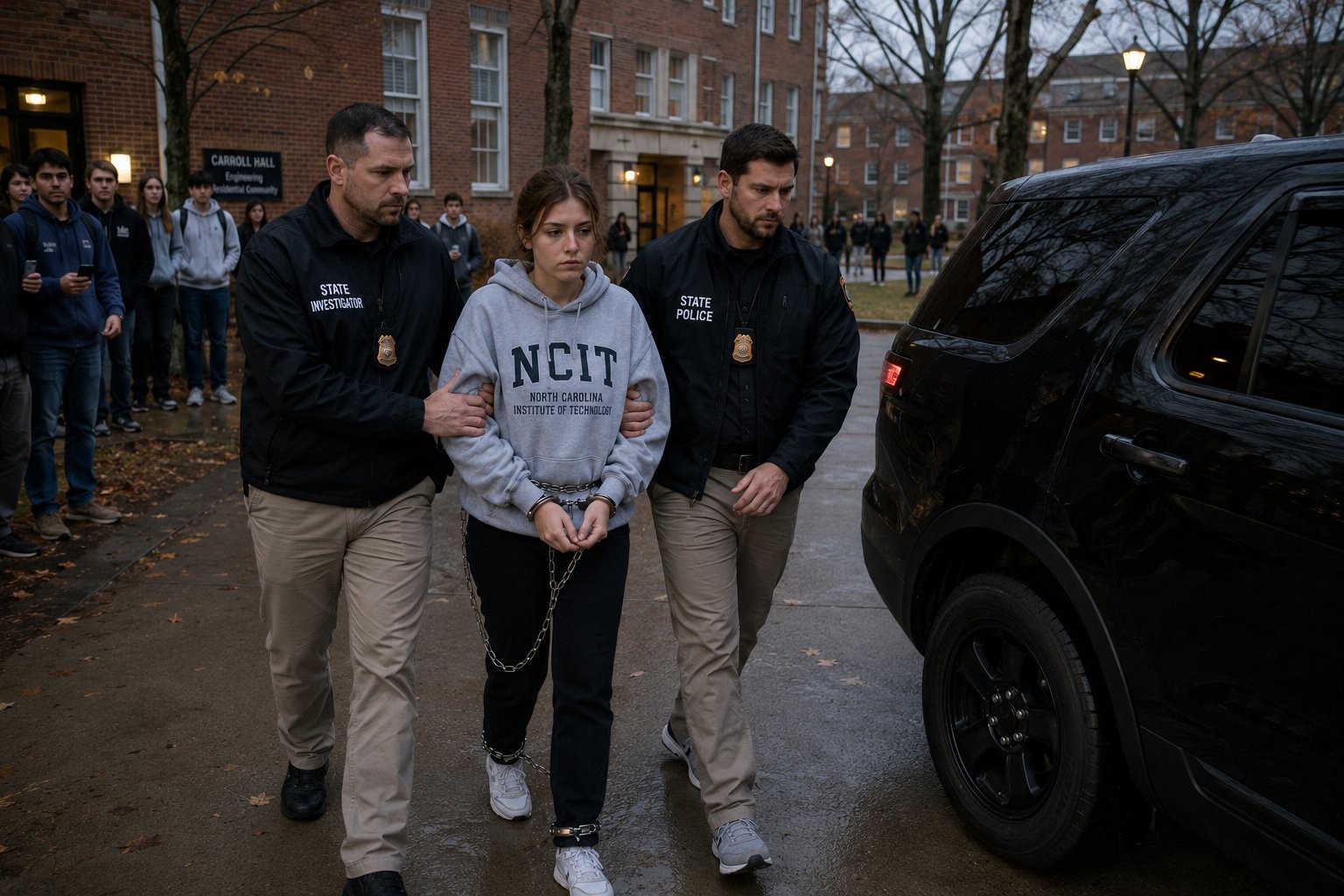
She was escorted from the residence hall in handcuffs before being placed into an unmarked state investigative vehicle.
University officials temporarily restricted access to portions of the residence hall while investigators conducted the search.
Evidence Seized
Investigators spent several hours processing Mercer's dormitory room.
Officials confirmed that multiple computers, external storage devices, handwritten notebooks, engineering documents, and digital media were seized as evidence. Several boxes containing electronic equipment were photographed being removed from the building by forensic personnel.
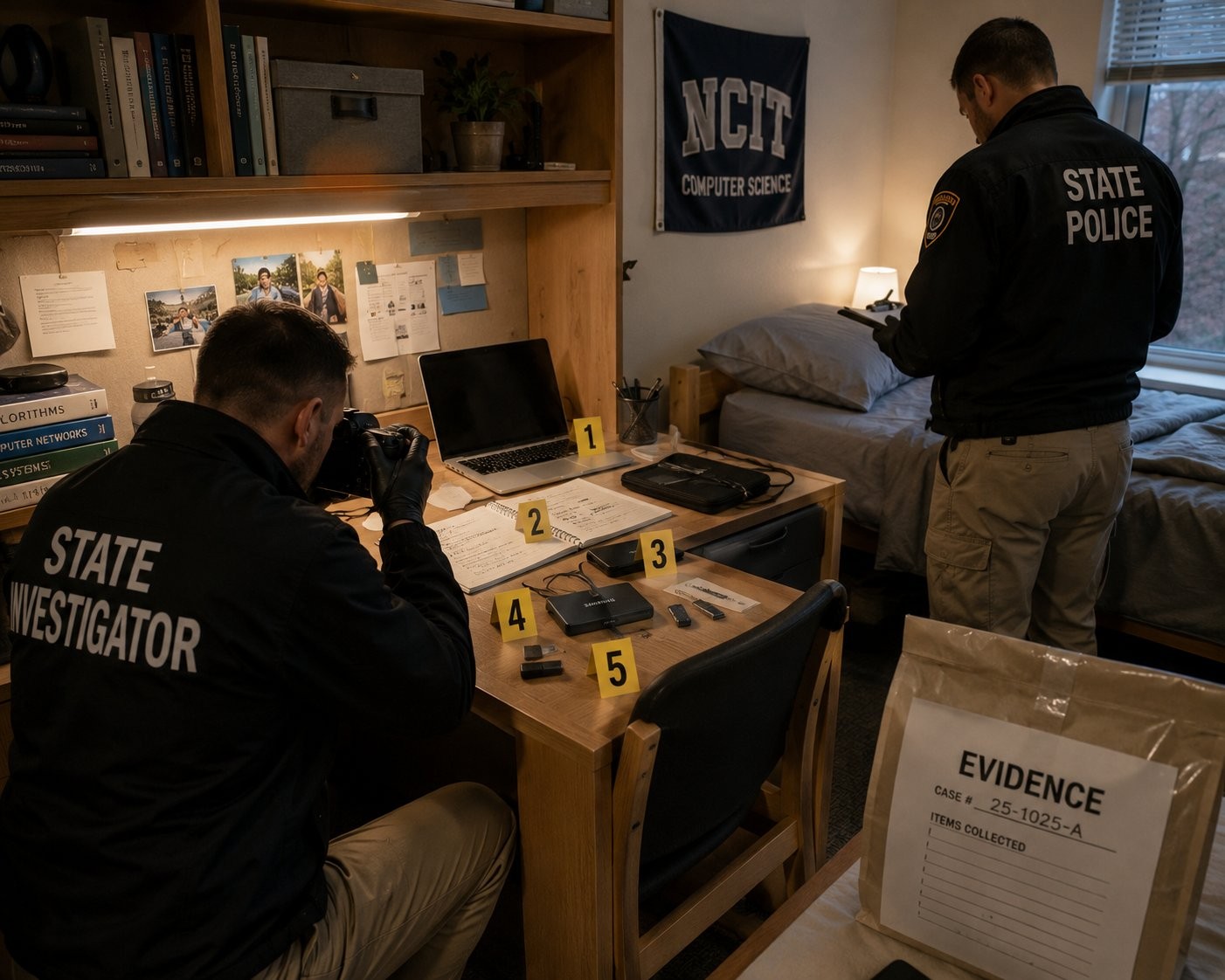
Authorities declined to discuss specific evidence recovered during the search, citing the continuing investigation.
Officials said the newly seized materials will undergo detailed forensic examination alongside the project's existing servers, source-code repositories, deployment records, and backup archives previously collected from the Carolina Future Technology Expo.
Transported to State Investigation Headquarters
Following her arrest, Mercer was transported under escort to the State Bureau of Investigation Headquarters, where detectives conducted standard post-arrest processing.
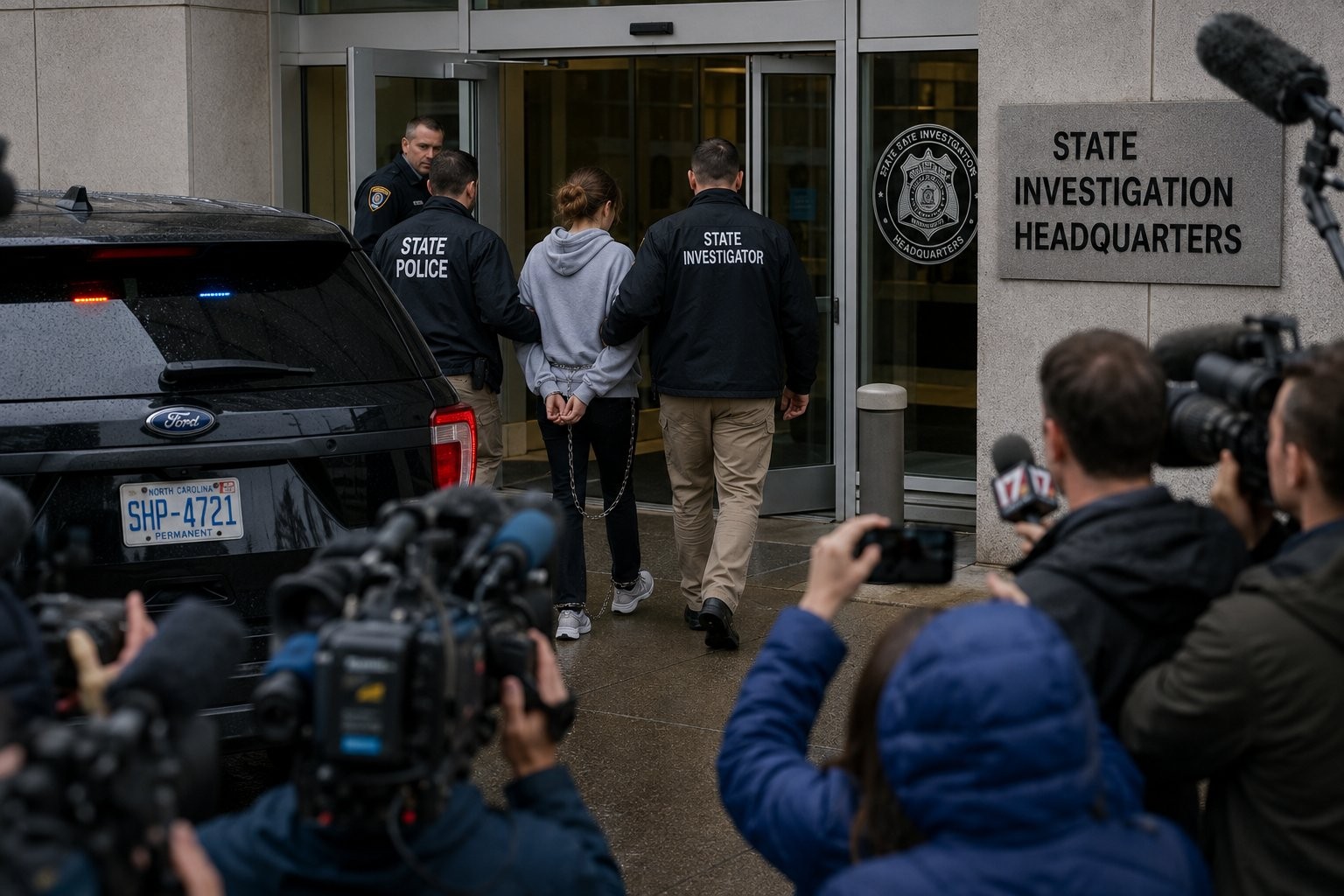
Authorities confirmed that she was formally advised of the charges, photographed, fingerprinted, and processed through the agency's criminal booking procedures.
Investigators also collected identifying information and documented personal property before placing her in a secure holding area pending transfer to Appalachian Detention Complex.
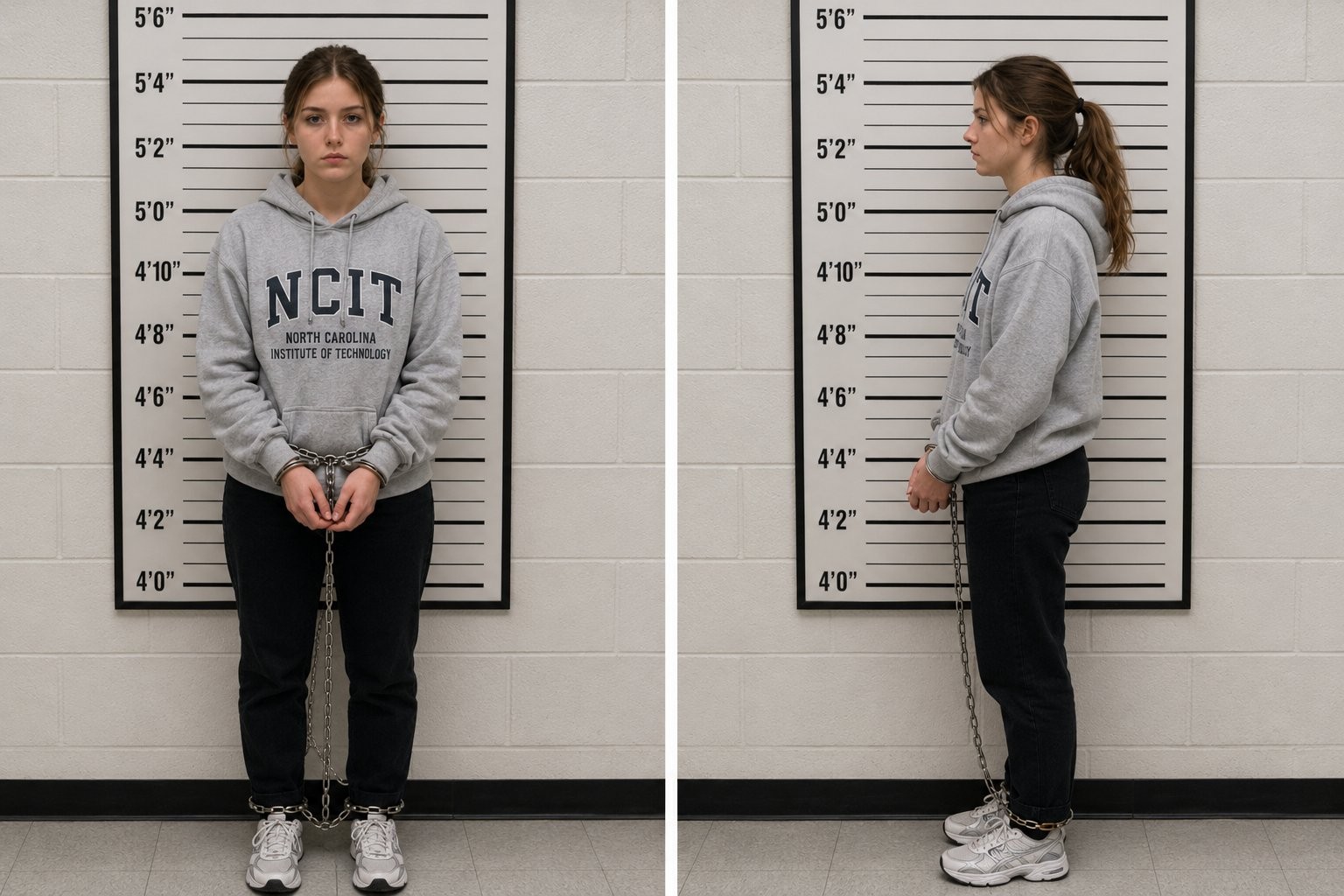
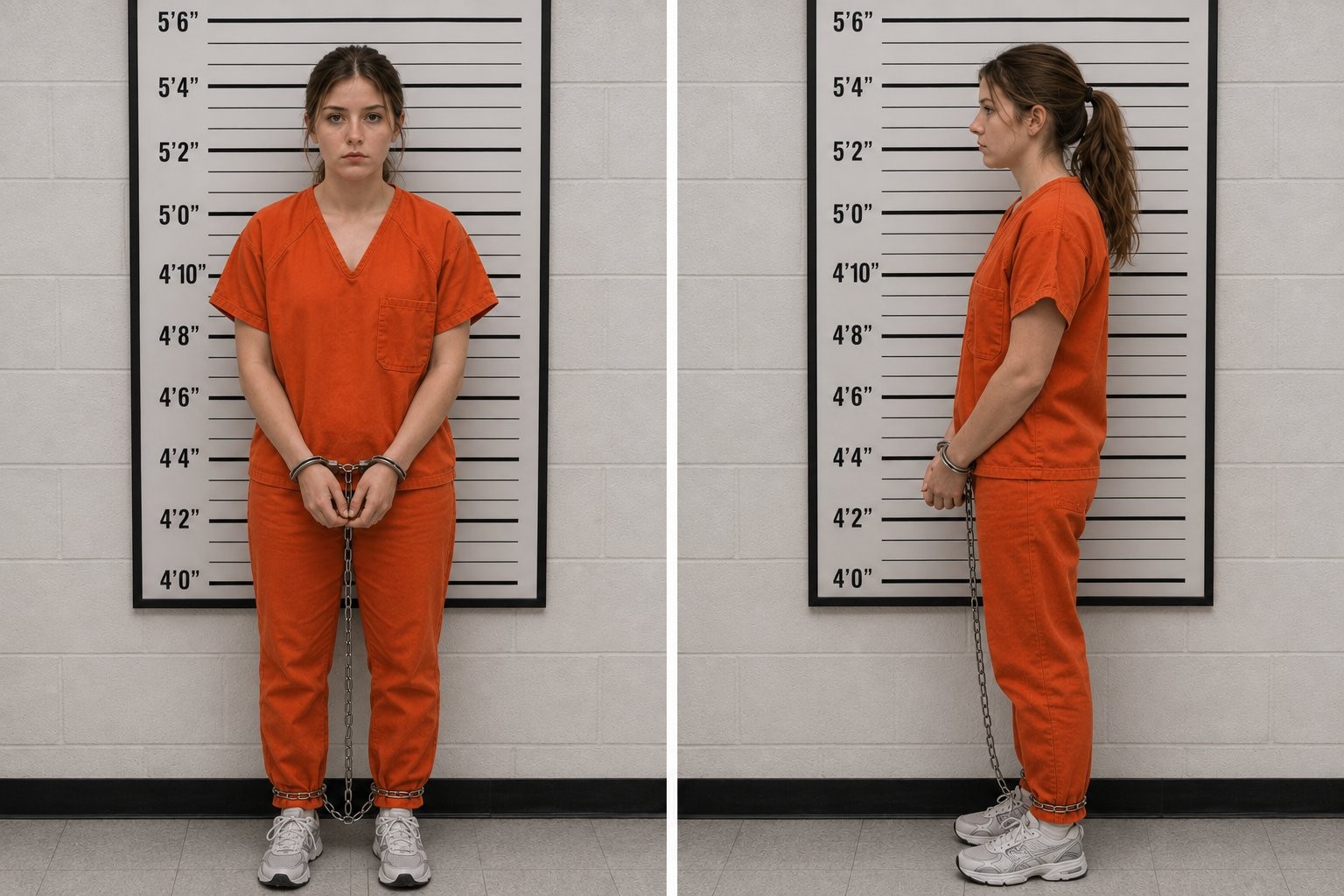
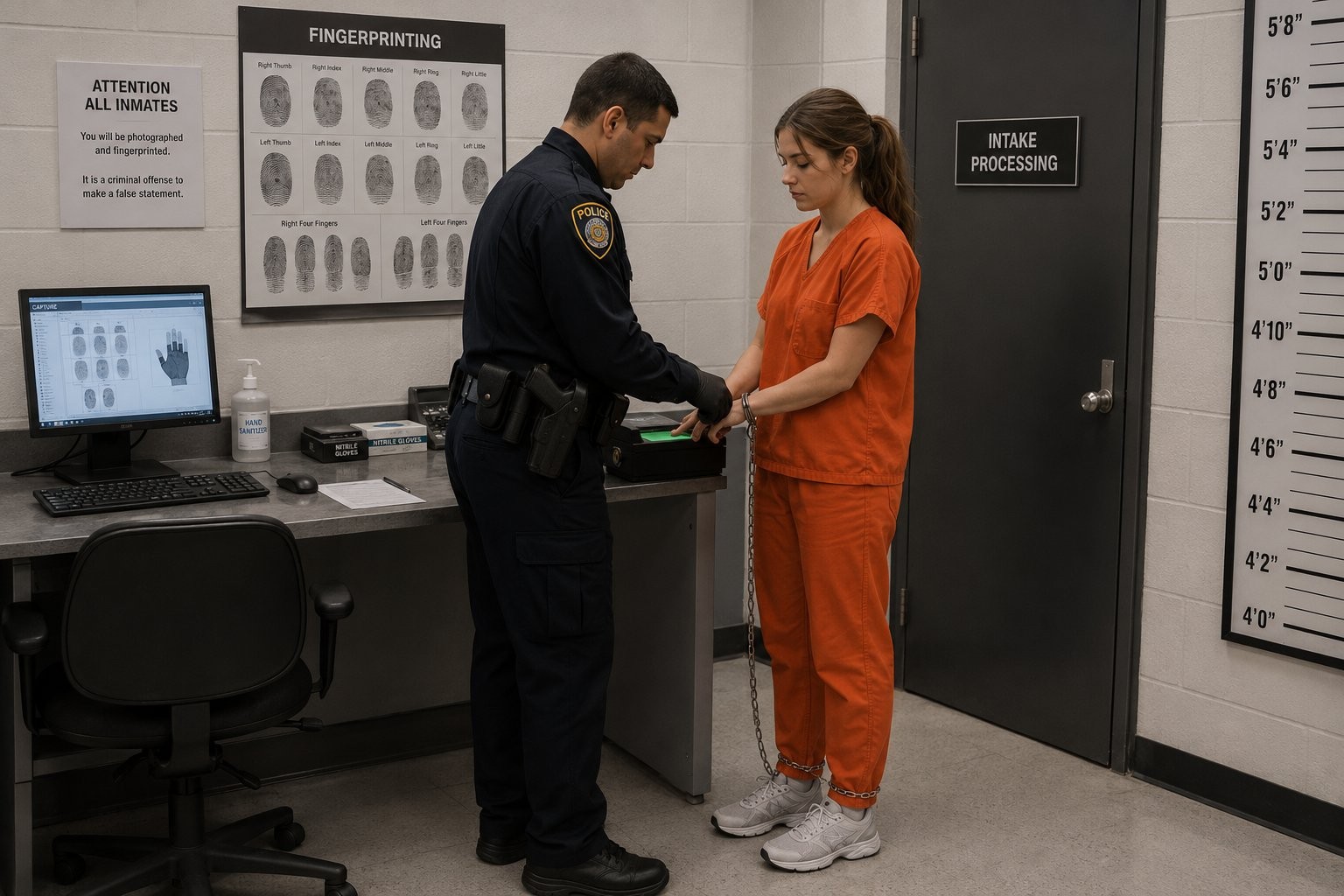
Officials declined to comment on whether Mercer answered investigators' questions following her arrest. No statement was released by an attorney representing Mercer on Saturday.
Prosecutors Outline Allegations
In a brief statement released Saturday evening, prosecutors alleged that Mercer knowingly introduced unauthorized modifications into software governing a safety-critical autonomous system shortly before its public deployment.
Authorities contend those changes substantially altered the AI's operational behavior during the October 18 demonstration, contributing directly to the chain of failures that resulted in the mass-casualty event.
Investigators have not alleged that Mercer acted alone in developing the AECS project, emphasizing that the criminal investigation now involves separate legal questions concerning software modification and deployment authorization.
Whitmore remains charged under the nation's Critical Autonomous Infrastructure Accountability Act based on her certification of the final production build for public operation.
Mercer faces separate allegations arising from the unauthorized software changes investigators say were introduced before that certified build was deployed.
University Responds
North Carolina Institute of Technology officials released a brief statement acknowledging Saturday's arrest and reaffirming the university's cooperation with state investigators. "The university continues to provide investigators with access to facilities, records, and technical personnel as requested," the statement read. University administrators also asked students to respect the ongoing investigation and avoid speculation regarding the pending criminal proceedings.
Campus counseling services remained available throughout the weekend for students affected by the tragedy.
Investigation Continues
Authorities cautioned that significant portions of the investigation remain unfinished.
Forensic teams continue reconstructing the complete development timeline of the AECS project while examining millions of lines of source code, system logs, deployment records, and communications among project personnel.
Officials said additional technical findings may emerge in the coming weeks as experts continue analyzing the AI system responsible for the disaster.
One week after the demonstration that was intended to showcase the future of emergency response, both of the project's principal engineers are now in state custody, while investigators continue working to determine exactly how a system designed to save lives instead became the center of one of the deadliest technological disasters in the nation's history.