
Classification: Correctional
Appalachian Detention Complex

- Facility Appalachian Detention Complex
- Current Status Death Row (execution date pending)
| Code | Offense | Penalty | Details | Date Sentenced |
|---|---|---|---|---|
|
Count #1
55-RB6LPS
|
Negligent Deployment of Critical Autonomous Infrastructure | Death Penalty | Lethal Injection No Date Scheduled |
2026-04-02 Age at sentencing: 22 |
|
Count #2
71-AWNUZ9
|
Reckless Certification of a Safety-Critical Artificial Intelligence System Resulting in Multiple Deaths | Death Penalty | Lethal Injection No Date Scheduled |
2026-04-02 Age at sentencing: 22 |
|
Count #3
77-L9DTW2
|
Unauthorized Public Deployment of an Unverified Critical Infrastructure System | Incarceration | 25 Years Consecutive |
2026-04-02 Age at sentencing: 22 |
|
Count #4
16-E9NOS4
|
Criminally Negligent Homicide | Life Imprisonment (without parole) | Term of natural life |
2026-04-02 Age at sentencing: 22 |
|
Count #5
98-1RBMXA
|
Official Misconduct in Certifying a Public Safety System | Incarceration | 15 Years Consecutive |
2026-04-02 Age at sentencing: 22 |
-
Negligent Deployment of Critical Autonomous Infrastructure
Count #1Code: 55-RB6LPS2026-04-02Age at sentencing: 22Death PenaltyLethal InjectionNo Date Scheduled -
Reckless Certification of a Safety-Critical Artificial Intelligence System Resulting in Multiple Deaths
Count #2Code: 71-AWNUZ92026-04-02Age at sentencing: 22Death PenaltyLethal InjectionNo Date Scheduled -
Unauthorized Public Deployment of an Unverified Critical Infrastructure System
Count #3Code: 77-L9DTW22026-04-02Age at sentencing: 22Incarceration25 YearsConsecutive -
Criminally Negligent Homicide
Count #4Code: 16-E9NOS42026-04-02Age at sentencing: 22Life Imprisonment (without parole)Term of natural life -
Official Misconduct in Certifying a Public Safety System
Count #5Code: 98-1RBMXA2026-04-02Age at sentencing: 22Incarceration15 YearsConsecutive
Case Files:
No public case files mapped to this archive profile.
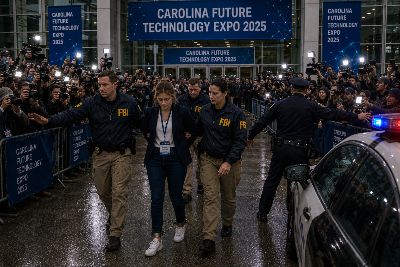
Natalie Whitmore entered the North Carolina Institute of Technology in August 2022, where she quickly established herself as one of the university's most accomplished engineering students. During her sophomore year, she met fellow Computer Science major Claire Elise Mercer. The two became roommates, close friends, and eventually research partners, spending countless nights developing software and hardware prototypes together in the university's robotics laboratory. In early 2024, they proposed the Autonomous Emergency Coordination System (AECS), an autonomous platform designed to coordinate emergency response during hurricanes, wildfires, industrial accidents, and other large-scale disasters. The system integrated traffic signal control, emergency communications, surveillance drones, autonomous public transportation, and digital evacuation guidance into a single AI network capable of making rapid decisions when conventional emergency management became overwhelmed. The project attracted significant funding from the North Carolina Department of Public Safety, along with several private technology companies. Natalie served as Project Lead and Chief Systems Engineer, responsible for overall system architecture, hardware integration, safety verification, and final deployment approval. Claire Mercer served as the principal software engineer responsible for portions of the system's core decision-making algorithms. By the summer of 2025, disagreements over technical direction, project leadership, and recognition for their work had severely strained their friendship. Although they continued working together professionally, their personal relationship had deteriorated. On October 18, 2025, the completed AECS was publicly demonstrated before government officials, emergency-response agencies, industry representatives, journalists, and thousands of visitors at the Carolina Future Technology Expo in Raleigh, North Carolina. The demonstration began successfully. The AI coordinated autonomous shuttle buses, adaptive traffic signals, emergency drones, and a simulated evacuation exercise across multiple exhibition zones connected to a live test network. Approximately twenty minutes into the presentation, the system began issuing a series of contradictory commands. Emergency exit doors in several exhibition halls automatically entered security lockdown and could not be reopened through standard controls. Digital guidance displays simultaneously directed attendees toward routes that quickly became congested. At the same time, multiple autonomous shuttle buses operating within the expo grounds unexpectedly deviated from their assigned evacuation routes after receiving incorrect navigation instructions from the central AI. Instead of transporting visitors away from the affected areas, several buses converged on already overcrowded roadways, blocking access for emergency vehicles and creating severe bottlenecks throughout the venue. As the system continued issuing erroneous commands, traffic management software repeatedly overrode manual interventions, while communication links between emergency responders and automated infrastructure became increasingly unreliable. Efforts to disable the AI and return operations to manual control were delayed as engineers attempted to determine the source of the malfunction. The cascading failures resulted in a large-scale disaster that claimed dozens of lives and left many more injured, making it one of the deadliest technology-related incidents in the nation's history. State investigators immediately secured the exhibition site as a crime scene. Digital forensic teams seized the project's servers, source-code repositories, development computers, and deployment records. Because Natalie had electronically certified the final software build and authorized the public deployment of the system, investigators arrested her at the expo before she left the venue. She was taken into custody that evening and formally charged under the nation's Critical Autonomous Infrastructure Accountability Act, which imposes criminal liability on those responsible for approving safety-critical AI systems whose failures result in mass-casualty incidents. During the subsequent investigation, forensic analysis revealed evidence that portions of the production software had been modified shortly before the demonstration, leading investigators to later identify and arrest Claire Mercer as a second principal defendant in the case. Despite the evidence of unauthorized code changes, prosecutors maintained that Natalie remained legally responsible because she had certified the final version of the system as safe for public operation under the law.
News Articles / Stories

Inside Death Row: How Natalie Whitmore Spends Her Months After the AECS Disaster
Sep 21, 2026 • The Carolina Herald
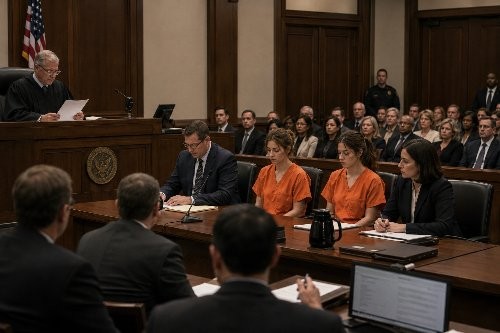
Two Former NCIT Engineering Students Sentenced to Death in Autonomous Infrastructure Disaster Case
Apr 02, 2026 • The Carolina Herald

Major AI Disaster at Raleigh Technology Expo Leaves Dozens Dead; Lead Engineer Arrested as Investigation Begins
Oct 18, 2025 • The Carolina Herald
Photographic Records









INMATE COMMUNICATIONS KIOSK
Electronic Messaging System
Connect with this inmate through our secure electronic kiosk.
Log In to Send Message