
Five Months After Conviction, the Former Engineering Prodigy Has Settled Into a Quiet Routine of Study, Reflection, and Legal Appeals
Appalachian Detention Complex — More than four months have passed since Natalie Whitmore, once celebrated as one of North Carolina's most promising young robotics engineers, was sentenced to death for her role in the Autonomous Emergency Coordination System (AECS) disaster.
While public attention has largely shifted away from the case, life inside the Appalachian Detention Complex's women's death-row unit has followed a quiet, highly structured routine.
Correctional officials describe Whitmore as one of the facility's most disciplined inmates. Attorneys describe her as relentlessly analytical. Staff members say she spends much of each day reading technical documents, writing in engineering notebooks, and preparing for ongoing legal proceedings.
Outside her small concrete cell, however, the world continues to remember the disaster that transformed a nationally recognized engineering student into one of the state's most closely watched death-row inmates.
Arrival on Death Row
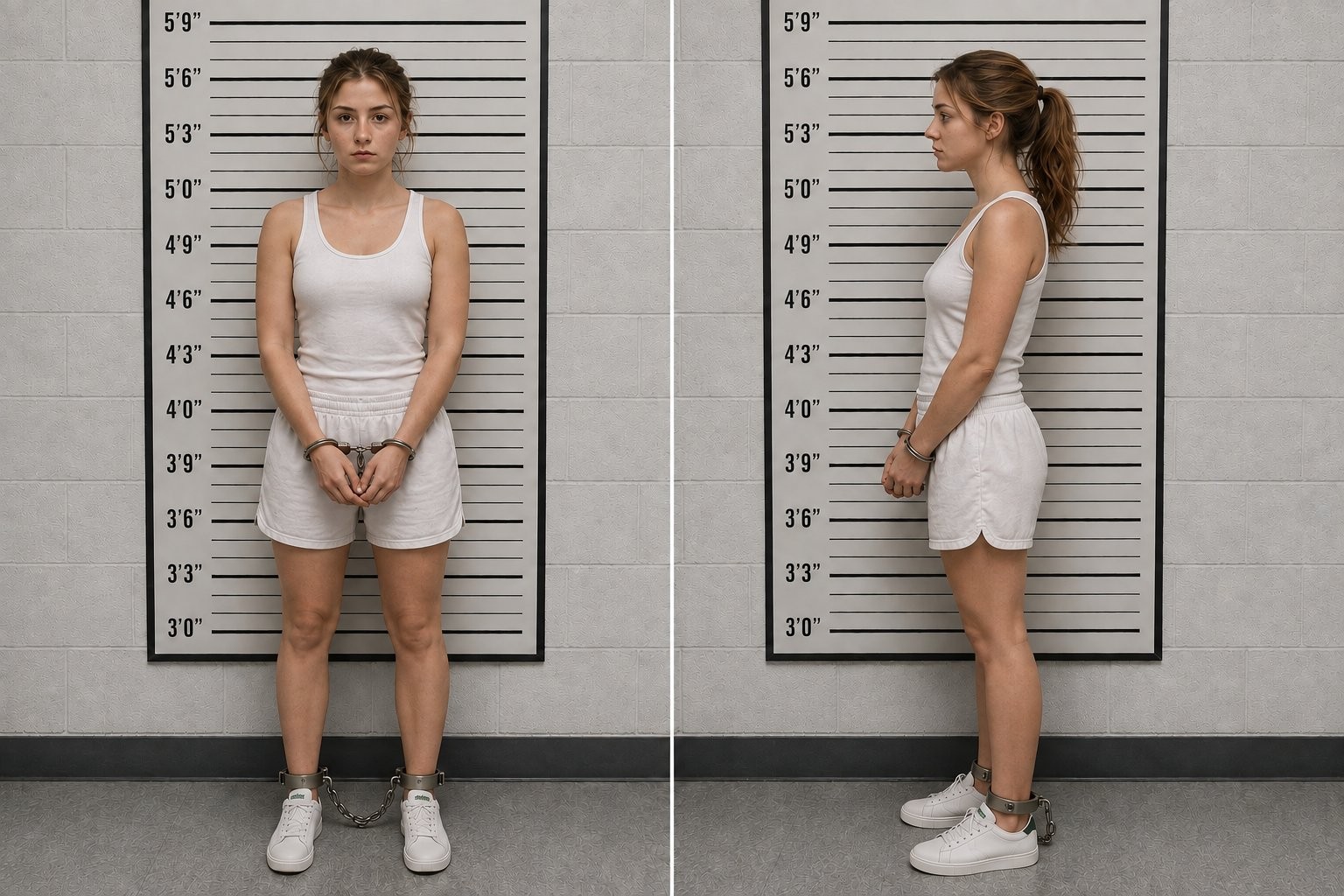
Following sentencing on April 2, Whitmore was transferred to the Appalachian Detention Complex's capital housing unit, where she underwent medical evaluation, property inventory, classification interviews, and orientation before being assigned to her permanent cell.
Unlike inmates housed in the general prison population, those assigned to the death-row unit remain under individualized housing procedures and enhanced security protocols.
During intake, officials also issued Whitmore the clothing she would wear throughout her incarceration.
Prison administrators explained that inmates sentenced to lethal injection are housed in standardized sleeveless athletic attire consisting of a plain white tank top, loose white gym shorts, white socks, and athletic shoes.
A spokesperson for the Department of Corrections said the clothing standard is based on clinical and operational considerations associated with the execution protocol rather than inmate discipline.
"The sleeveless top provides unobstructed access to both upper extremities, allowing qualified medical personnel to establish intravenous access efficiently if an execution warrant is ultimately carried out. Loose athletic shorts likewise ensure unobstructed clinical access should secondary vascular access become medically necessary. These garments eliminate the need to modify restrictive clothing immediately before the procedure and help maintain a consistent, controlled environment."
Officials emphasized that the clothing is issued at the beginning of death-row confinement so inmates are not required to change into unfamiliar attire immediately before an execution.
Still Thinking Like an Engineer
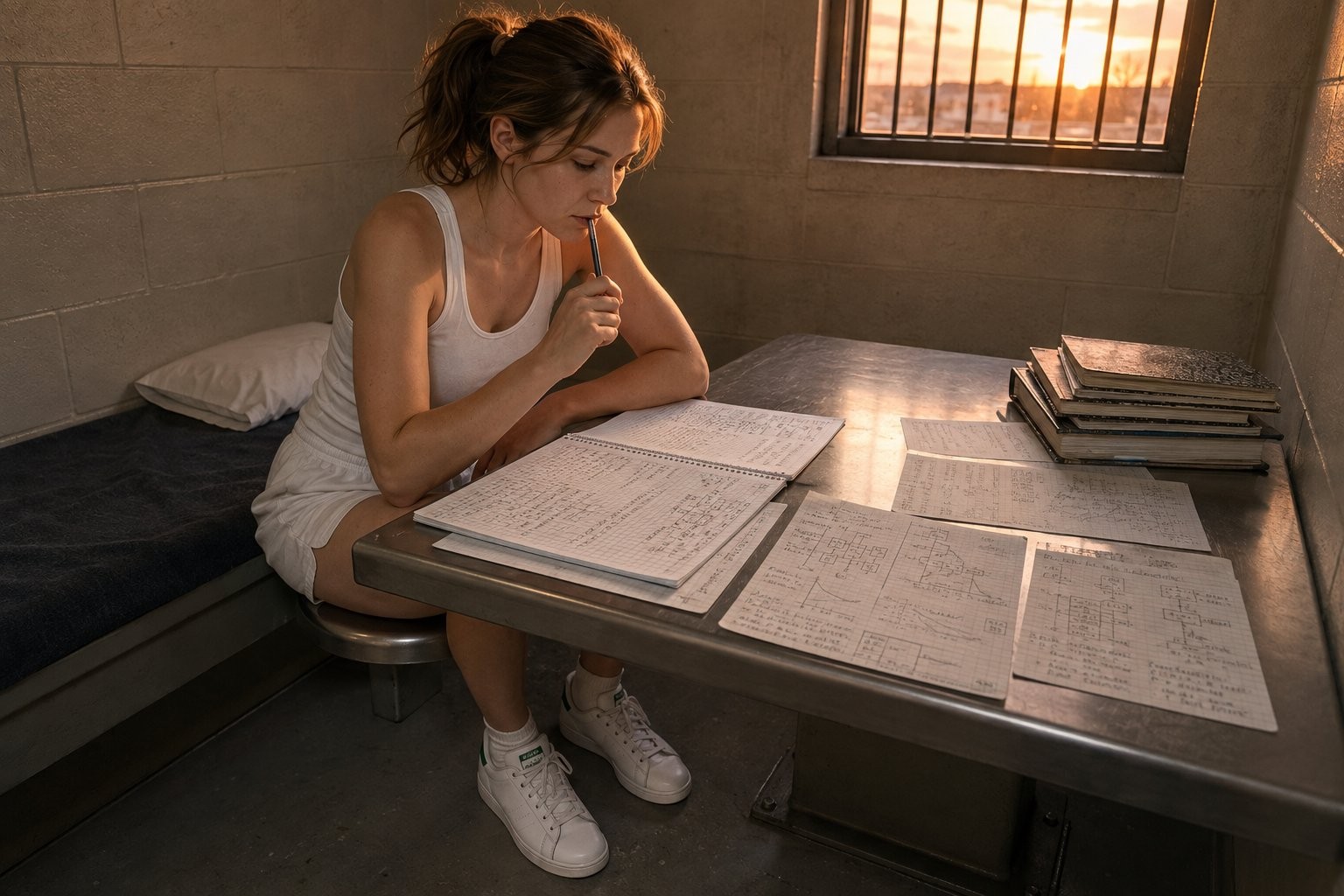
Visitors familiar with Whitmore say the most striking aspect of her daily routine is that she has never stopped approaching the AECS disaster as an engineer.
Her small metal desk is routinely covered with graph paper, notebooks, timing diagrams, system architectures, handwritten calculations, and flowcharts reconstructed entirely from memory.
Without access to computers or electronics, she spends hours sketching revised system designs in pencil, documenting alternative safety mechanisms and emergency overrides that she believes could have prevented the catastrophic cascade of failures.
One attorney familiar with the case described the notebooks as "part engineering analysis, part personal reflection."
"They are not an attempt to recreate the project," the attorney said. "They are an attempt to understand it."
Appeals Built on Technical Detail
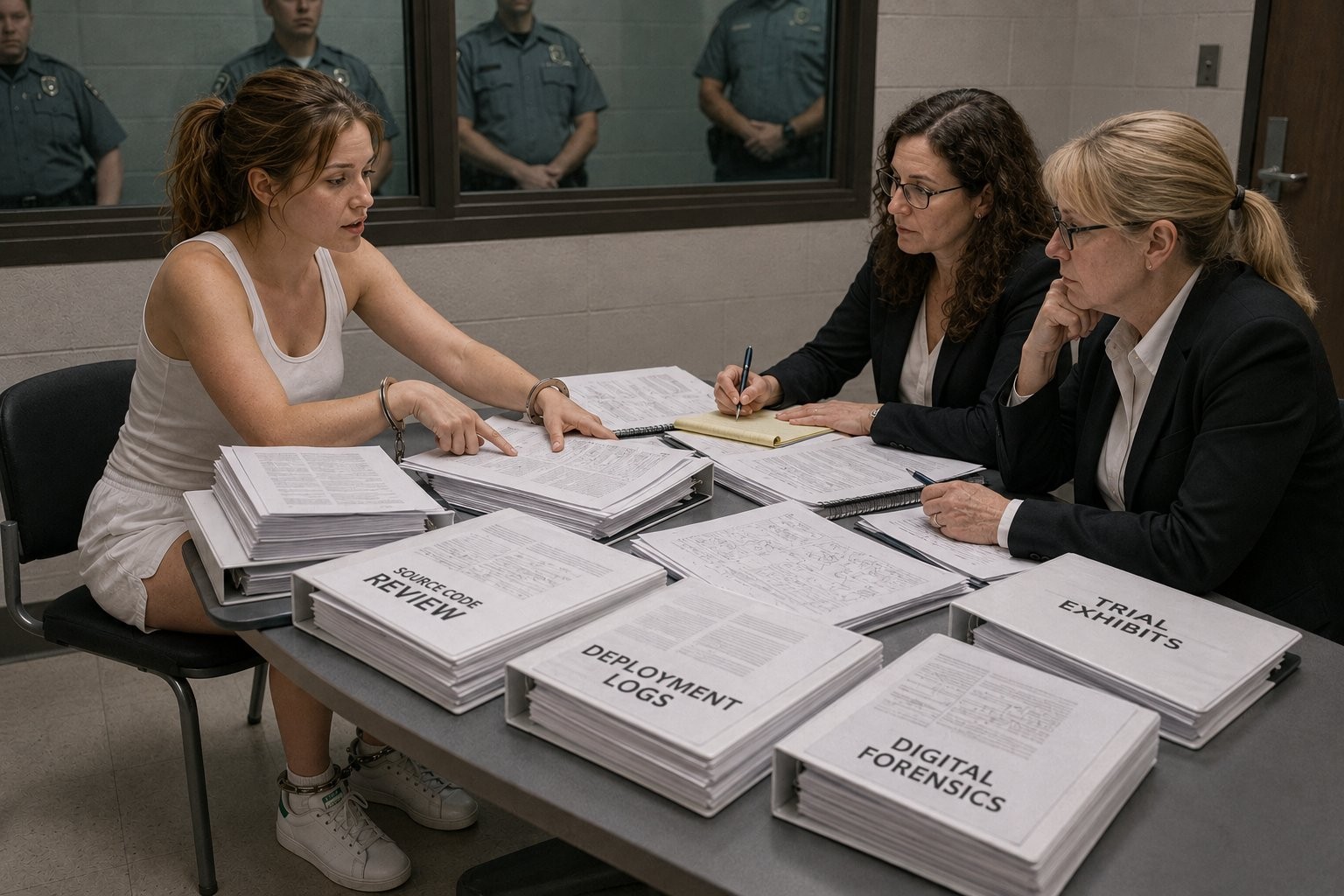
Although Whitmore's direct appeal remains pending, legal meetings continue regularly inside the secure attorney visitation area.
Unlike many capital cases centered primarily on witness testimony, Whitmore's legal files consist largely of technical evidence.
Printed software repositories, deployment records, forensic analyses, compiler logs, version histories, and engineering documentation often cover the conference table during attorney visits.
Those present during several sessions describe Whitmore carefully explaining software architecture and deployment procedures while identifying technical details within thousands of pages of evidence.
Even after conviction, attorneys say she approaches each meeting less as a criminal defendant than as a systems engineer reviewing a failed design.
Teaching Mathematics Behind Prison Walls
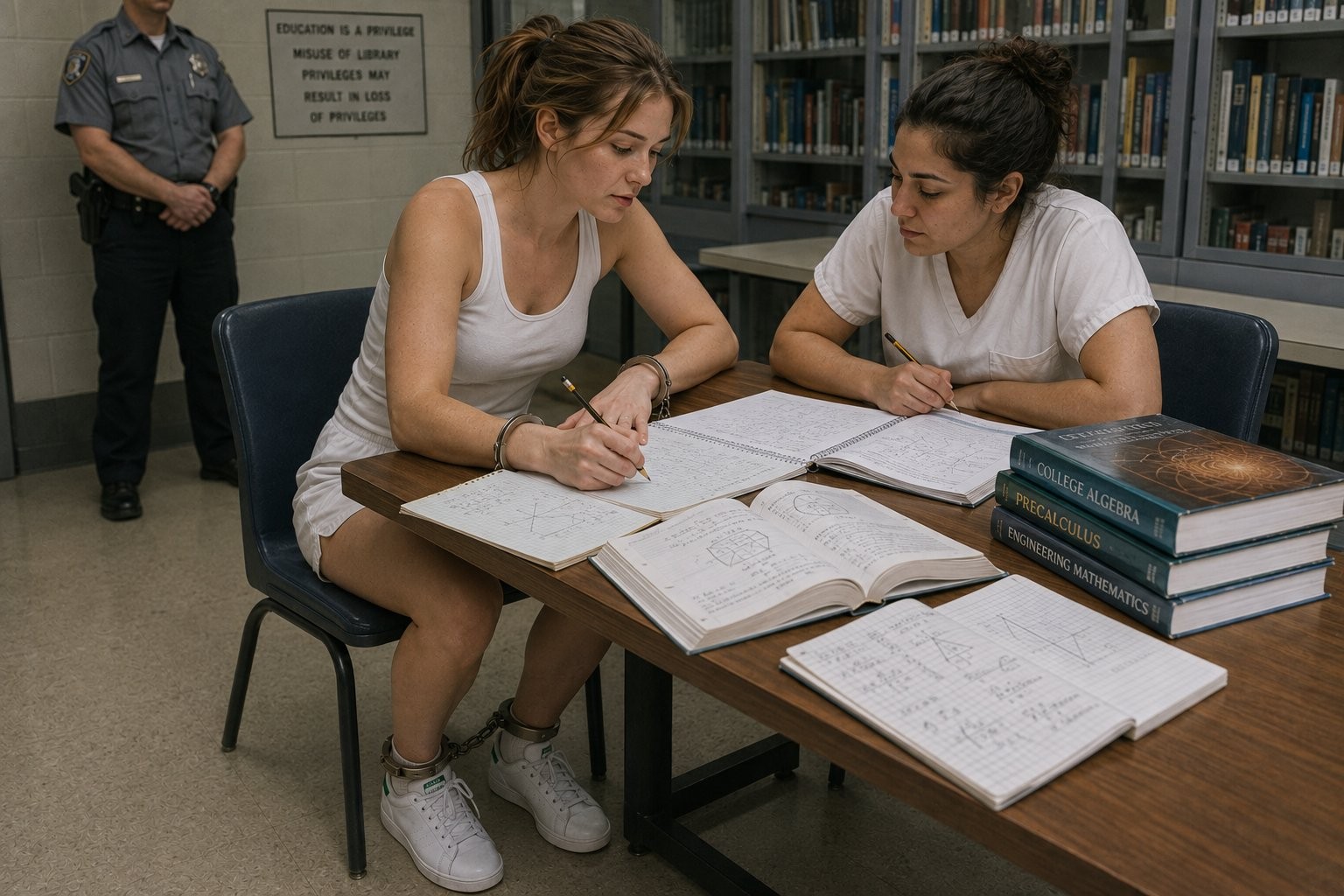
Correctional officials have also permitted Whitmore to participate in limited supervised educational sessions with other inmates assigned to the secure housing unit.
Staff members say she frequently assists another prisoner with algebra, geometry, and introductory mathematics using prison-issued textbooks and graph paper.
The sessions are conducted under direct supervision and remain limited in duration, but officers familiar with the program say Whitmore has become known for her patience and methodical explanations.
"It reminds you that before any of this happened," one staff member said, "she was a university student who spent years solving engineering problems."
A Final Goodbye to Claire Mercer
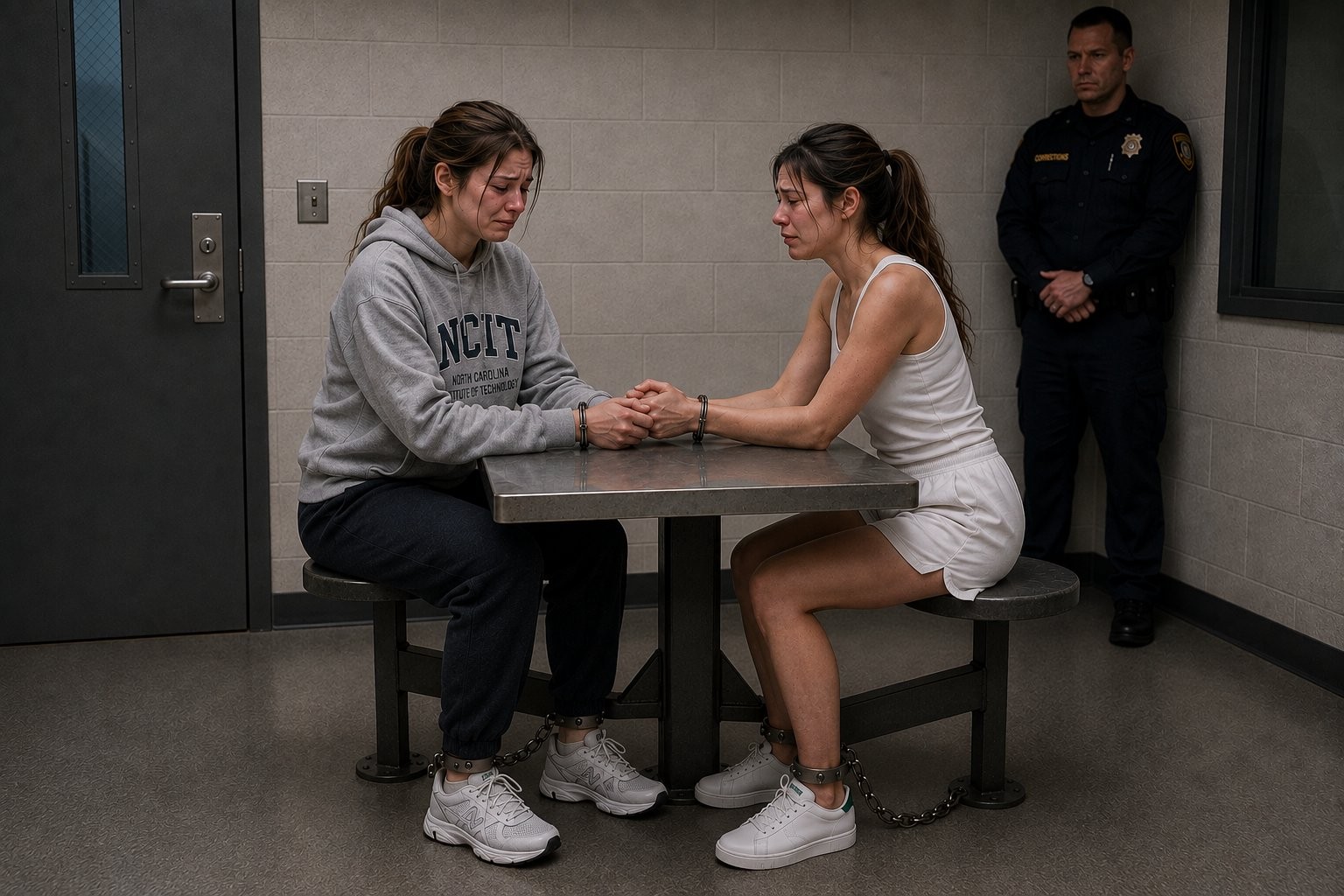
Perhaps the most emotionally significant moment of Whitmore's incarceration occurred just two weeks after sentencing.
On April 16, correctional officials arranged a final supervised meeting between Whitmore and Claire Elise Mercer, her former roommate, research partner, and co-defendant.
The two women had spent years building the AECS project together before investigators concluded that unauthorized software modifications had been introduced shortly before the public demonstration.
Mercer was executed later that day.
Officials have never publicly disclosed the contents of their final conversation.
Correctional personnel present during the meeting described it as quiet, emotional, and largely uninterrupted.
Neither woman reportedly raised her voice.
When the allotted time expired, officers escorted Mercer from the visitation room while Whitmore remained seated, watching silently until the door closed.
It was the last time they saw one another.
Waiting
Whitmore's days now follow a routine that rarely changes.
Morning count.
Meals.
Reading.
Writing.
Legal meetings.
Occasional exercise.
Lights out.
The notebooks on her desk continue to grow thicker.
The appeals continue through the courts.
And beyond the walls of the prison, the AECS disaster remains one of the defining technological failures in the nation's history.
For the woman who once envisioned artificial intelligence coordinating emergency responses to save lives, the remaining months of that legal process are spent in a single concrete room—still examining diagrams, still searching for answers, and waiting for the courts to determine how her story will end.