Jun 26, 2026 • paul
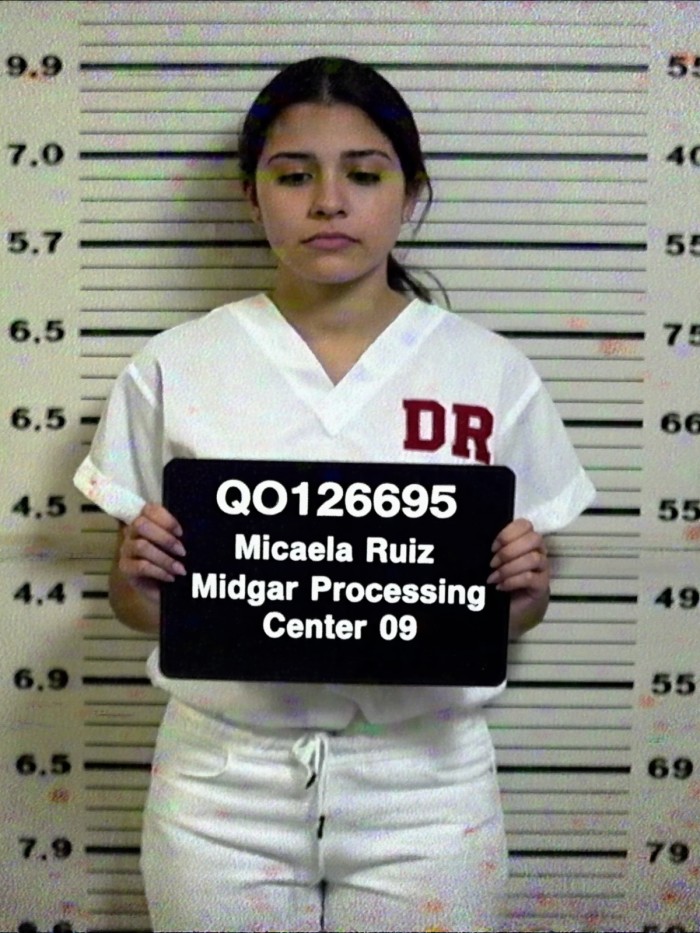
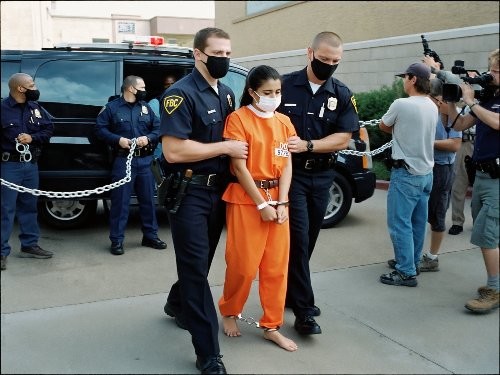
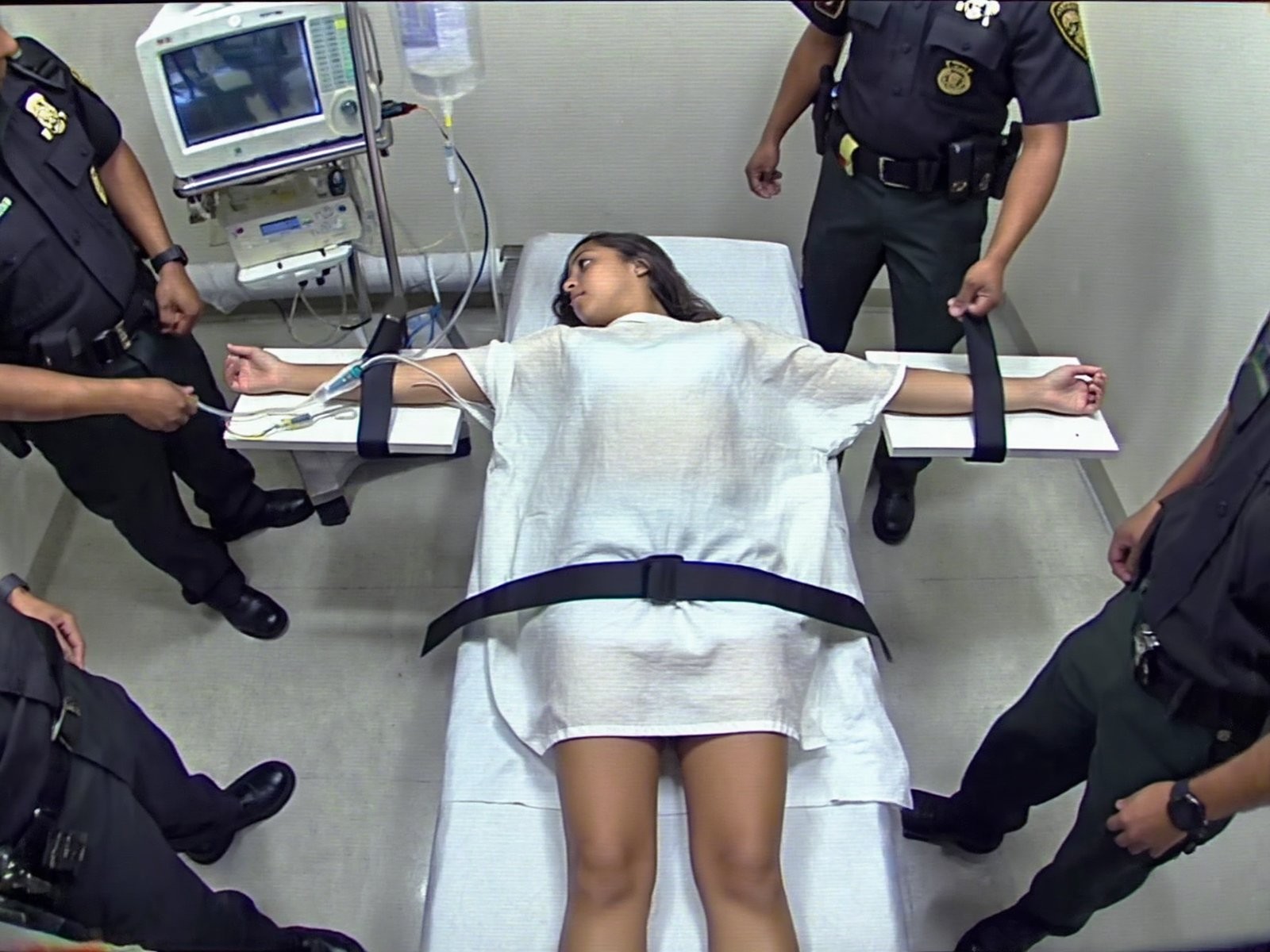
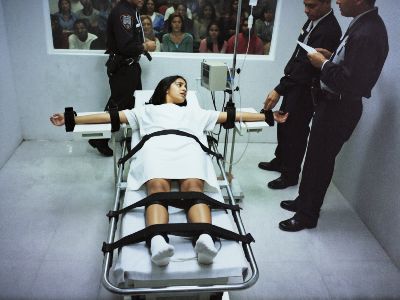
The fluorescent lights of the execution chamber were too bright, humming a low, insect-like drone that vibrated in Micaela Ruiz’s back teeth. The air was cold—sterile and aggressively cold, like a refrigerator in a morgue, which she supposed was fitting. They had given her a new pair of plain white briefs and a white gown, and the thin fabric did nothing to stop the goosebumps that rippled across her skin as the guards walked her the final eight steps from the holding cell.She was 22 years old. Her hands were trembling.She tried to count the people beyond the glass. The witness gallery was a blur of solemn faces, some wet with tears, some hard as stone. Her mother was there somewhere, but Micaela had begged her not to come. She didn’t want her mother’s last memory to be of straps and needles. She spotted the police officer’s widow, a woman with gray-streaked hair pulled back so tight it stretched the skin around her eyes. Micaela wanted to mouth “I’m sorry” to her, but her lips had gone numb, and the guard on her left, a stocky man with a neck like a redwood stump, was already guiding her toward the gurney.The gurney. It wasn’t a bed. It was a steel tray with a thin, crinkly mattress covered in medicinal paper, positioned in the center of the octagonal room like an altar. Black restraints dangled from its sides, limp and waiting.“Step up, please,” said the warden. His voice was surprisingly gentle, almost pastoral. Micaela’s legs didn’t want to cooperate. She had to consciously tell her left foot to lift, then her right. The paper crinkled under her weight, a sound so loud it made her wince.Then they started.“Arms at your sides, Micaela.”The first guard lifted her left wrist. His touch was firm but not cruel—professional. She felt the leather strap, wide and tan, slide over the thin skin where her pulse was fluttering like a trapped moth. He pulled it snug, not tight enough to cut off circulation, but tight enough that when she instinctively tried to pull away, her hand wouldn’t move. The buckle clicked with a finality that shot straight up her arm and lodged in her throat. Click. Her wrist was no longer hers.The second guard mirrored the motion on her right. She had a sudden, desperate urge to feel her mother’s hand, to have one last human squeeze of fingers. Instead, she felt cool leather and the dull pressure of the strap against her radius bone. Click. Both arms now belonged to the state.Her chest started to heave. She could see it rising and falling beneath the white cotton, a panicked animal caught in a trap. The same guard who had strapped her left arm moved to the foot of the gurney and began working on the ankle restraints. Micaela had always hated people touching her feet. During her trial, she’d worn clunky state-issued shoes, but now she was shoeless with only a pair of soft white socks. The guard’s fingers, gloved in latex, brushed the arch of her foot as he guided the strap over her right ankle. The sensation was so unexpectedly personal, so intimate, that a sob escaped her lips. A single, sharp sound that echoed in the quiet room. Click. Her right ankle. Click. Her left. She was spread-eagled now, pinned to the cold metal, a butterfly mounted for observation.Finally, the chest strap. The guard leaned over her, his face a mask of neutrality, and drew the wide leather belt across her diaphragm, just below her breasts. As he tightened it, she felt the air in her lungs compress. She couldn’t take a full breath anymore, only these shallow, fluttering sips. This was the worst one. It didn’t just restrain her; it stole her breath, a constant, physical reminder that soon, breathing itself would be a luxury the chemicals would revoke.She was completely immobilized now, a topography of fear beneath a grid of leather. Only her head was free to move, which she did, whipping it from side to side, her dark hair, unbraided at her request, spilling against the paper. Wrong place, right time. The phrase looped in her mind, a broken hallelujah. She was in the car. Just in the car. Marco’s car. They were going for burgers. The blue lights had flared behind them. Marco, panicked, sweating, saying he had a dime bag in the glove box. *Just stay cool, baby, stay cool.* The officer’s flashlight, a white tunnel. Marco’s hand, shaking, holding a gun she didn’t even know he had. The explosion of noise. A red flower blooming on the officer’s neck. Her own scream, a sound she didn’t recognize. The law didn’t care that she didn’t pull the trigger. The law of parties. All conspirators are guilty. Her silence after, her terror, her stupid, misguided loyalty to a boy who died in the shootout—all of it was weighed on a scale and found to be the same as murder.“Micaela Ruiz,” the warden’s voice pulled her back to the humming lights. “Do you have any last words?”Through the glass, she found her mother. A crumpled figure in the second row, a hand pressed against the pane. Micaela’s voice, when it came, was a thin reed of sound, amplified by a microphone she couldn’t see. “Mama, I’m so cold. Please don’t be sad. I’ll be warm soon.” She then turned her head, just slightly, toward the officer’s widow. “I’m sorry. I didn’t… I would have stopped him if I could. I’m so sorry.”A tear traced a cold path from the corner of her eye, down her temple, and into her ear. She felt it pool there, a tiny, private ocean.The warden gave a silent nod to a window draped with a white curtain. She couldn’t see the executioner behind it, only the silhouette of movement.A sharp pinch in the crook of her right arm, where the IV line had been inserted earlier by a solemn nurse. A sterile saline drip had been flowing since she walked in, a clear path of readiness. Now, the line changed. She felt the cold flood her vein first, a creeping frost that radiated outward from the insertion point, climbing toward her shoulder.The first drug: the sedative. It was meant to put her to sleep, to render the proceedings “humane.” The cold reached her heart, and she imagined it clutching the valves, a dark, icy hand. The room began to tilt, the humming lights smearing into white streaks across her vision. The face of the widow dissolved into a gray fog. Her mother’s sobs sounded underwater, distant and warbled. I don’t want to sleep, she thought with a child’s defiance. I want to stay. I want to tell them again that I didn’t know. That I was just in the car.But the drug was a thief that wouldn’t be denied. The terror in her chest, the frantic moth-wing pulse, began to slow. The straps that had felt like prisons now felt like the only things holding her to the earth. A heavy, sinking warmth replaced the freezing cold. It was the cruellest comfort, a chemical lie that everything was going to be okay. Her jaw went slack. The last thing she saw, before her eyelids won their battle against her will, was the reflection of her own still form in the glass—a girl wrapped in belts, waiting.A few seconds of stillness.Then the second drug, a paralytic, entered the line silently. Her diaphragm, already restricted by the strap, stopped moving entirely. Her lungs became two useless bags of air. Her face, which had softened into a mask of artificial peace, didn’t change. The witnesses saw only a sleeping girl.The third drug, the potassium chloride, was the executioner. It hit her stopped heart like a fist of electricity. Inside her chest, the muscle seized, twisted, and was stilled forever. The EKG monitor, which had been beeping a steady, panicked rhythm, began to skip. A jagged, chaotic line scrawled across the screen, then flattened into a single, unwavering green note.A physician stepped forward, touched a stethoscope to the chest beneath the leather strap, and listened for a sound that would never come. He stood up, nodded to the warden.“Time of death: 7:17 a.m.”In the gallery, the mother’s wail was a raw, primal thing, a sound of a world ending. The widow sat perfectly still, tears running down her taut cheeks, finding no peace in the scene before her, only an echoing emptiness where vengeance was supposed to be. The girl on the gurney, Micaela Ruiz, lay motionless, bathed in the indifferent, humming light, finally free of the cold.