
A journalism student who helped build Eastbridge University's most prominent anti-war organization now finds herself at the center of a federal investigation into classified military information. Her arrest has raised difficult questions about the boundaries between political communication, student journalism and national security.
EASTBRIDGE — Before her arrest outside Eastbridge University's administration building on Monday, Elizabeth Claire Morgan was better known among fellow students as a photographer, communications organizer and advocate for independent student journalism than as a figure in a federal national security investigation.
A journalism student who enrolled at Eastbridge University in August 2023, Morgan had developed an interest in investigative reporting, documentary photography and the relationship between the press and political power. In early 2025, those interests became closely connected to her growing involvement in the university's anti-war movement.
She subsequently became a co-founder and Communications Director of the Students for Peace and Accountability (SPA), a student-led organization that emerged in opposition to the government's military policy and its expanded assistance to a foreign government involved in an ongoing war.
Today, Morgan is in federal custody alongside fellow co-founder Mei Lin Park. Prosecutors allege that she knowingly participated in the distribution of classified military materials through the organization's publications, an allegation that Morgan's defense is expected to contest.
Her case presents a particularly complicated question: where does student journalism end and alleged participation in an unlawful national security operation begin?
From journalism student to communications director
Born in Columbus, Ohio, Morgan grew up in a middle-class American family before beginning her studies at Eastbridge University. Her academic interests centered on the practical and ethical responsibilities of journalism, particularly investigative reporting and documentary photography.
Her involvement in student activism expanded in early 2025, following the government's announcement of Operation Iron Horizon and an expanded military assistance package to a foreign government involved in an ongoing conflict.
As opposition grew on university campuses, Morgan became involved in organizing communications for the emerging student movement. Alongside Park, she helped establish SPA, which developed into a recognizable presence within Eastbridge University's anti-war community.
The division of responsibilities between the two founders was relatively distinct.
Park concentrated on political essays, written commentary and the ideological direction of the organization. Morgan, meanwhile, was responsible for its public-facing communications: preparing organizational statements, coordinating press inquiries, managing social media publications, photographing demonstrations and editing SPA's publication, The February Letters.
The arrangement made Morgan an important figure in the organization's relationship with the outside world. While Park's writing helped articulate SPA's political arguments, Morgan was responsible for presenting those arguments to a wider audience.
Her work placed her at the intersection of student activism and journalism, a position that would later become central to the government's case against her.
The publication at the center of the investigation
Among Morgan's principal responsibilities was editing The February Letters, SPA's organizational publication.
The publication served as a platform for political commentary, organizational statements and material concerning the government's military policy. It also became a focus of the federal investigation into the alleged unauthorized acquisition and distribution of classified military documents.
Prosecutors allege that Morgan knowingly assisted in distributing classified military materials through the publication and participated in the organization's alleged wartime conspiracy.
The allegations place particular importance on her communications responsibilities. Investigators are examining whether her editorial and distribution activities were merely administrative and journalistic functions or whether, as prosecutors contend, she knowingly helped disseminate material obtained through unlawful channels.
The distinction is significant.
A person responsible for editing and distributing a publication may have substantial involvement in its production without necessarily knowing how every document or item of information was acquired. Conversely, prosecutors may seek to establish that an individual's knowledge and conduct went beyond ordinary editorial responsibilities.
The available allegations do not, by themselves, establish which interpretation is correct in Morgan's case.
Her defense maintains that her responsibilities were primarily journalistic and administrative, and that her work should not be equated with knowing participation in an unlawful conspiracy.
The precise extent of Morgan's knowledge, and the evidence supporting the government's allegations, remain central unresolved issues.
The camera at the demonstration
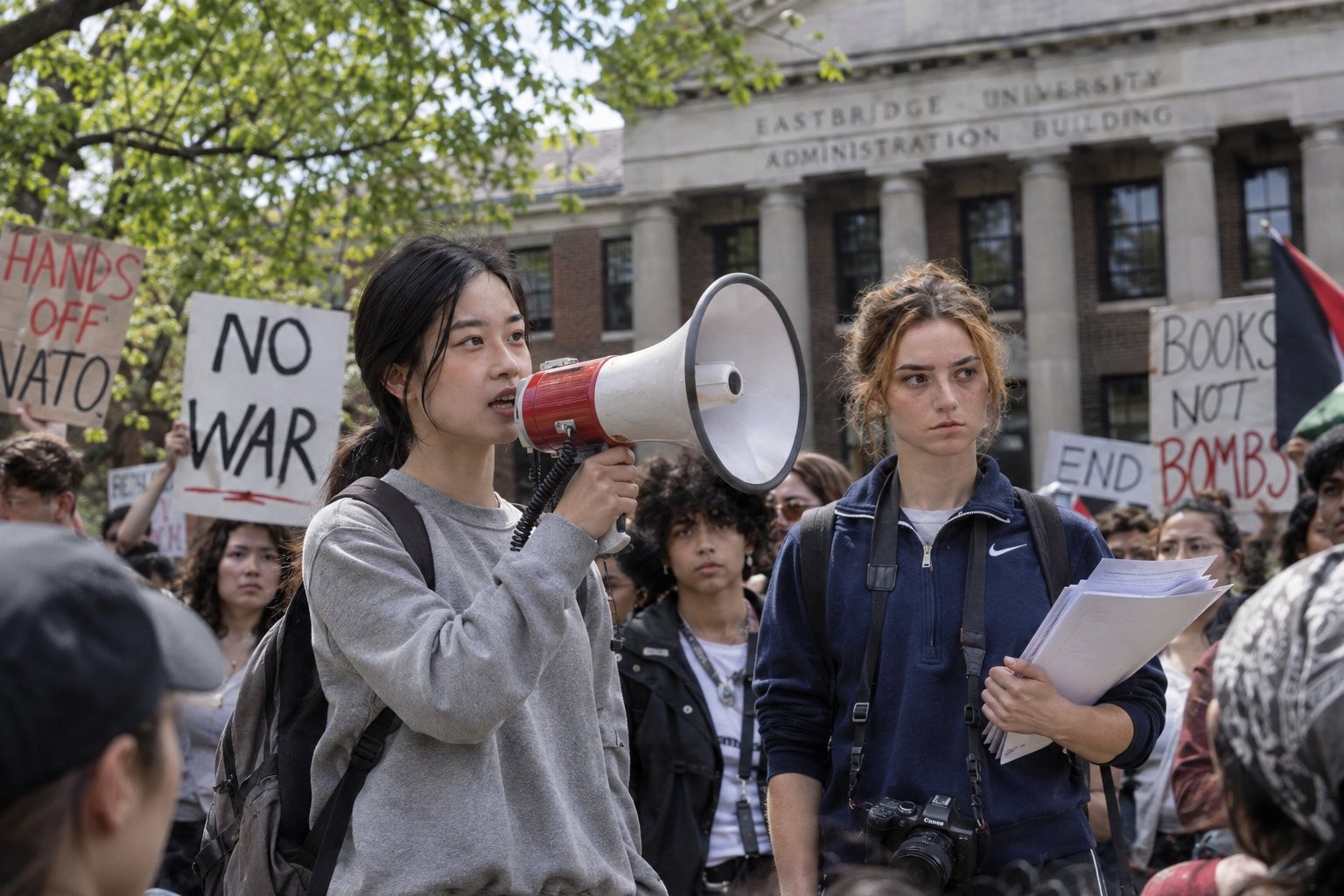
On May 19, Morgan attended the major anti-war demonstration outside Eastbridge University's administration building alongside Park.
The gathering attracted approximately 2,000 participants. Park addressed demonstrators through a handheld megaphone, while Morgan stood nearby with organizational materials and participated in the activities surrounding the demonstration.
Morgan was reportedly carrying a press camera and organizational documents when federal and local law enforcement officers intervened at approximately 3:40 p.m.
She was arrested alongside Park in front of fellow protesters and members of the press.
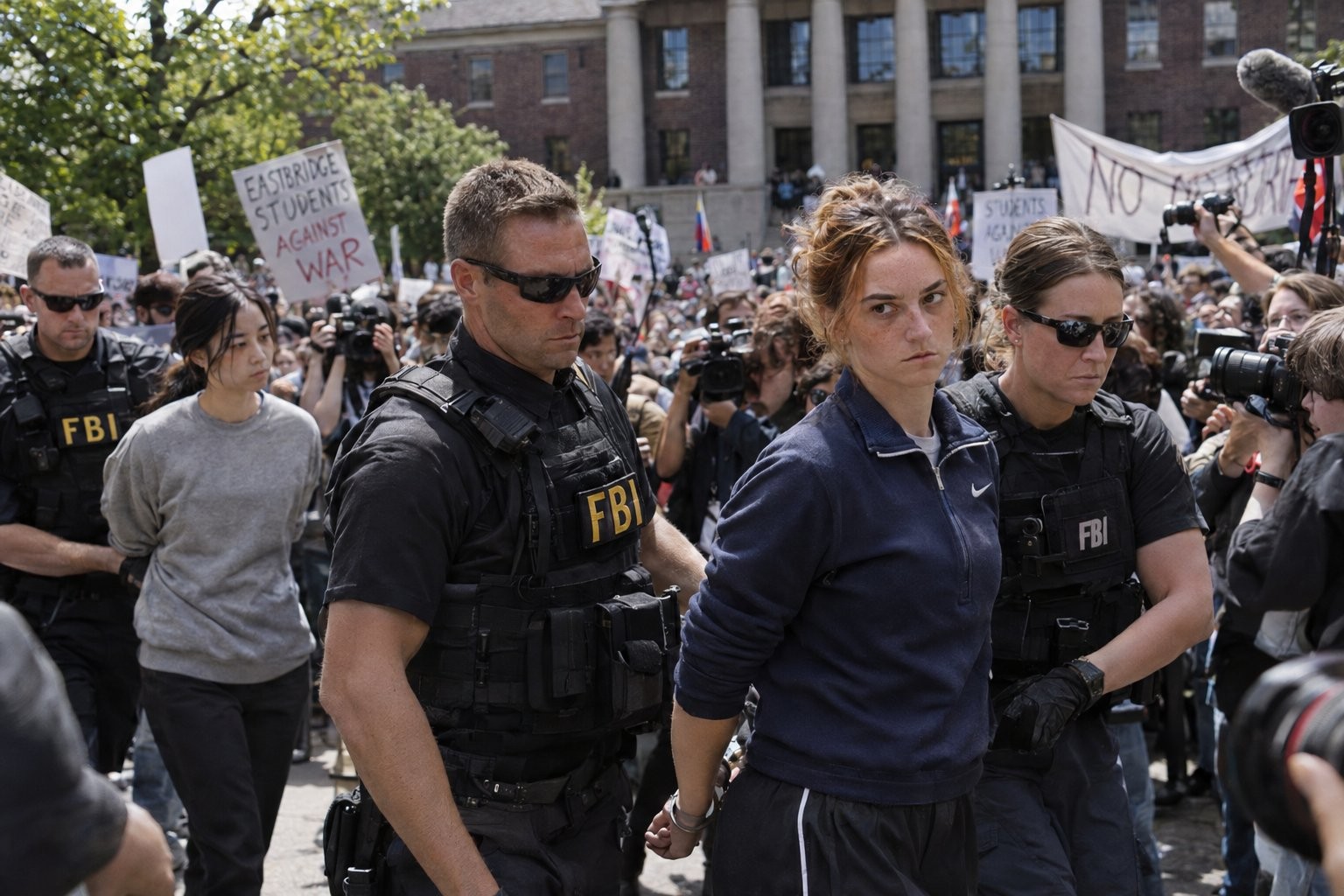

The camera has since become one of the more widely discussed details of her arrest. For a journalism student whose responsibilities within SPA included photographing demonstrations and documenting political activity, carrying photographic equipment was consistent with her established organizational role.
However, investigators are also examining the broader circumstances of her communications activities and her alleged involvement in distributing classified military information.
The presence of a press camera does not resolve those allegations. Nor does the fact that Morgan held a communications position within SPA establish, on its own, that she knowingly participated in the conduct under investigation.
Footage showing Morgan and Park being escorted away by officers circulated widely online in the hours following their arrests. The images transformed the two co-founders into the most recognizable figures in the growing controversy surrounding SPA.
A case with implications beyond the university
Morgan is being prosecuted alongside Park in the same federal case involving the alleged conspiracy to acquire and distribute classified military information.
The prosecution's allegations suggest that the government views the organization's publication and communications activities as part of a broader operation rather than as isolated acts of student political expression.
The defense, by contrast, is expected to emphasize the distinction between journalistic work and knowing participation in the alleged conspiracy.
That distinction could have consequences extending well beyond the two defendants.
University newspapers, independent student publications and organizations involved in political advocacy routinely handle sensitive political material. The question of what knowledge or intent is required before editorial and distribution activities become criminal participation is therefore likely to attract considerable attention from legal scholars and press-freedom advocates.
Morgan's academic background adds another dimension to the debate. Her interest in investigative reporting and documentary photography had formed part of her identity before SPA became the focus of federal scrutiny.
Whether those activities will ultimately be treated as evidence of ordinary journalistic work or as part of the conduct alleged by prosecutors remains to be determined through the legal proceedings.
From the university to federal custody
Following their arrests, Morgan and Park were transported to Appalachian Detention Complex (ADC), where they underwent booking and intake processing.
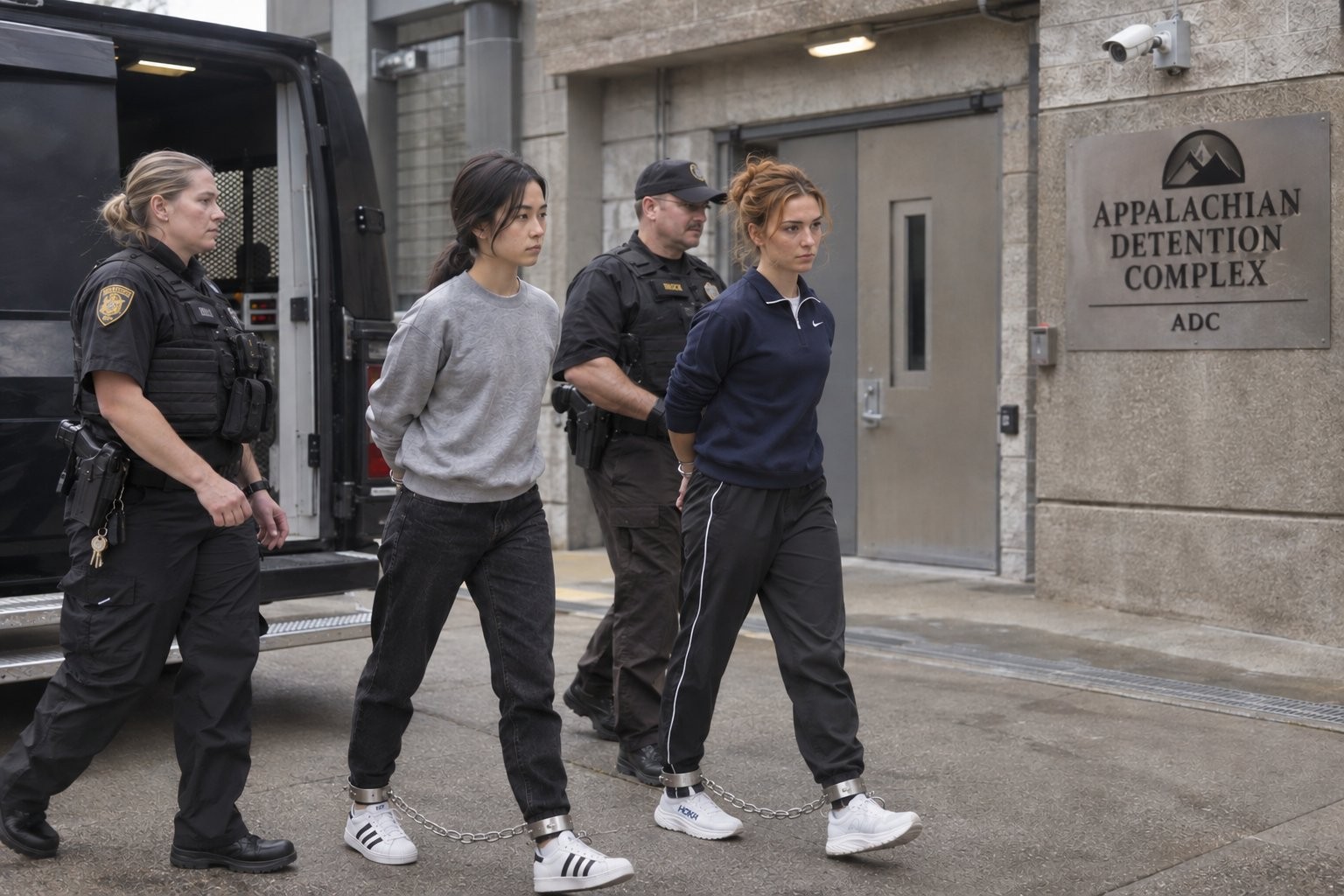
Both women were photographed in the facility's standard orange detention uniforms before being transferred to the secure housing unit.
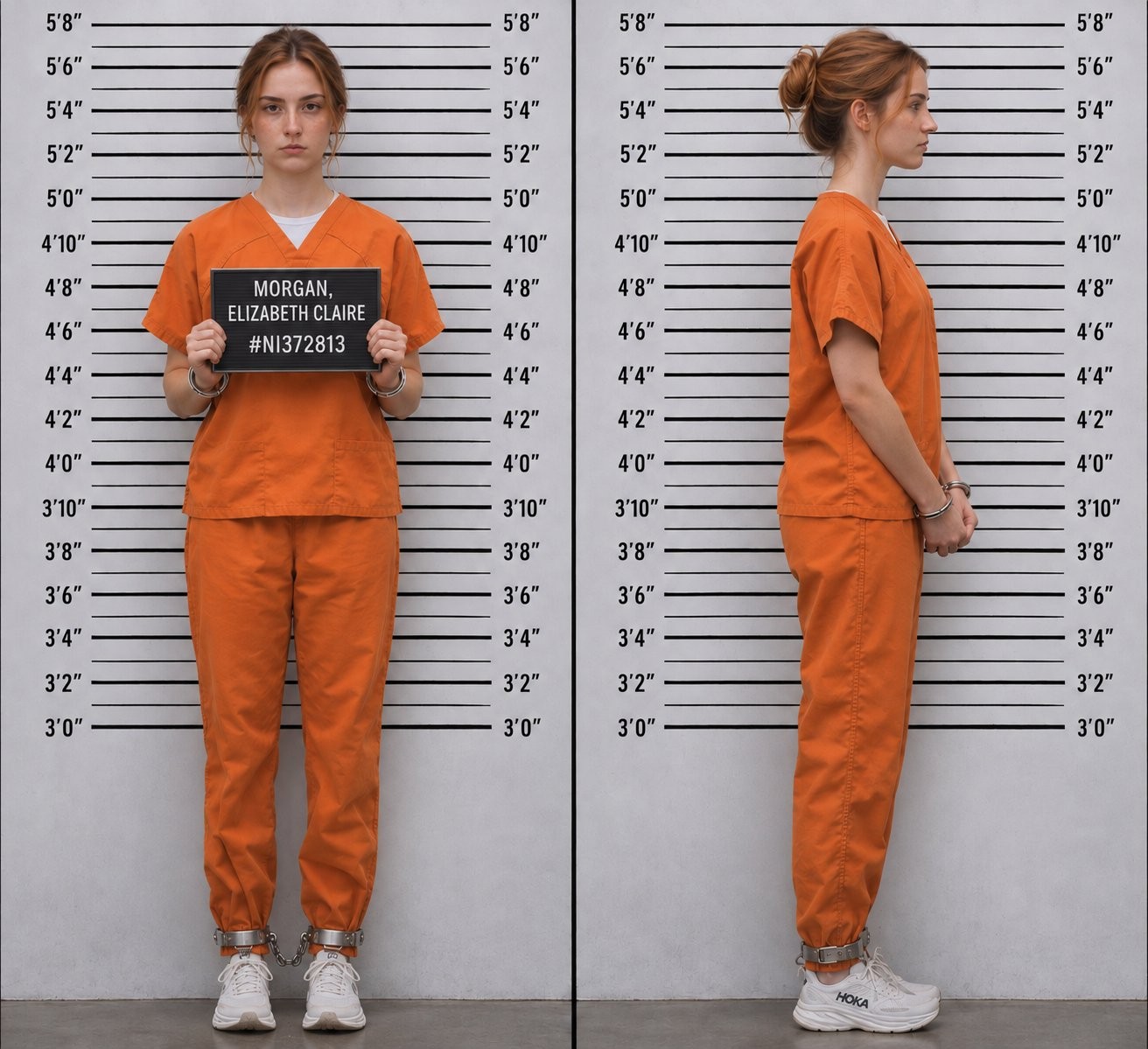
After completing intake, Morgan and Park were escorted by correctional officers through the detention complex's secure housing corridor. Both wore their newly issued orange uniforms as they were transferred to their assigned cells.
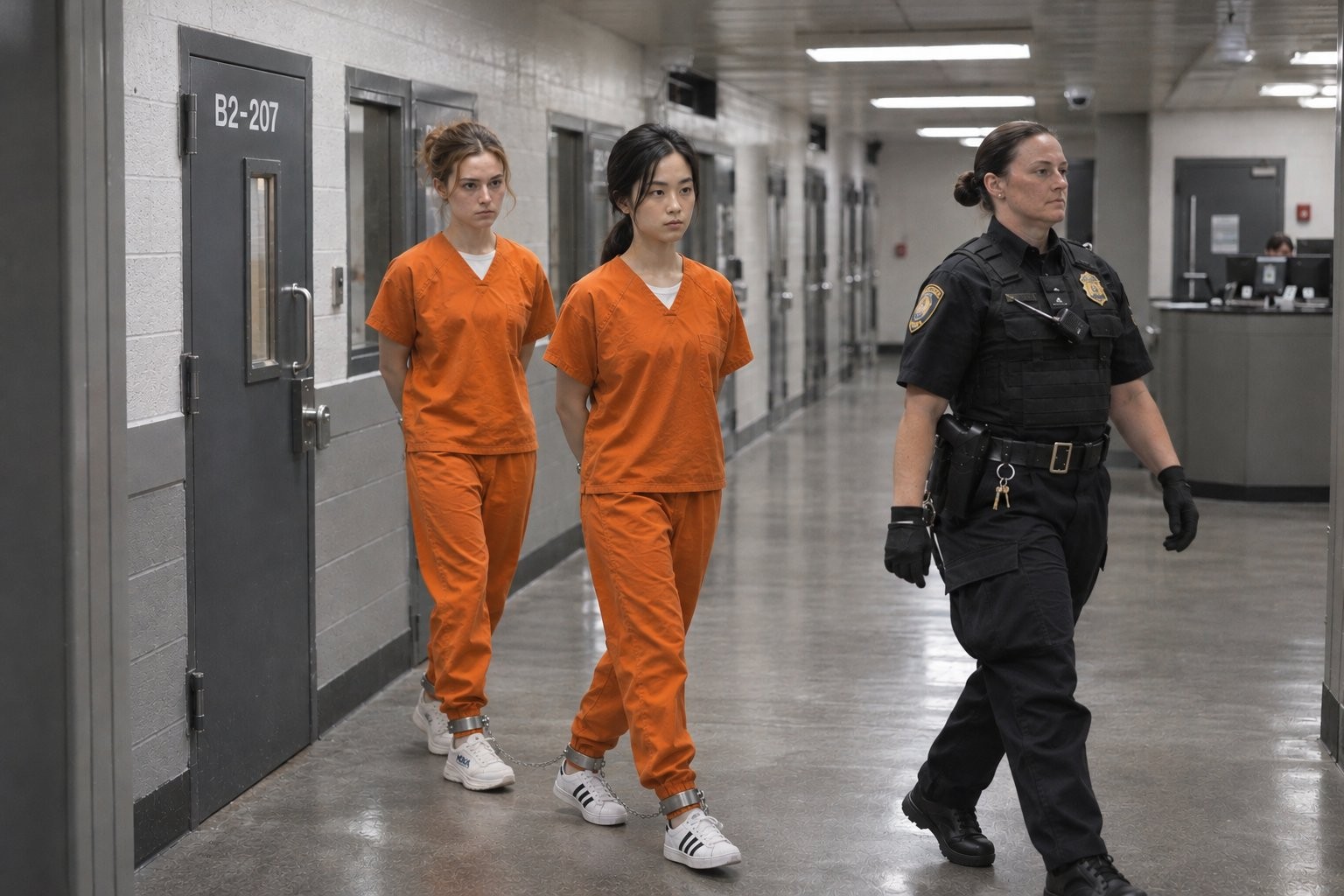
Morgan's first hours in custody marked a sharp departure from her previous activities at Eastbridge University. The press camera and organizational documents she had reportedly carried at the demonstration were no longer part of her daily routine. Instead, she entered a controlled institutional environment under correctional supervision.
She was assigned to an individual detention cell, where she remained under the facility's custody pending further proceedings.

The questions ahead
For Morgan, the immediate challenge is the federal case and the allegations concerning her role in SPA's activities.
For the government, the central task will be establishing the extent of her knowledge and whether her communications and editorial responsibilities amounted to knowing participation in the alleged distribution of classified military information.
For her defense, the challenge will be demonstrating why her activities should be understood within the context of student journalism, organizational communications and political advocacy rather than as participation in a national security conspiracy.
The two interpretations are sharply different, and the available public information does not yet provide a complete account of the evidence that will be presented in court.
Morgan's arrest has nevertheless made her an important figure in a national debate that extends beyond Eastbridge University. The case now touches on the responsibilities of student journalists, the treatment of political organizations and the government's authority to investigate activities involving classified information.
Before the investigation, Morgan's work was largely concerned with documenting events and communicating political arguments to the public. Now, her own activities have become the subject of federal scrutiny.
The question facing the courts is not simply what SPA published, but what Morgan knew about the material it distributed and what role she played in its acquisition and circulation.
For a journalism student who had sought to document the actions of others, the focus has now shifted to her own decisions.
Her case is only beginning.