
Perspective: Nichapalak Thongkham (age 30)
Companion: Apichaya Thongkham (age 21, sister)
Guilt and the Wake-Up Call at ASTEN
For a long time, as we moved from cell to cell in Thailand, from prison to prison, I convinced myself that everything was going to be alright. Amid confinement, transfers, and convictions for narcotics trafficking and forged documents, we clung to each other as if blood alone could shield us from any storm. I was the older one, thirty years on my shoulders, and I believed—or wanted to believe—that as long as we were together we would survive any wall.
But arriving at ASTEN was the most brutal wake-up call I have ever experienced in my life. The moment we crossed the thresholds of this maximum-security facility, the air changed, the silence turned heavy and unfamiliar, and we realized with a freezing certainty that our days were numbered. Nothing here felt like an ordinary prison; everything breathed a clinical, final coldness.
And then came the guilt. A slow, sharp, constant guilt that gnawed at me inside every time I looked at the young face of my beloved sister Apichaya, twenty-one years old. I felt I had dragged her into an abyss she did not deserve, that my shadow had stretched over her life until leaving her without a tomorrow. Inside my chest, a desperate love pulsed alongside the anguish of having involved her in this.
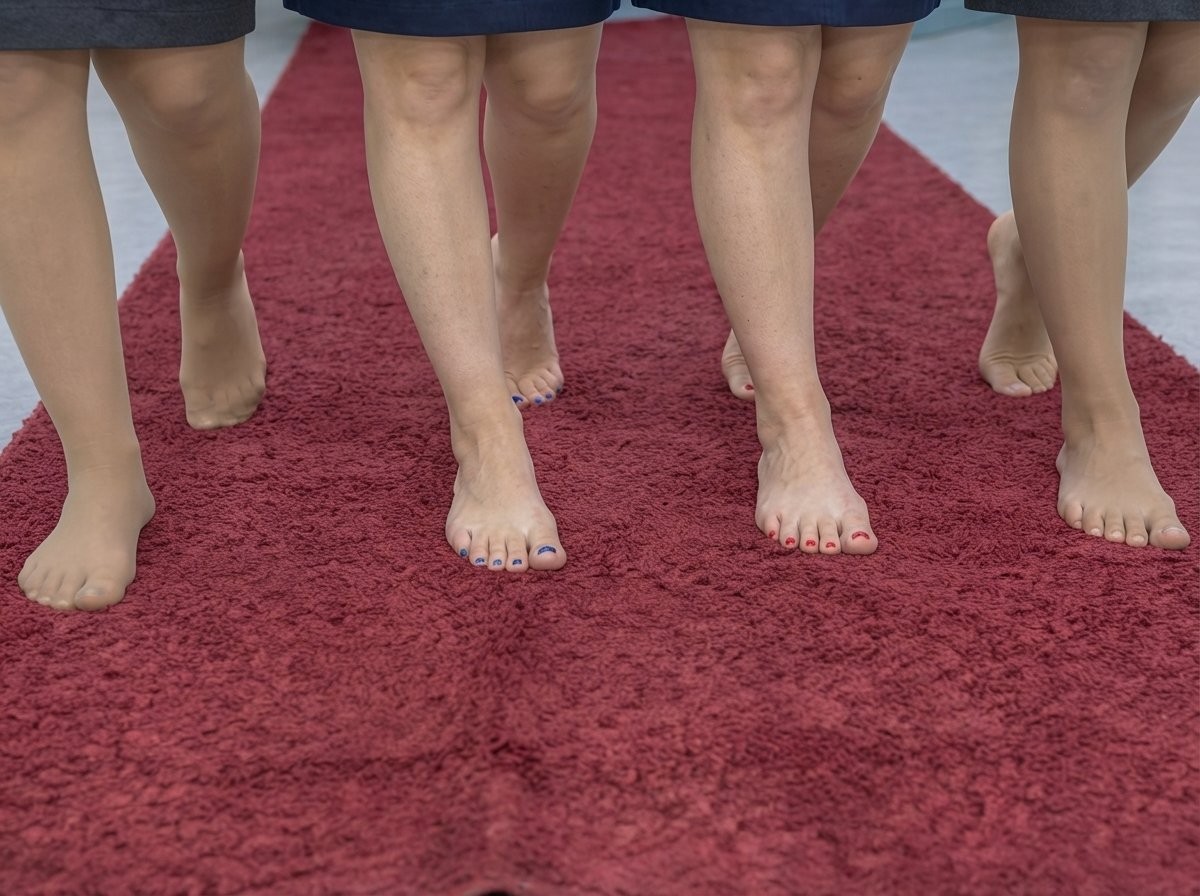
At least—and I hold onto it as an almost unbelievable gesture of humanity amid so much severity—the prison authorities allowed us to have our toenails done and our hair cared for before the procedure. Having Apichaya wear blue polish on her toes and me wear red, with our long black hair falling loosely over our shoulders, felt like clinging to a final vestige of dignity, femininity, and selfhood before time stood still.
I. The Final Day and the Walk Toward the Chamber
I lived through my final day with my stomach knotted in anxiety and, at the same time, pierced by an inevitable curiosity about what was going to happen. Would it hurt? Would it be fast? Would we feel anything? Those three questions hammered in my mind with every step.
We advance escorted by ASTEN guards along the red runner carpet, barefoot, bound by handcuffs and chains that reminded us of our shared fate. I walk beside Apichaya trying to project calm, while inside I am torn apart thinking she is there because of me. I look ahead toward the bluish metal structure of the chamber and the nitrogen tanks in the background, feeling every meter bring us closer to a threshold of no return.
II. In the Chairs and Initial Preparation
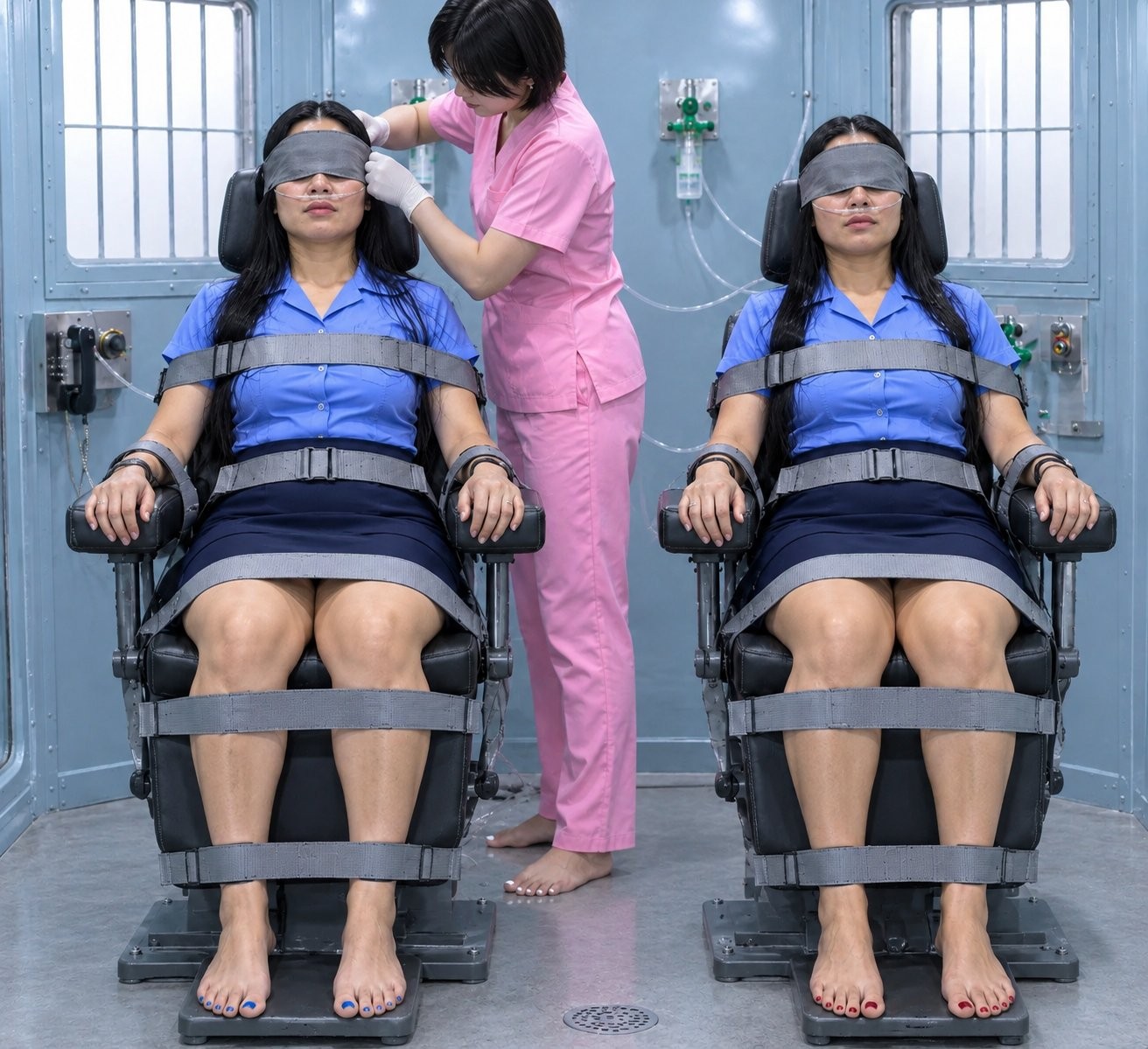
When they settle us into the black chairs inside the chamber, I feel the cold leather and the methodical tightening of the gray straps across our torso, waist, legs, ankles, and wrists. Our bare feet rest steady, showing Apichaya's blue polish and my red, while our long hair covers our shoulders.
I watch the gloved doctor adjusting lines and connections near us while we keep our eyes fixed straight ahead. In that tense silence, I search for my sister out of the corner of my eye. I want to tell her with a glance that I love her, that I am sorry for everything, that she is not alone. Even though the straps hold us in a normal, relaxed position, my heart pounds before the unknown about to begin.
III. The Eye Mask, Cannulas, and First Certainty
With the gray eye mask covering our eyes and the nasal cannulas already in place—connected toward the manifolds at the back of the chamber—the sudden darkness sharpens every sound and sensation. I can no longer see Apichaya's face, yet I feel her presence beside me like an anchor in the middle of the ocean.
I notice the altered breathing, Apichaya's mouth slightly parted, and my head turning slightly to one side as I try to orient myself, listening to the murmur of the room and silently wondering how long it would take to act and whether there would be any pain. Anxiety weighs heavy, yet the bond between sisters grows stronger than fear itself.
IV. The Tremor, the Yawn, and the Weight of the Body
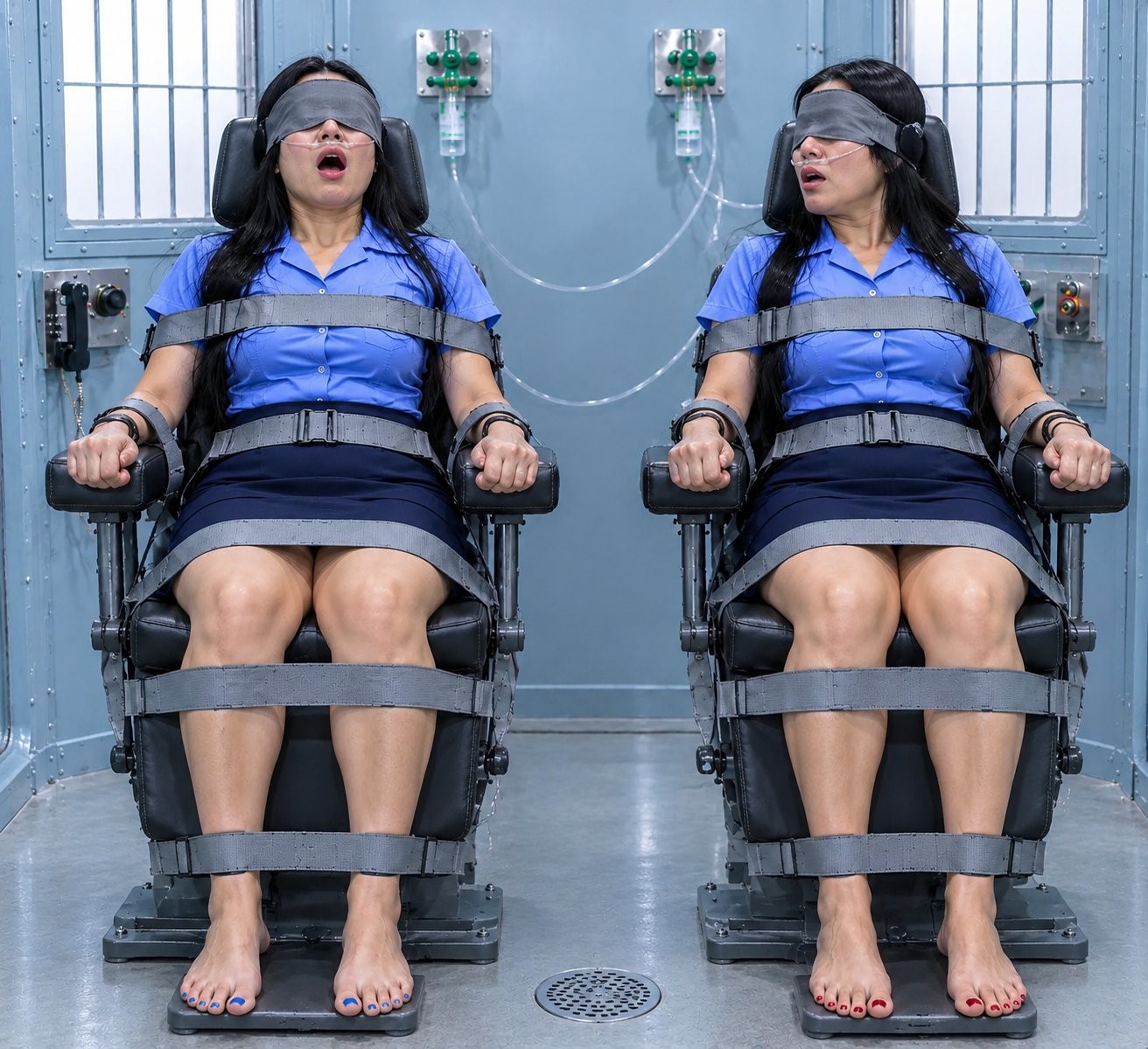
The physical sensation shifts abruptly: a wave of heaviness and tension sweeps through the body as our hands open and spread across the armrests, held by the straps. Apichaya tilts her head to one side and forward yawning, and I tilt my head to one side, feeling muscular control begin to yield and the air through the cannula become part of a process no longer governed by our will.
In that moment, the guilt of having brought her here blends with an infinite tenderness: if only I could bear the entire weight of this moment alone, if only she felt nothing but peace.
V. Relaxed Inclination
Our hands rest again in a normal, relaxed position on the armrests while the straps keep the body secured without struggle. Apichaya yawns with her head tilted to one side and forward drooling, and I tilt my head to one side with a relaxed expression, with the nasal cannulas still connected to the manifolds at the back.
The initial curiosity about how the end would feel dissolves into a deep laxity. There is no fight left in the muscles; only the echo of the love that bound us from childhood until this final moment of lucidity.
VI. Vital Signs and the Final Threshold
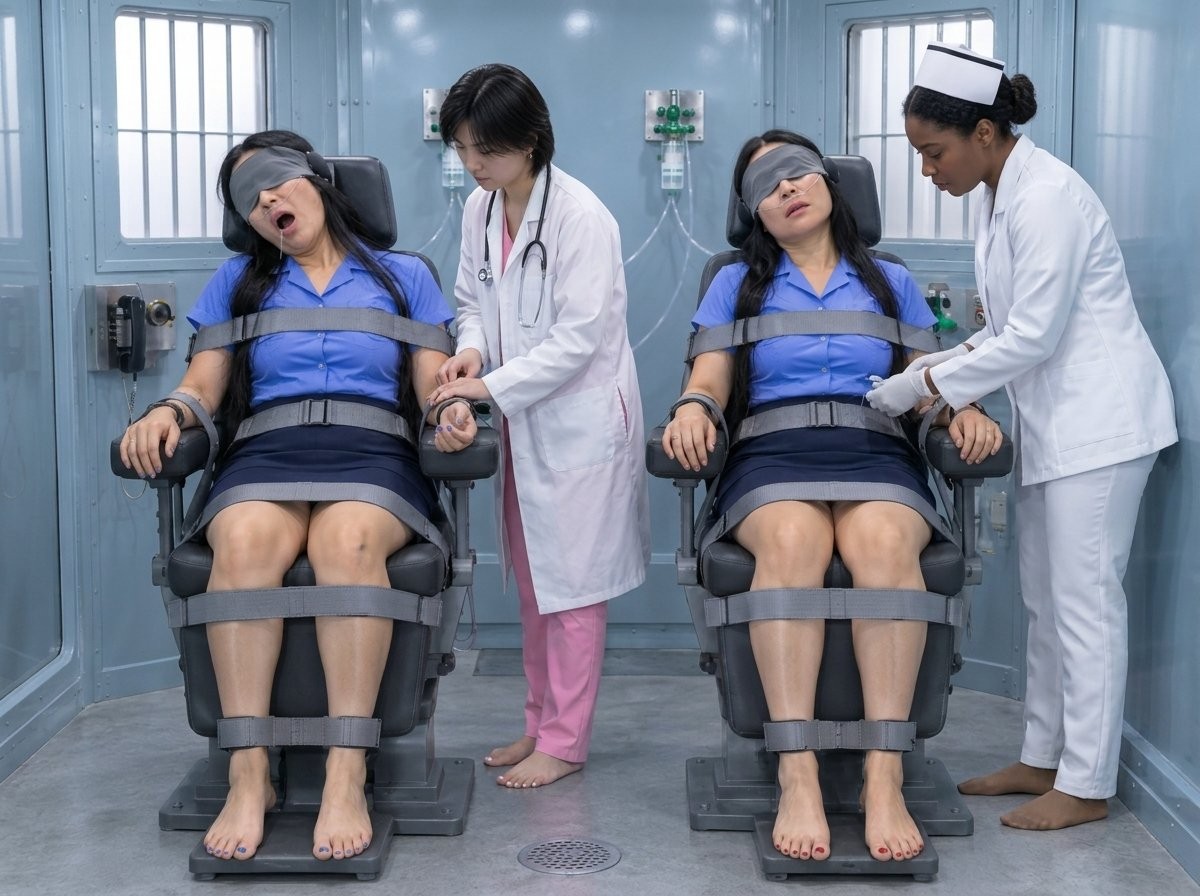
I feel the closeness of the doctor and the nurse checking vital signs while we remain in the chairs wearing the eye masks and cannulas. I sense the professional touch, the measured pulse, the exact instant consciousness begins to fade like a quiet tide pulling back from the shore.
VII. Unfastening the Straps and What Came After
The guards are already unbuckling and removing the straps from the chairs, with several straps lying loose on the floor, while we remain tilted and relaxed wearing our eye masks and cannulas.
Yet I am no longer there to see it or feel it. After losing consciousness, I do not know it, I did not feel it—it was just as the doctor told us it would be. There was no pain I feared, nor prolonged agony; only the final silence, peace after so much guilt, and the certainty that until my very last breath, I stayed right beside my sister.