
ASTEN SUPERMAX FACILITY
CONFIDENTIAL TESTIMONIAL REPORT
Classification: STATE SECRET — RESTRICTED ACCESS
Author: Dr. Himari Tsumugi
Title: Director of Research and Clinical Oversight, NT-EXP Program
Recipients: Director Karl Anton and ASTEN Executive Council
Subject: Chronological retrospective report of the first experimental operation involving two female inmates of Thai nationality.
Statement of Dr. Himari Tsumugi
«I never imagined the day would come when I would have to write a report like this. For years, my work consisted of researching, developing, documenting, and evaluating experimental protocols. That night, however, my role ceased to be exclusively academic. ASTEN leadership entrusted me with a responsibility I could not delegate: personally supervising the first application of our NT-EXP experimental program.»
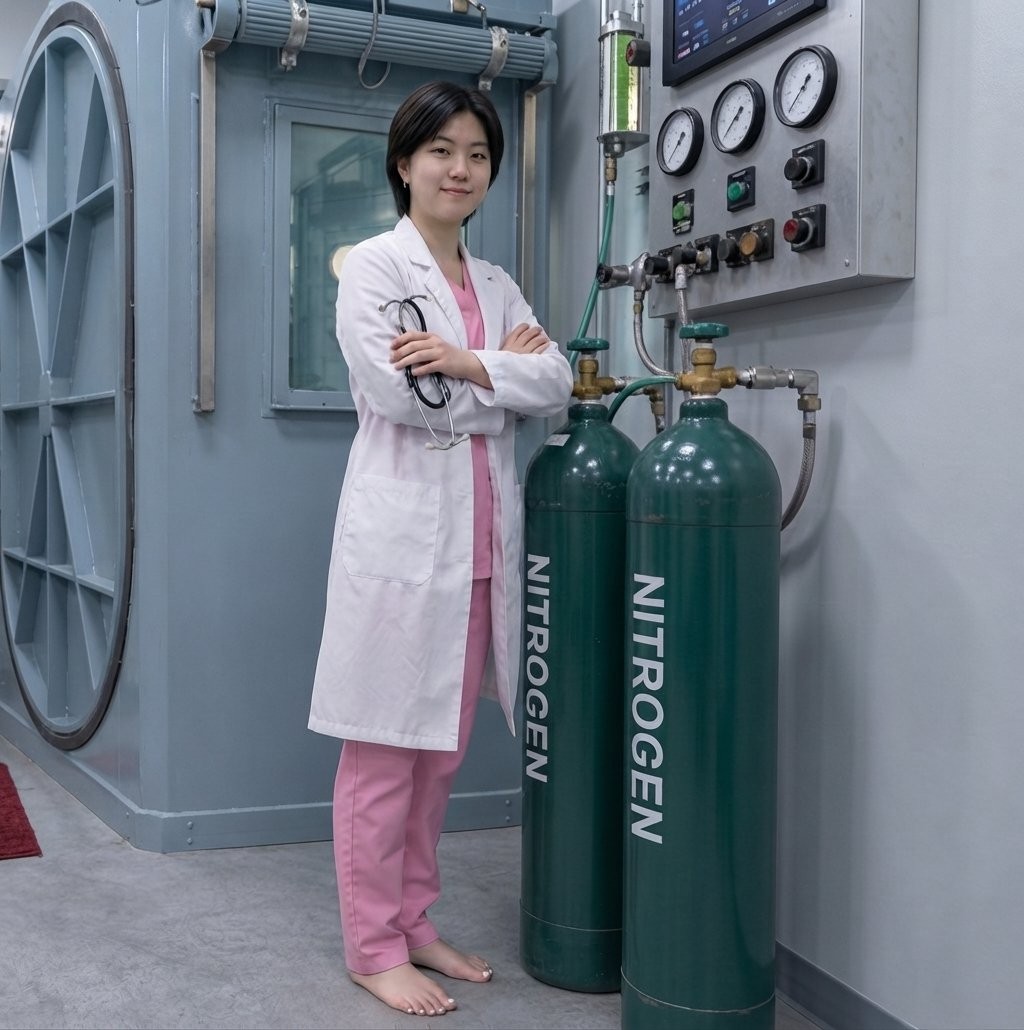
I want to begin by expressing my gratitude to Director Karl Anton for the trust placed in my team and in my research work. Likewise, I acknowledge the institutional cooperation of the Thai authorities, whose authorization and coordination made it possible for both inmates to be brought under our jurisdiction under a regime of extraordinary confidentiality.
The circumstances surrounding the arrival of Apichaya Thongkham and Nichapalak Thongkham were exceptional. These were not two routine prison admissions. Their file was subject to diplomatic, administrative, and security restrictions that required a response entirely different from our standard procedures.
From the moment we received their files, I understood that the success of the operation would not be measured solely by its administrative outcome. It would also depend on our ability to maintain documentary integrity, institutional discipline, and absolute control over information.
I. File Intake and Transfer
September 28, 2026 was recorded as the date both inmates entered ASTEN. Apichaya, age twenty-one, and Nichapalak, age thirty, arrived under a joint administrative designation. Their files contained information regarding their arrest in Bangkok, charges related to international narcotics trafficking, falsified documentation, and sentences handed down by a Thai court.
The documentation I received was marked on every page with access restrictions. There were explicit instructions not to generate unnecessary duplicates and to limit circulation of the inmates' names to personnel directly involved. My initial review confirmed that both women would be treated within the same experimental program, while maintaining individual clinical records.
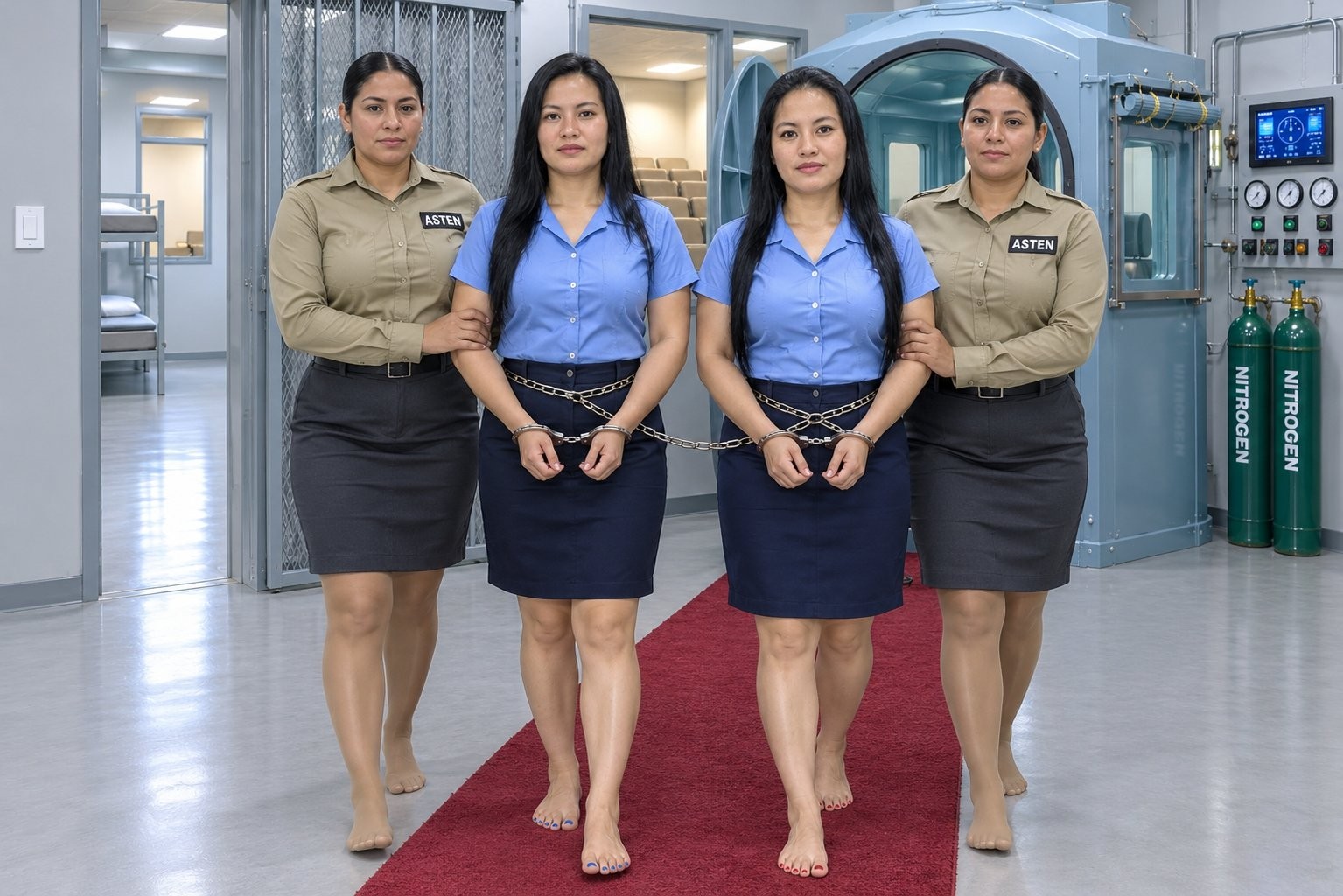
In the visual record corresponding to their escort toward the assigned area both inmates are seen advancing flanked by facility guards, walking barefoot along the red runner carpet toward the chamber—with Apichaya wearing blue nail polish on her toes and Nichapalak wearing red. At that stage, I still viewed them primarily as evaluation subjects within a protocol. Documents, signatures, codes, and authorizations formed the framework of my work. The human reality of the two inmates became more evident when I finally stood before them.
II. Maximum-Security Wing Preparation and Entry Protocol
Leadership decided that the procedure would take place in ASTEN's maximum-security wing. That choice reflected the classified nature of the case, the transfer conditions of the inmates, and the institutional need to keep the area completely isolated from ordinary prison operations.
The section underwent an extraordinary inspection. Staff access was restricted, activities unrelated to the program were suspended, and an independent log was established for everyone authorized to enter. The atmosphere inside the wing was very different from any other part of the facility: doors remained closed, communications were limited, and staff had been instructed to avoid unnecessary conversation.
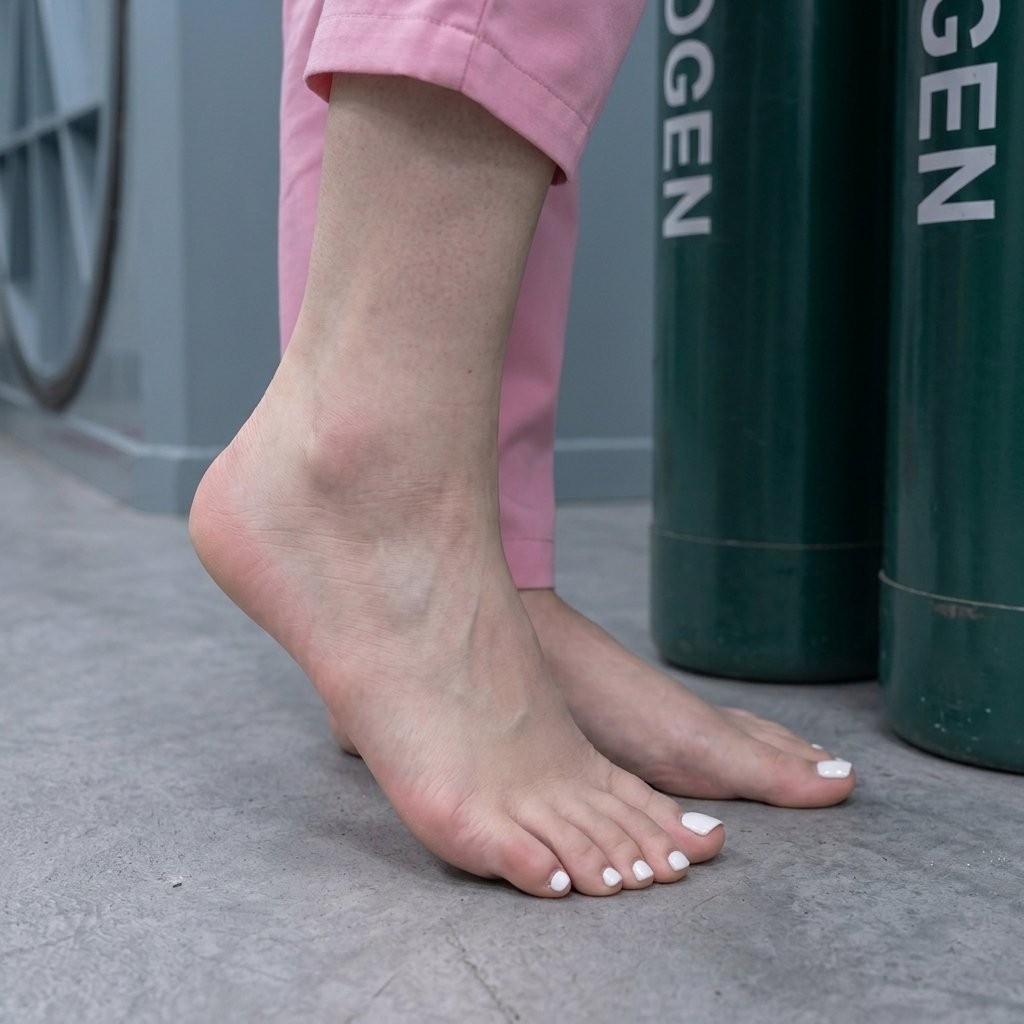
All working personnel had to comply with the dress and entry protocol established for that zone. The admission policy required remaining barefoot inside the control enclosure as an internal measure of identification and compliance with the security protocol. For me, it was the first time entering the maximum-security wing under these conditions; I prepared to remain barefoot the entire time and, by way of a light personal touch amid the tension of the moment, got a pedicure with white polish for the occasion.
There were no visitors or family members in the enclosure—only authorized personnel and those directly connected to the case.
III. Final Document Review and Restraint
Before starting, I personally reviewed Apichaya's and Nichapalak's documentation. Both files contained administrative authorizations, inmate identifications, intake records, and signatures corresponding to the institutional chain of custody. I verified that the identities matched the records and that the documents were complete.
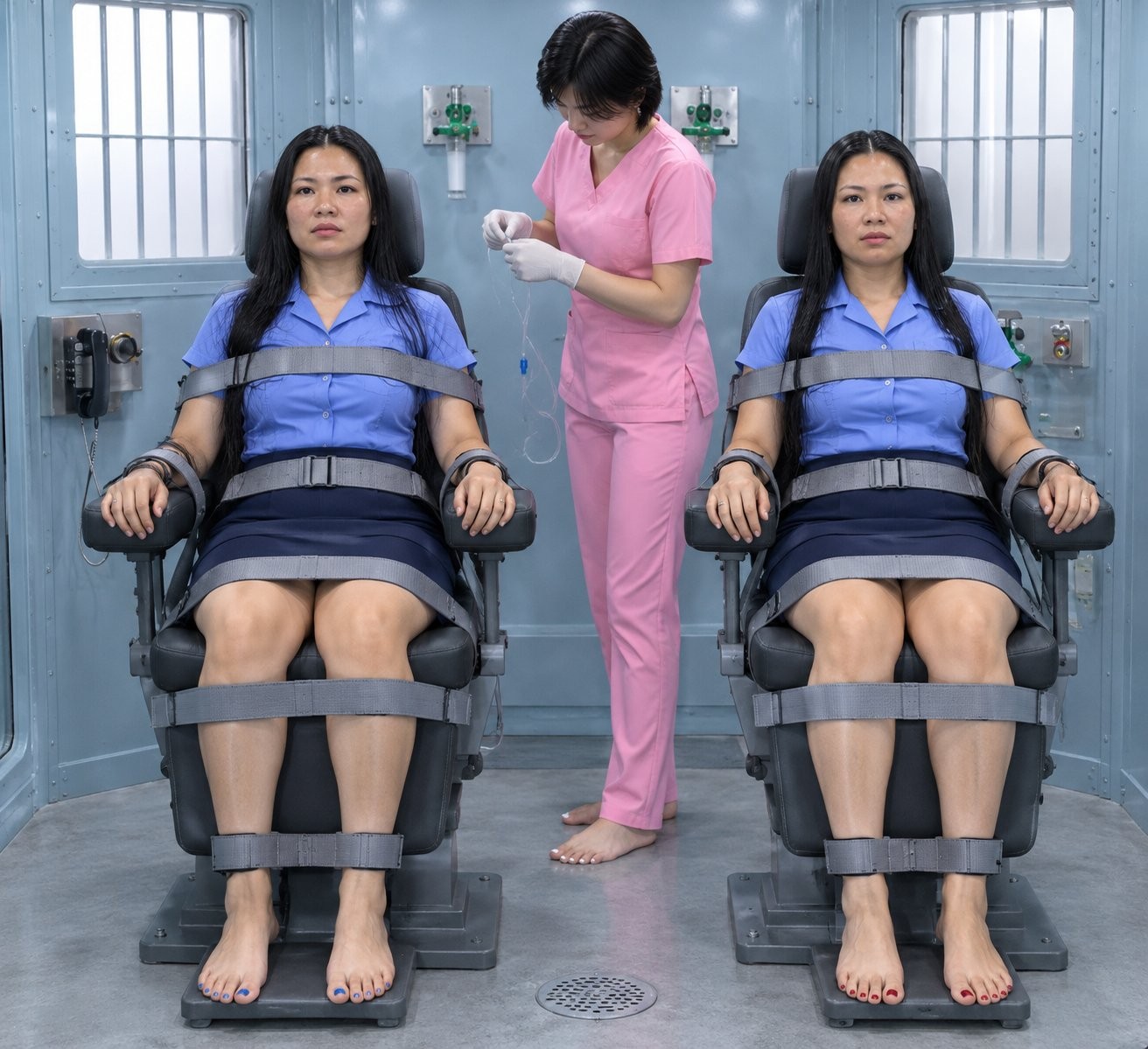
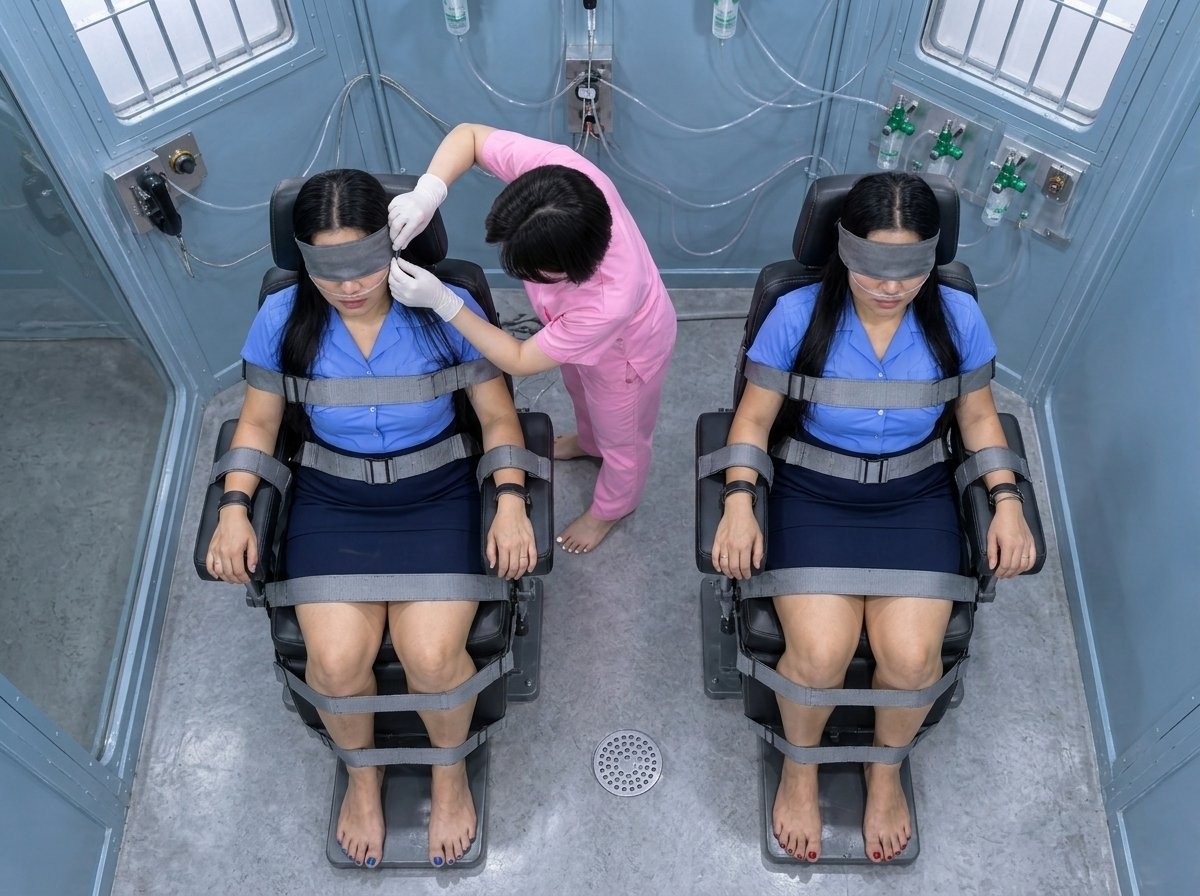
In scen, both inmates are already seated in the black chairs inside the bluish-lit chamber, secured with gray straps across the torso, waist, legs, ankles, and wrists, with their bare feet resting in place. During this initial preparation phase, gloved staff perform preliminary checks and line/equipment connections around the chairs while both inmates look straight ahead in strict, tense silence.
Up until then, meetings had revolved around evaluations, simulations, reports, and theoretical reviews. Now we had two real people in front of us, and that shift was impossible to ignore.
IV. Encounter, Eye Mask, and Cannulas
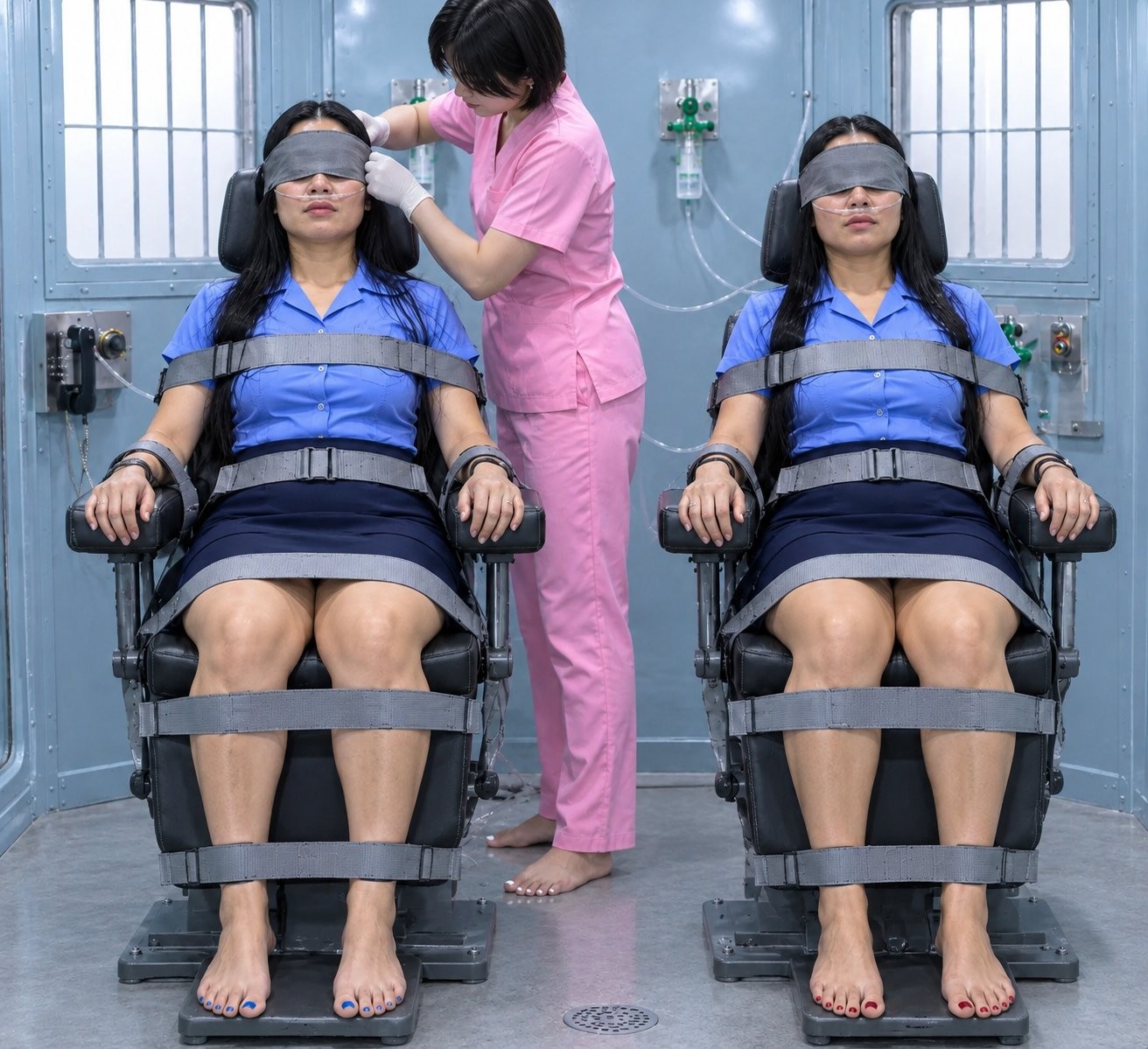
When I saw them at closer range inside the enclosure, both remained still in their respective chairs. Apichaya kept her face slightly raised, her black hair falling over the shoulders of her blue uniform. Nichapalak, seated to her right, appeared more reserved, with a measured posture.
The moment is captured as the gray eye mask is adjusted over the inmate's eyes and the placement of the nasal cannulas connected toward the manifolds and lines at the back of the chamber is verified.
Nichapalak turned her head slightly toward her sister; Apichaya responded with a small movement. It was a nearly imperceptible exchange, yet in that instant they ceased to be two experimental codes: they were two sisters sharing the same space who seemed to seek each other's presence.
V. Technical Briefing to the Thai Delegation
As lead researcher, my responsibility was to oversee institutional compliance with the program, verify authorized actions, maintain the record, and report any incidents to Director Karl Anton.
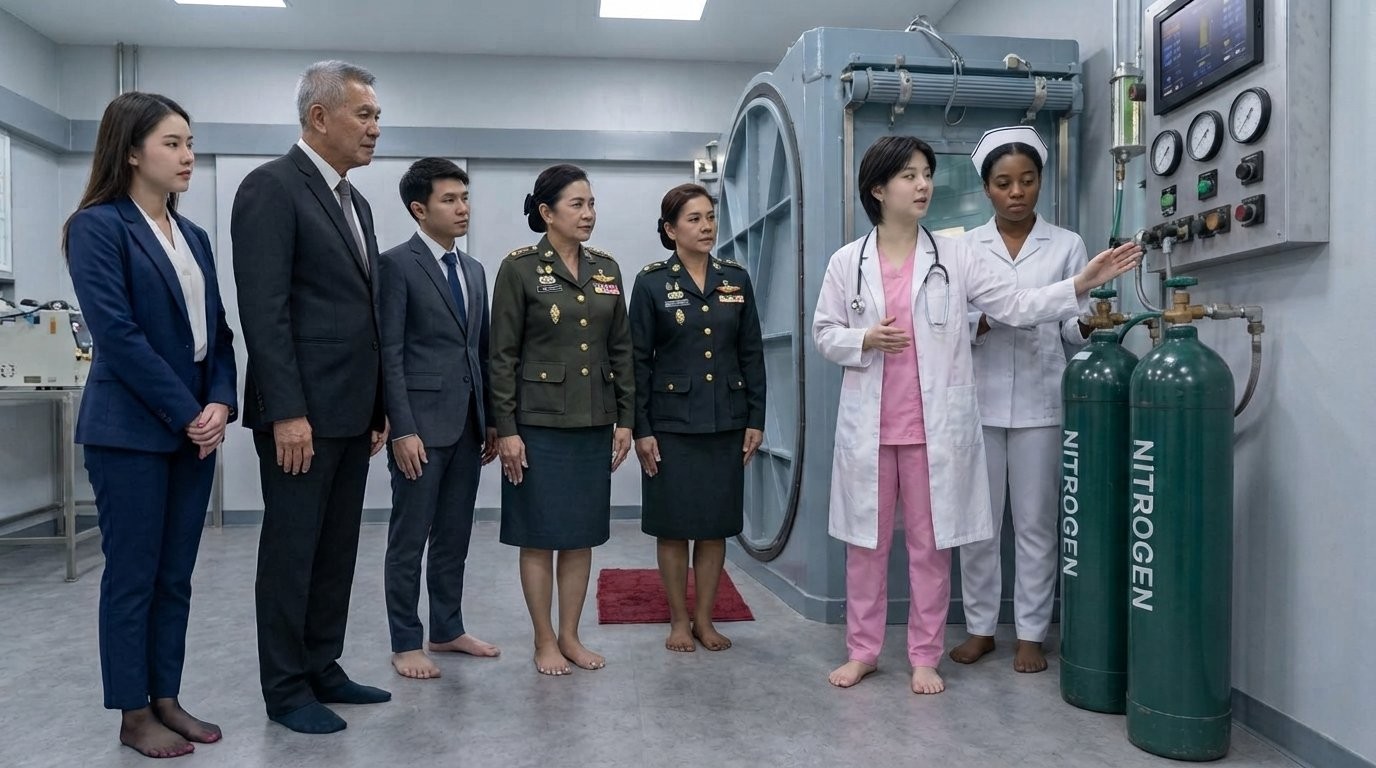
During the phase prior to final activation, alongside Nurse Frances Thomas, I explained the procedure in detail to the delegation of Thai officials present in the room—comprising the two men in business suits with matching socks, the two female military officers with decorations barefoot without hosiery (silver polish on the older officer and brown on the younger), and the young female diplomat wearing nylon hosiery and fuchsia nail polish.
I outlined how the NT-EXP experimental method worked, what it entailed operationally for the inmates confined in the chairs, and roughly how long the protocol took to act under controlled conditions. The complete technical documentation remained under special classification, so I restricted myself to authorized aspects of oversight and institutional explanation.
VI. Preceding Moments and Observed Reactions
The final part of preparation passed with an uncanny calm. The lights were on, the metal panels reflected a bluish glow, and the black chairs stood motionless in the center of the facility.
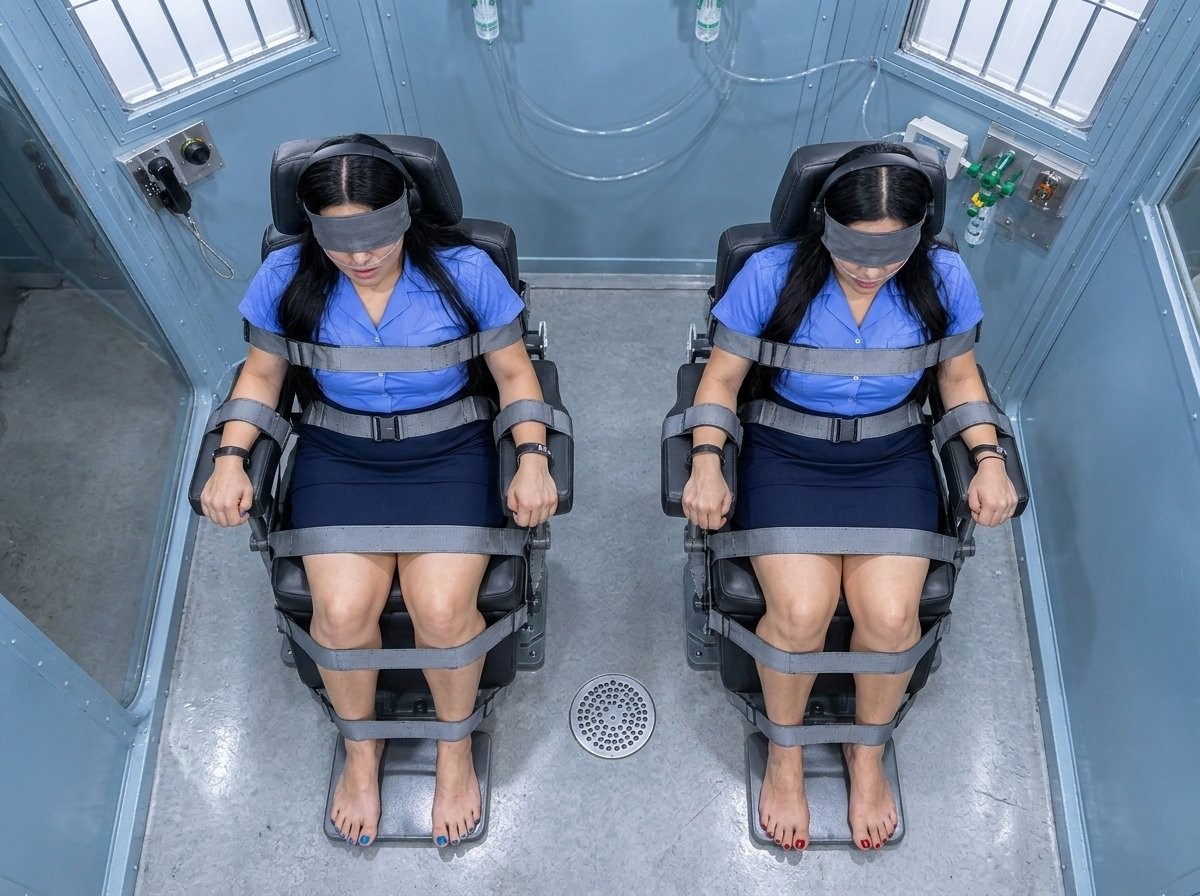
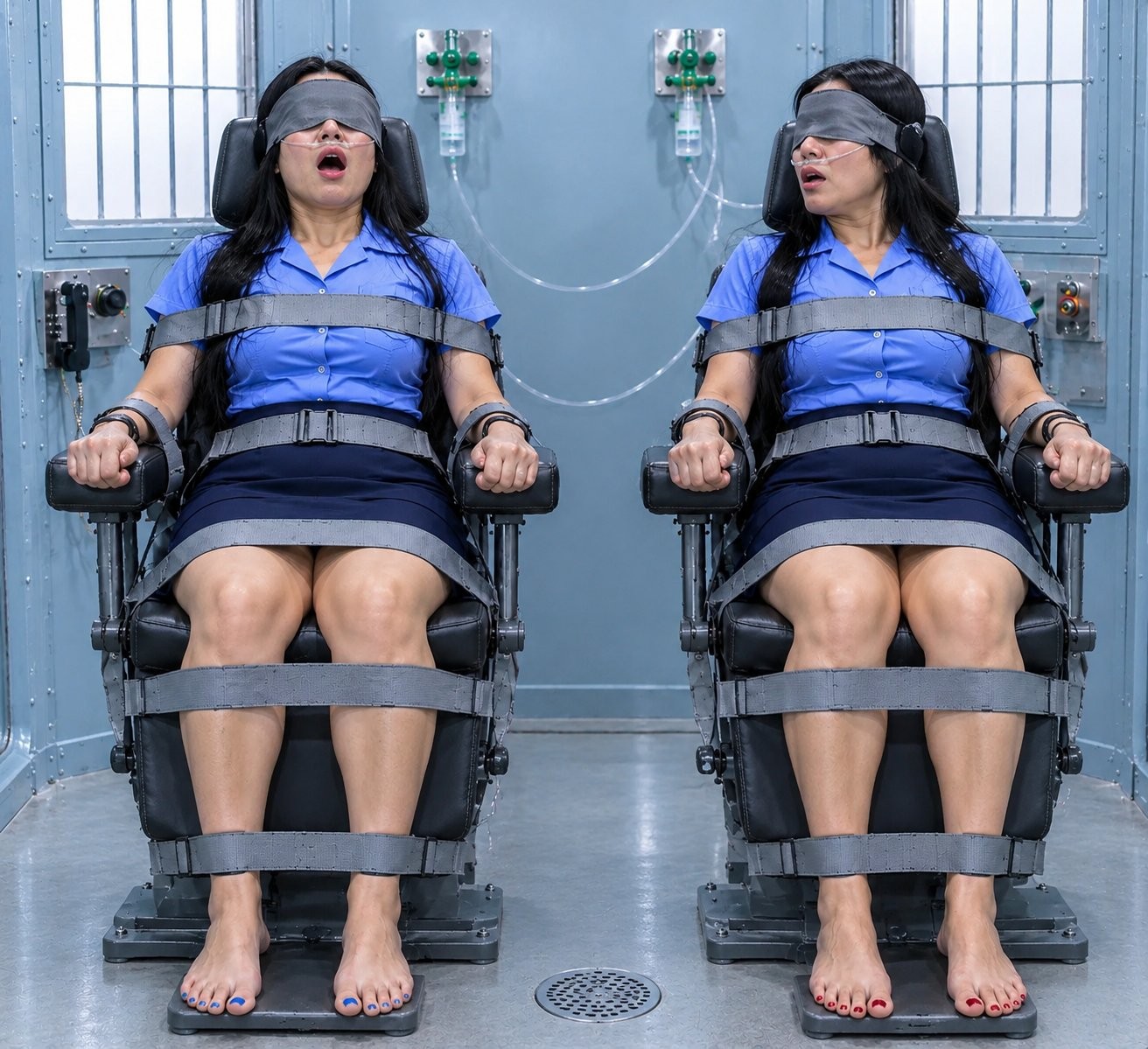
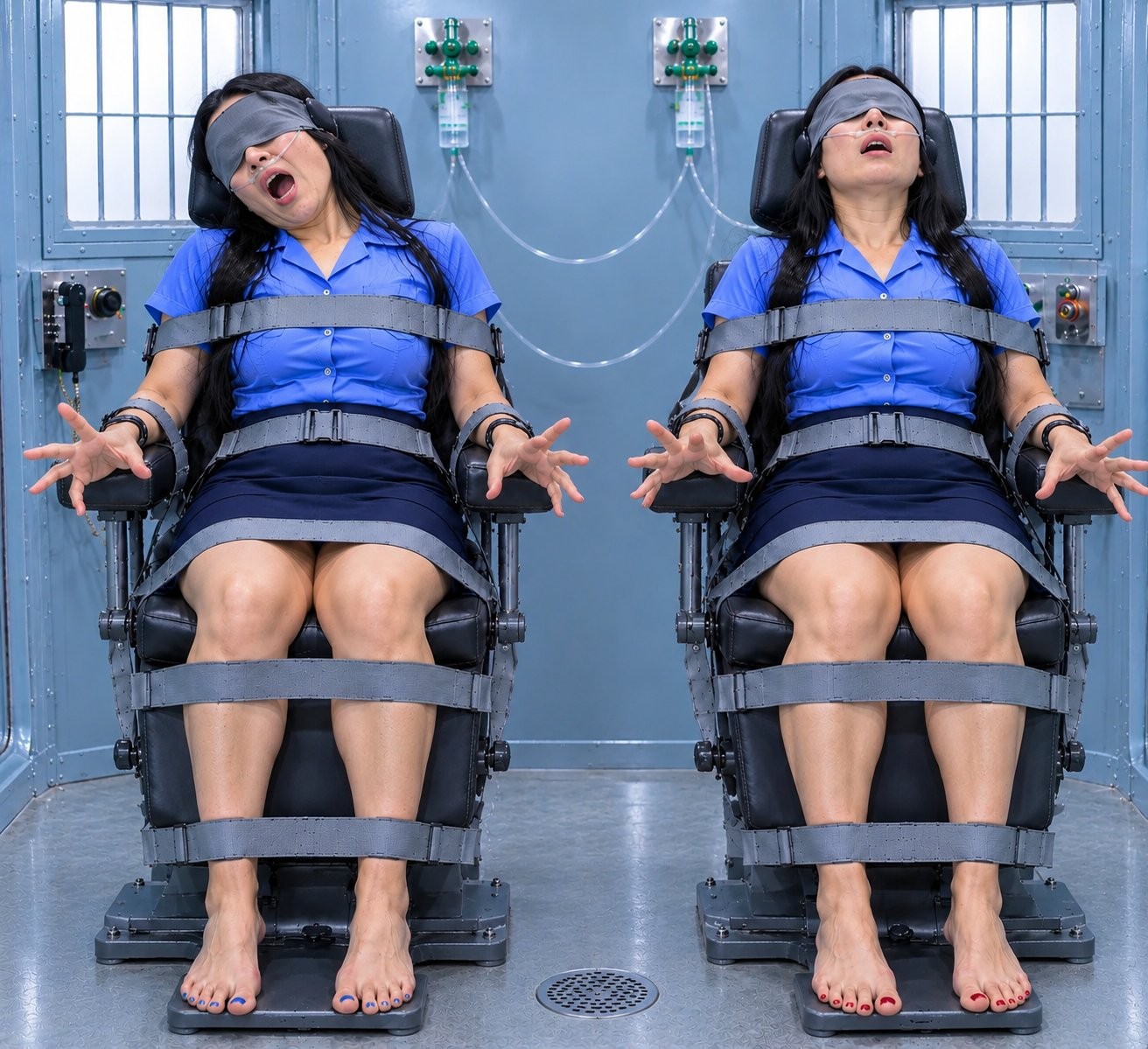
- Adjustment and initial response : With eye masks on and nasal cannulas connected to the manifolds at the back of the chamber, both inmates remain secured in a normal position; one is seen with her mouth slightly open and the other turning her head slightly to the side.
- Tilt and muscular tension : In this sequence, one inmate tilts her head to the side and forward yawning, while the other tilts her head to the side, and both extend and spread their fingers on the armrests while held by the straps.
- Relaxation phase and tilt : Their hands rest relaxed again on the armrests in a normal position; Apichaya yawns with her head tilted to one side and forward drooling, while Nichapalak tilts her head to one side with a relaxed expression, keeping the nasal cannulas connected to the manifolds at the back.
Everything we had designed to preserve order appeared to be functioning just as planned. Still, I could not stop thinking about a question absent from evaluation sheets:
What does it mean for a procedure to have functioned properly from an institutional standpoint when the outcome is irreversible?
VII. Vital Signs Monitoring and Nitrogen Valve Manipulation
Prior to get inside the chamber, Nitrogen flow is cut and al valves must be closed
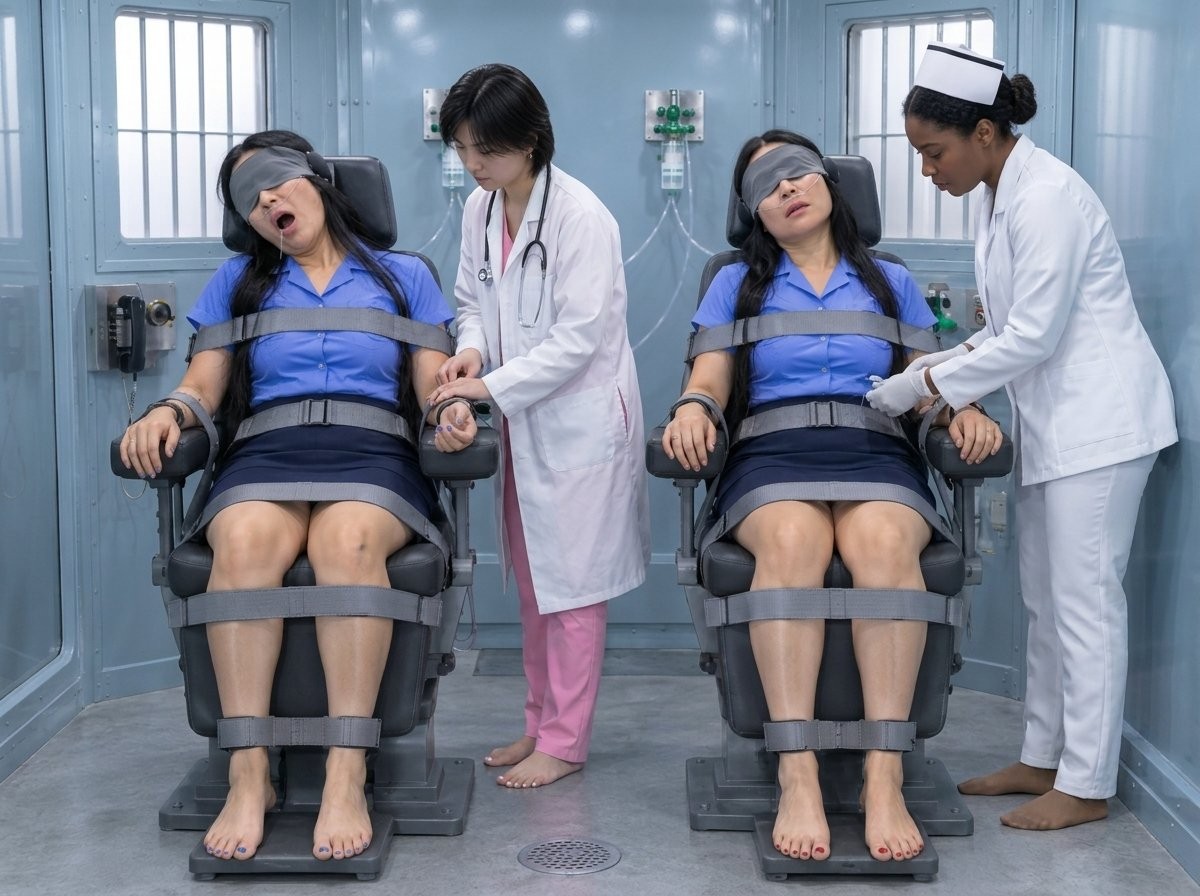
- Vital signs check: Vital signs monitoring and clinical checks are shown beside the relaxed inmates secured in their chairs, with direct participation from medical and nursing staff.
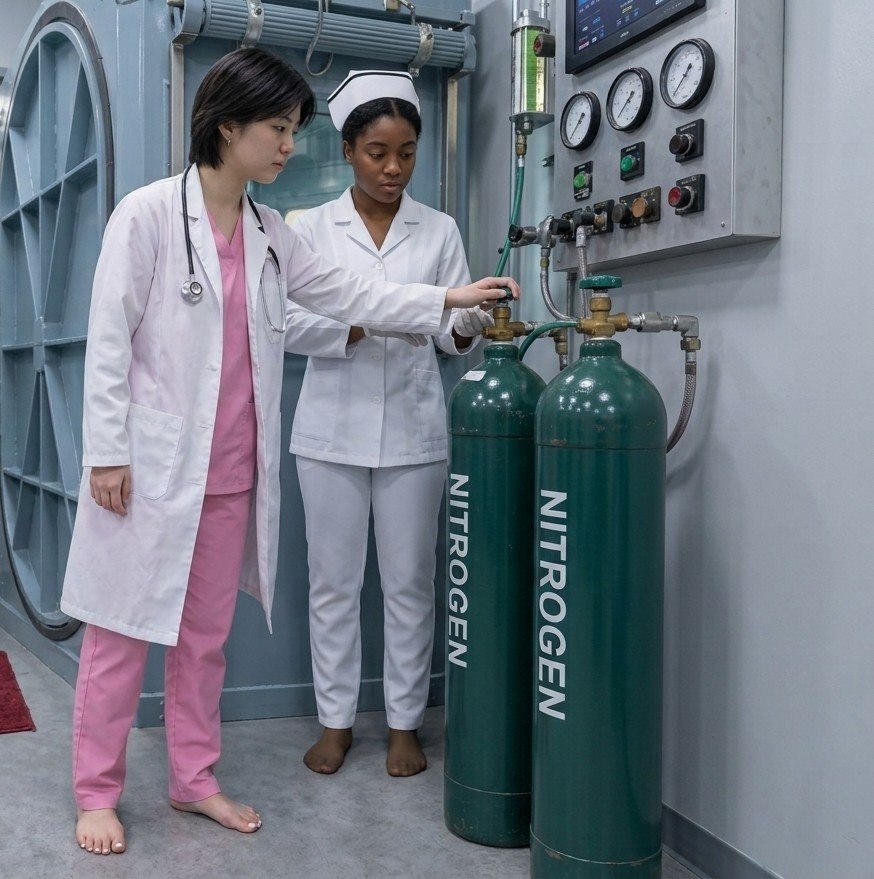
- Nitrogen valve control: In the close view beside the nitrogen tanks and gauge panel, I manipulate the regulating valves standing next to the cylinders, looking toward the interior of the chamber with Nurse Frances Thomas beside me.
For classification reasons, I do not describe restricted technical parameters or detailed physiological sequences here, nor would it be scientifically responsible to claim, from visual observation alone, that a person did not experience pain, distress, or suffering. Leadership received formal notification of procedure completion and the preliminary oversight report.
VIII. Release of Restraints and Close of Record
In scene the guards unfasten and remove the restraint straps from the chairs while several straps already lie loose on the floor; the inmates remain wearing their eye masks and cannulas in a relaxed posture as the operation enters its closeout and custody phase.
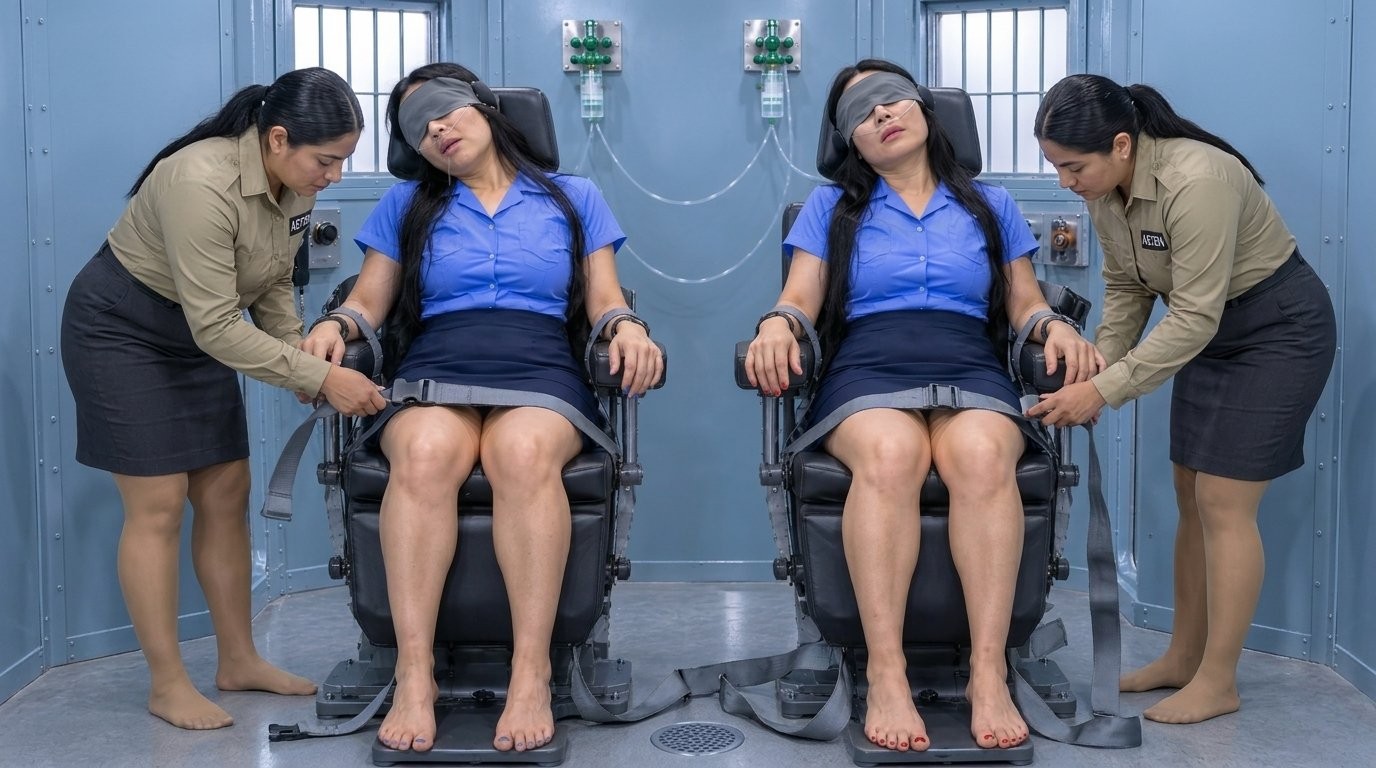
From an administrative standpoint, the first application of NT-EXP was declared operationally concluded. The facility remained under security control and the recording material was placed under planned custody restrictions.
When I finally met with Director Karl Anton, I handed over the corresponding documentation and thanked him for the confidence placed in me and my team—including the support of Ms. Frances Thomas. I omitted, however, stopping to explain that upon leaving that section, the silence of the corridor felt unbearably normal while the prison kept operating and other files awaited review.
IX. Personal Note of Dr. Himari Tsumugi
Annex not incorporated into official documentation.
I was taught to measure outcomes, identify variables, log incidents, and evaluate procedures. I was taught that a protocol had to be reproducible, that every observation had to be verifiable, and that precision was an obligation.
That night I discovered that documentary precision does not necessarily provide moral answers.
Apichaya Thongkham and Nichapalak Thongkham arrived at ASTEN as two names in a confidential file. The institution classified them, identified them, and assigned codes. My team registered them as participants in an experimental program.
I had developed the research that led to that operation. I had defended its rationale before internal committees. I had answered technical questions and signed documents authorizing my participation.
Director Karl Anton trusted me. Thai authorities trusted ASTEN. Ms. Frances Thomas stood by me step by step in the room. And I accepted that responsibility.
The institutional report may describe the operation as concluded. It may classify it, archive it, and restrict access to it. Yet there is something no classification can erase: the responsibility of those who took part.
My name will remain in the file as lead researcher and supervisor. I do not expect history to remember me solely as a scientist who developed a procedure. Nor can I pretend that night was an ordinary investigation.
It was the first time my work ceased to be a hypothesis and carried an irreversible human consequence.
— Dr. Himari Tsumugi
ASTEN Supermax Facility
NT-EXP Program
Confidential document, retrospective statement.