
Mei Lin Park and Elizabeth Claire Morgan convicted under Wartime National Security Act; judge cites alleged participation in classified-information conspiracy as prosecution of anti-war student organization reaches its conclusion
EASTBRIDGE — Two former Eastbridge University students were sentenced to death Friday after a federal jury convicted them of wartime treason and related national-security offenses, concluding a closely watched capital trial that has become one of the most contentious prosecutions of the government's wartime crackdown on anti-war activism.
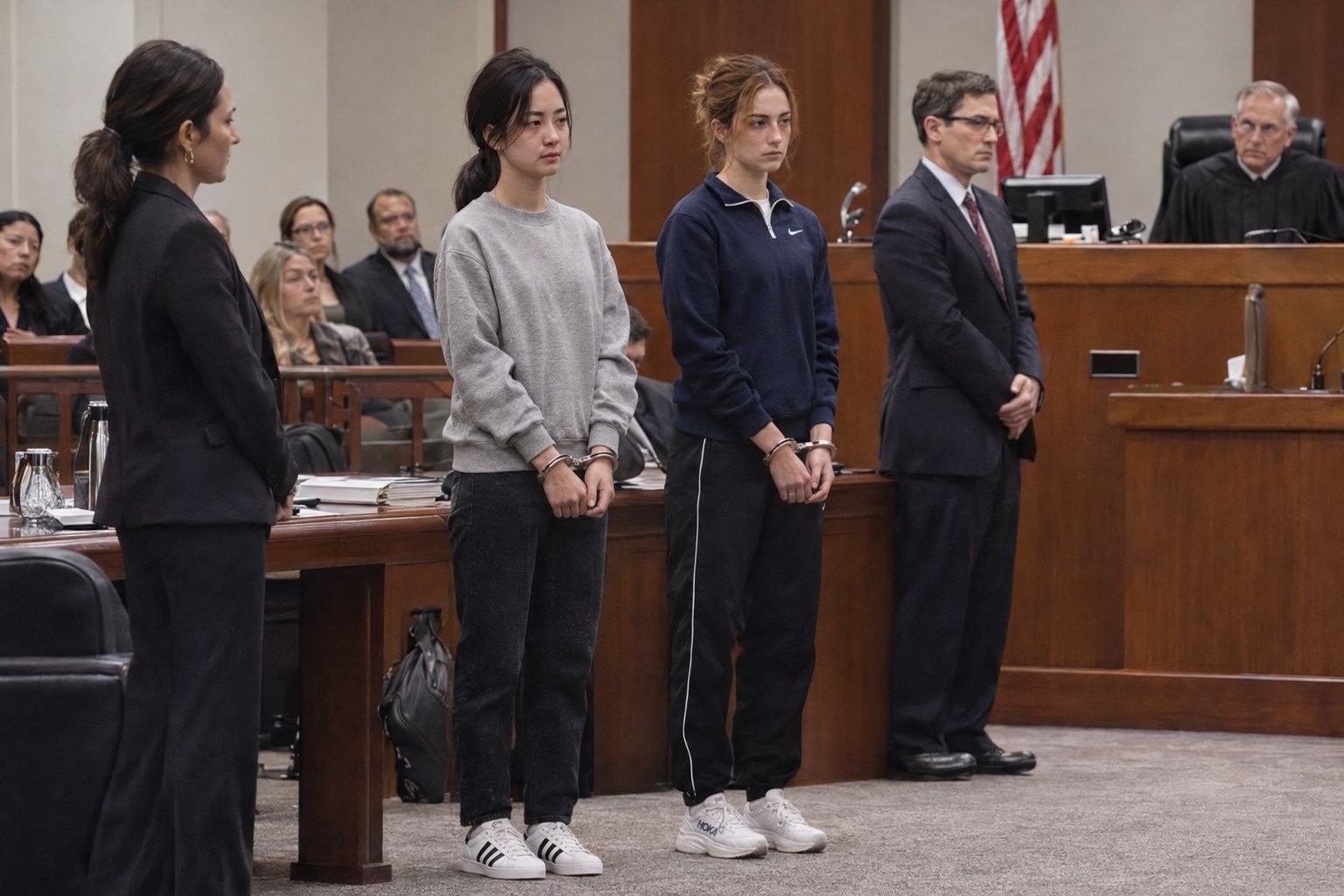
Mei Lin Park, 19, and Elizabeth Claire Morgan, 20, co-founders of the student organization Students for Peace and Accountability (SPA), were convicted of wartime treason following a seven-week federal trial. Both women received death sentences under the Wartime National Security Act, with the court designating decapitation as their method of execution under the applicable federal and Appalachian Detention Complex regulations.
The verdicts, delivered in federal court on November 21, followed months of public controversy surrounding the women's arrests, their publication of anti-war political material, and allegations that SPA members had participated in an organized effort to acquire and distribute classified military information.
The court imposed additional sentences of life imprisonment without the possibility of parole for conspiracy against national security, 25 years' imprisonment for unauthorized acquisition and distribution of classified information, and 10 years for conspiracy to obstruct a federal investigation. Those sentences were imposed alongside the capital sentences.
Park, a Korean-American former political science student who also studied computer science, and Morgan, a former journalism student and SPA communications director, were prosecuted together after their arrests at an Eastbridge University demonstration on May 19.
The two women stood beside one another in court as the verdicts and sentences were formally announced. Both appeared subdued, maintaining restrained expressions as the proceedings concluded.
Prosecutors argued that the women's involvement in SPA extended substantially beyond political opposition to government policy. Established in early 2025 following the announcement of Operation Iron Horizon and an expanded military assistance package to a foreign government involved in an ongoing war, SPA initially organized demonstrations, published political commentary, and coordinated student opposition to the administration's military policy.
Park emerged as one of the organization's principal political writers. Under the pseudonym "Winter Sparrow," she contributed essays and commentary to an anonymous publication called The February Letters, established in March 2025. Morgan served as the organization's Communications Director, overseeing publication editing, press relations, social media distribution, and documentary photography at demonstrations.
The prosecution maintained that their responsibilities placed them within a broader conspiracy involving the unauthorized acquisition and dissemination of classified military documents. Prosecutors alleged that Park knowingly participated in the conspiracy and helped conceal evidence, while Morgan knowingly facilitated the distribution of classified materials through SPA's publication network.
The defense challenged that interpretation, arguing that the government had improperly conflated political expression, journalism, and peaceful protest with criminal participation in an unlawful conspiracy. Park denied intending to assist a foreign adversary, while Morgan's attorneys maintained that her work was primarily journalistic and administrative and that she had not knowingly participated in the acquisition of classified information.
The demonstration that preceded their arrests took place outside Eastbridge University's administration building on May 19. Approximately 2,000 people attended. At around 3:40 p.m., federal and local law enforcement officers moved into the demonstration area to detain individuals suspected of involvement in the classified-information investigation.
Park and Morgan were arrested at the scene, in front of fellow demonstrators and members of the press. Morgan was reportedly carrying organizational documents and a press camera. Video showing the two students being taken into custody subsequently circulated widely online, turning their arrests into a defining moment in the national controversy surrounding SPA.
In explaining the capital sentences, the court distinguished the defendants' alleged conduct from the political activities that had initially brought them public attention. The judge emphasized that the convictions rested on the jury's findings concerning wartime treason and the defendants' alleged knowing participation in a national-security conspiracy, rather than their opposition to military policy or their attendance at demonstrations alone.
The court cited the seriousness of the classified military information involved, the alleged coordinated nature of the offenses, and the defendants' respective responsibilities within the organization as aggravating considerations. It concluded that the offenses, as established at trial, met the statutory threshold for capital punishment under the Wartime National Security Act.
The court nevertheless acknowledged the defense arguments concerning the distinction between journalism and criminal conduct, but found that the prosecution had established participation beyond the limits of protected political activity.
A separate determination concerned the method of execution. Under the applicable regulations, Appalachian Detention Complex (ADC) recognizes three authorized methods: decapitation, firing squad, and lethal injection. The sentencing orders designated decapitation for both defendants.
In its explanation, the court gave primary consideration to the institutional assessment of the offenses and the applicable sentencing framework. The judgments characterized the convictions as particularly serious wartime treason offenses involving an alleged coordinated threat to national security. The court stated that the selected method was consistent with the gravity of the capital convictions and the established execution provisions applicable to ADC.
ADC's longstanding institutional preference for decapitation among its authorized methods was also noted as a secondary administrative consideration. The court further directed that the two cases be administered under the same execution-method classification.
The decisions made Park and Morgan among the most prominent defendants sentenced under the Wartime National Security Act since the introduction of Operation Iron Horizon.
Following the announcement of the sentences, Park was permitted to address the court. Her final statement was delivered in a measured voice, with little visible emotion. She spoke about her understanding of patriotism and the reasons she had become involved in the anti-war movement.
"I never wanted to destroy my country. I wanted my country to remember what it stood for."
The statement was subsequently repeated by reporters and circulated widely across social media. Supporters of Park interpreted it as a final expression of political conviction, while critics viewed it as an inadequate response to the seriousness of the offenses for which she had been convicted.
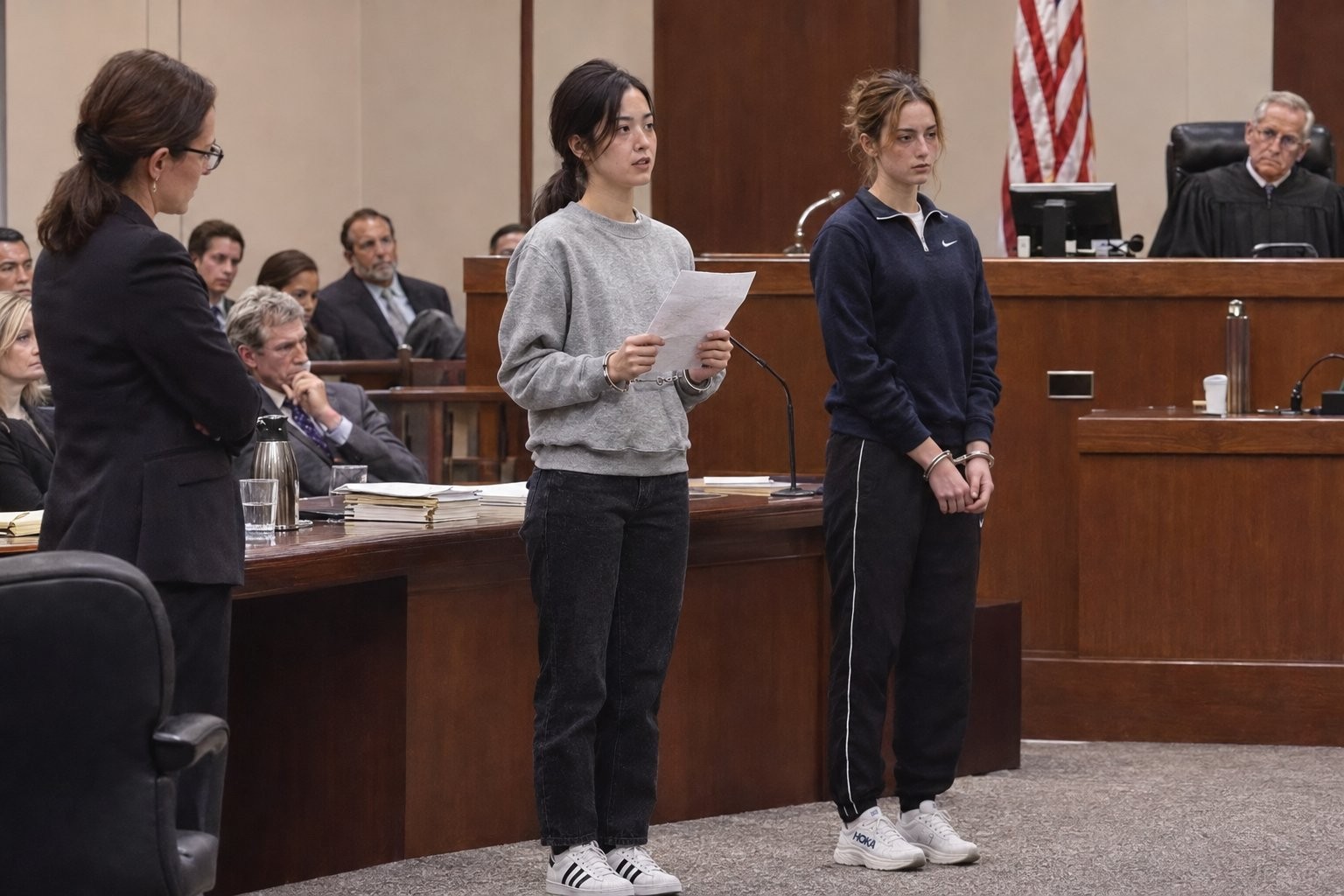
Later Friday, both women were escorted from the courthouse under federal custody. Security personnel accompanied them through the courthouse exit before their transfer to the Appalachian Detention Complex, a maximum-security correctional institution responsible for housing inmates under capital sentences.
The transfer took place under heightened security arrangements. Park and Morgan remained in the civilian clothing they had worn during the sentencing proceedings. Their departure marked the end of their public court appearances and the beginning of their confinement on the institution's death row.

The transport vehicle arrived at ADC later that afternoon. Both women were escorted through the institution's secure receiving entrance by correctional officers before being processed separately through death-row intake.
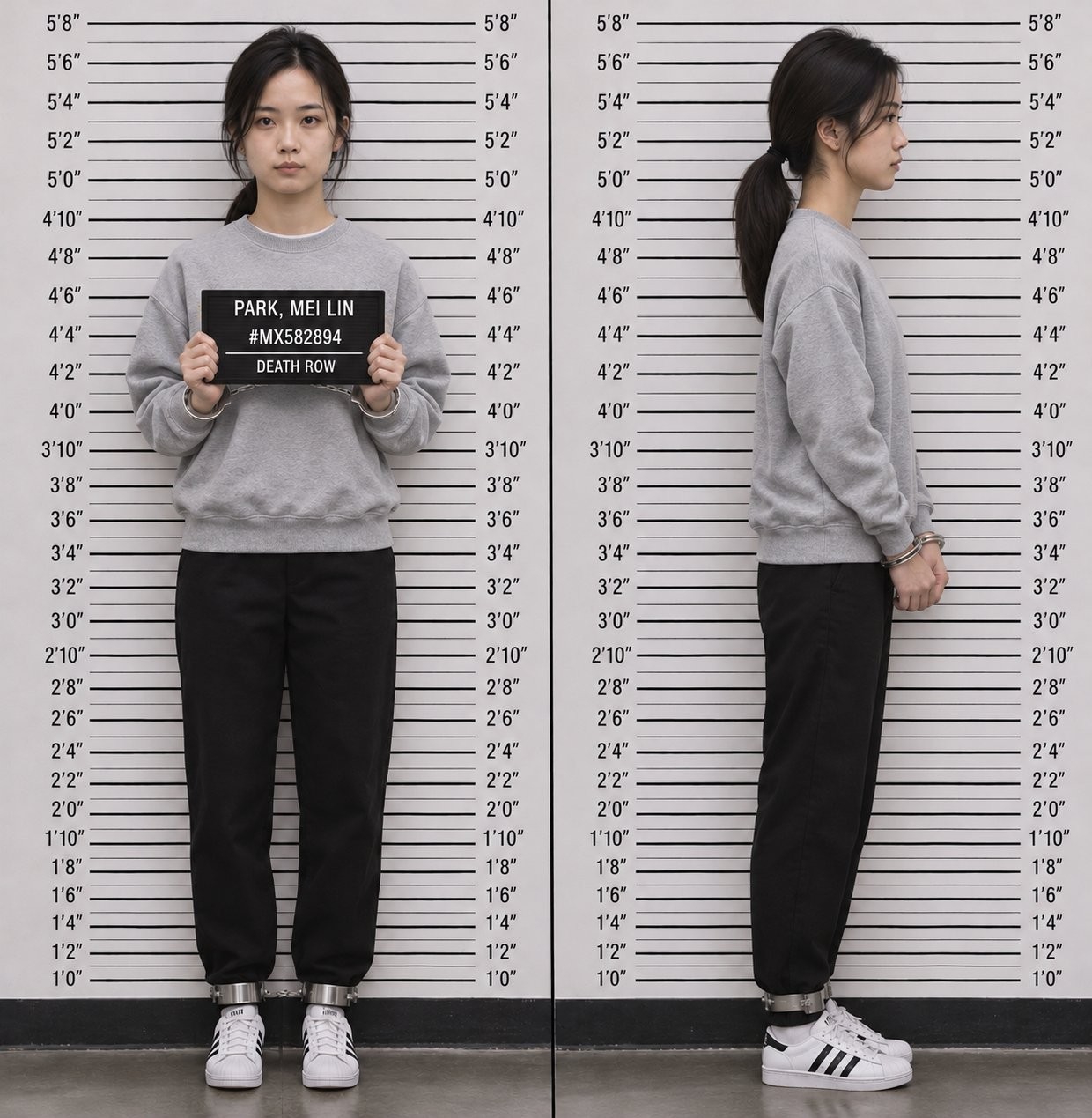
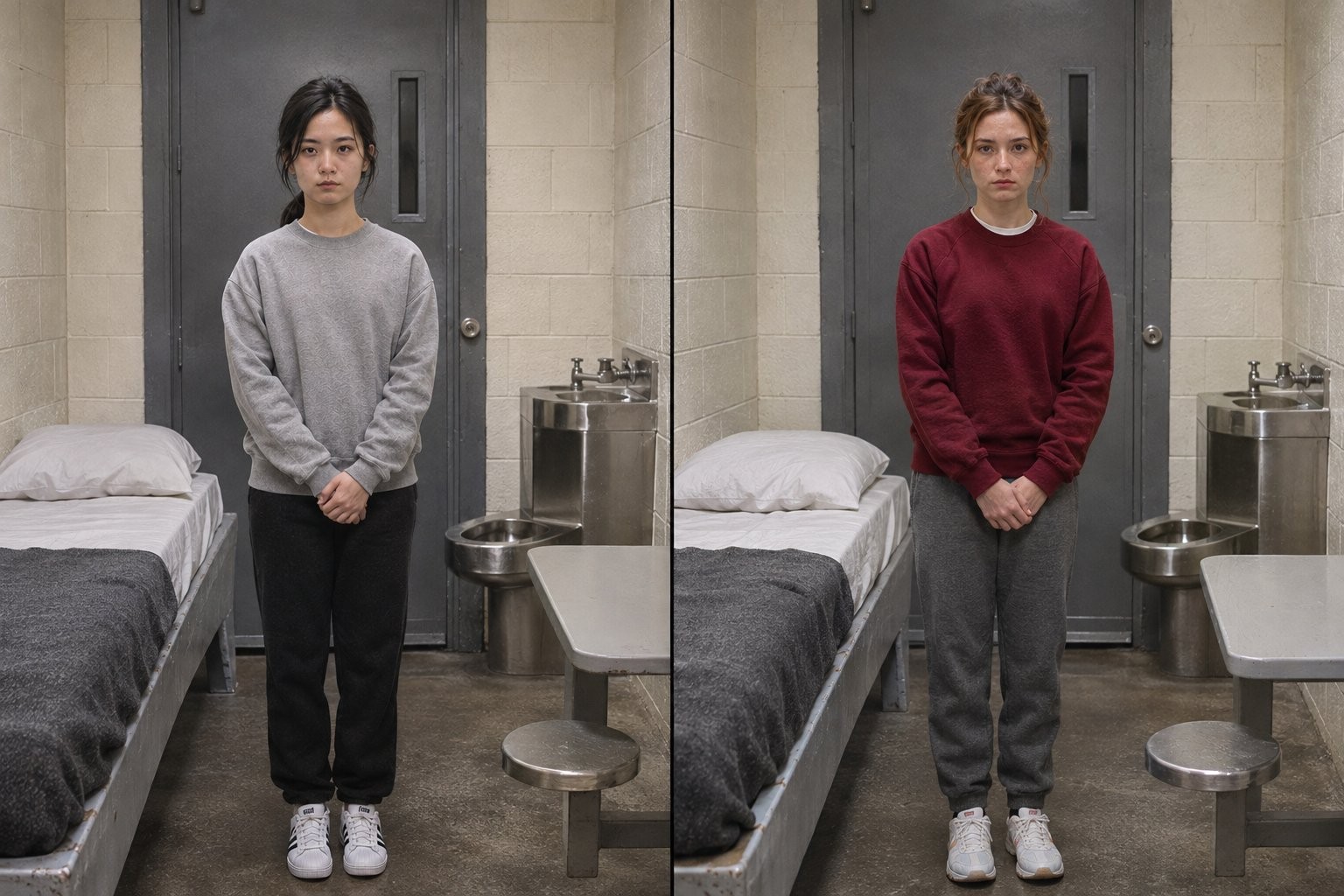
Their admission records were completed individually, including identity verification, institutional photographs, medical screening, personal property documentation, and housing assignments. Park was assigned to Death Row, Unit D, Cell D-12, while Morgan was assigned to the adjacent Cell D-13.

Under ADC's Death Row Personal Clothing and Attire Policy, each inmate must select one approved personal clothing style immediately after sentencing. The selection cannot subsequently be changed and remains the inmate's designated attire throughout incarceration and at execution. Park selected a light gray collarless crewneck sweatshirt, black straight-leg trousers, and white Adidas Superstar sneakers; Morgan selected a burgundy-red collarless crewneck sweatshirt, gray straight-leg sweatpants, and white Hoka running shoes. Both selections were approved by prison administrators and comply with the additional collarless-clothing requirements for inmates assigned to decapitation. ADC provides identical replacement sets to maintain each inmate's approved appearance.
The two women's individual intake photographs documented their approved clothing selections, identifying information, and initial death-row classification.

By Friday evening, both women had completed the initial intake procedures and entered their assigned cells.
The convictions have generated sharply divided reactions. Supporters of the defendants argue that the case represents an extraordinary expansion of wartime national-security powers into the activities of student journalists and political organizations. They maintain that the death sentences are disproportionate and that the government's treatment of SPA has created a troubling precedent for political expression during wartime.
Others have defended the prosecution, arguing that national security and the protection of classified military information require accountability when individuals knowingly participate in unlawful distribution networks.
For Eastbridge University, the outcome marks a difficult conclusion to a controversy that began with student demonstrations and developed into a major federal criminal case. The university has faced sustained public scrutiny over the arrests of two former students, their subsequent prosecution, and the consequences for student political activity.
Park and Morgan entered ADC as co-defendants whose cases had become closely intertwined in the national debate. They now face separate confinement assignments under the same capital sentence and the same designated execution method.
As of Saturday morning, November 22, both remained incarcerated in Death Row Unit, at Appalachian Detention Complex. Their transfer and intake procedures had been completed, and the institution had formally recorded their individual housing and approved personal clothing selections.
The verdicts have closed the trial, but the political and legal controversy surrounding the prosecution of SPA is far from settled.