
American student, 20, arrives at Appalachian Detention Complex following months of legal proceedings and unsuccessful appeals of her death sentence.
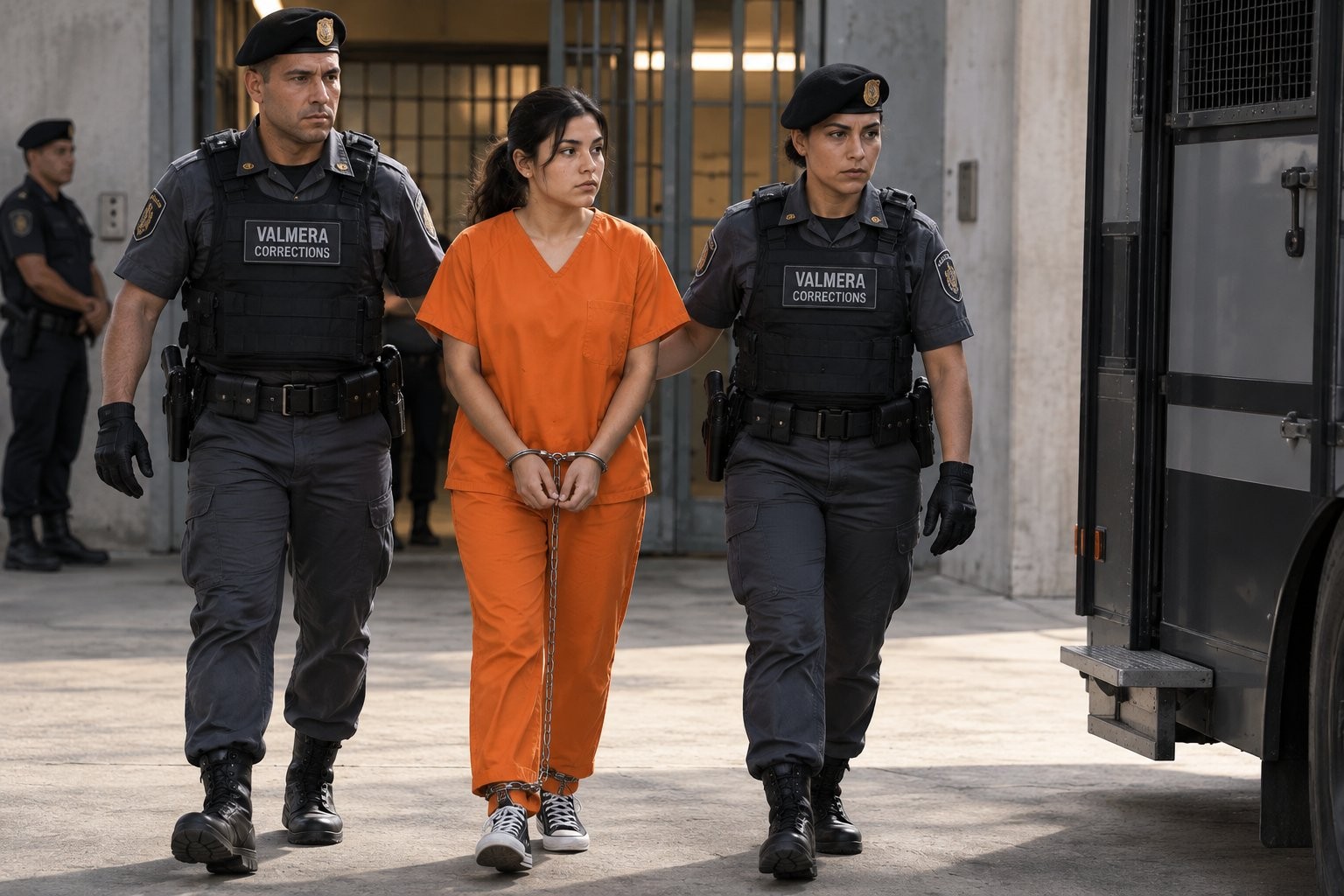
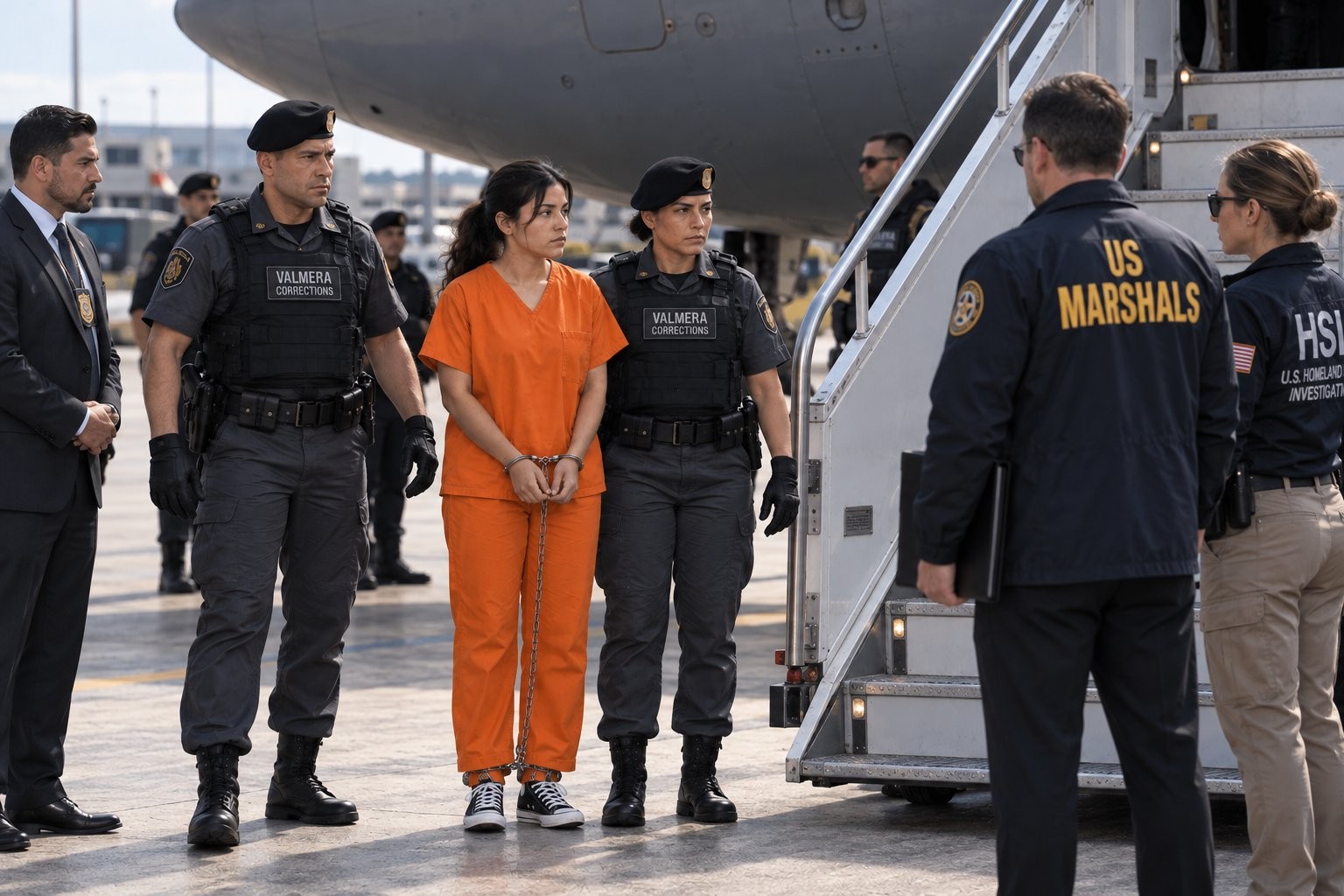
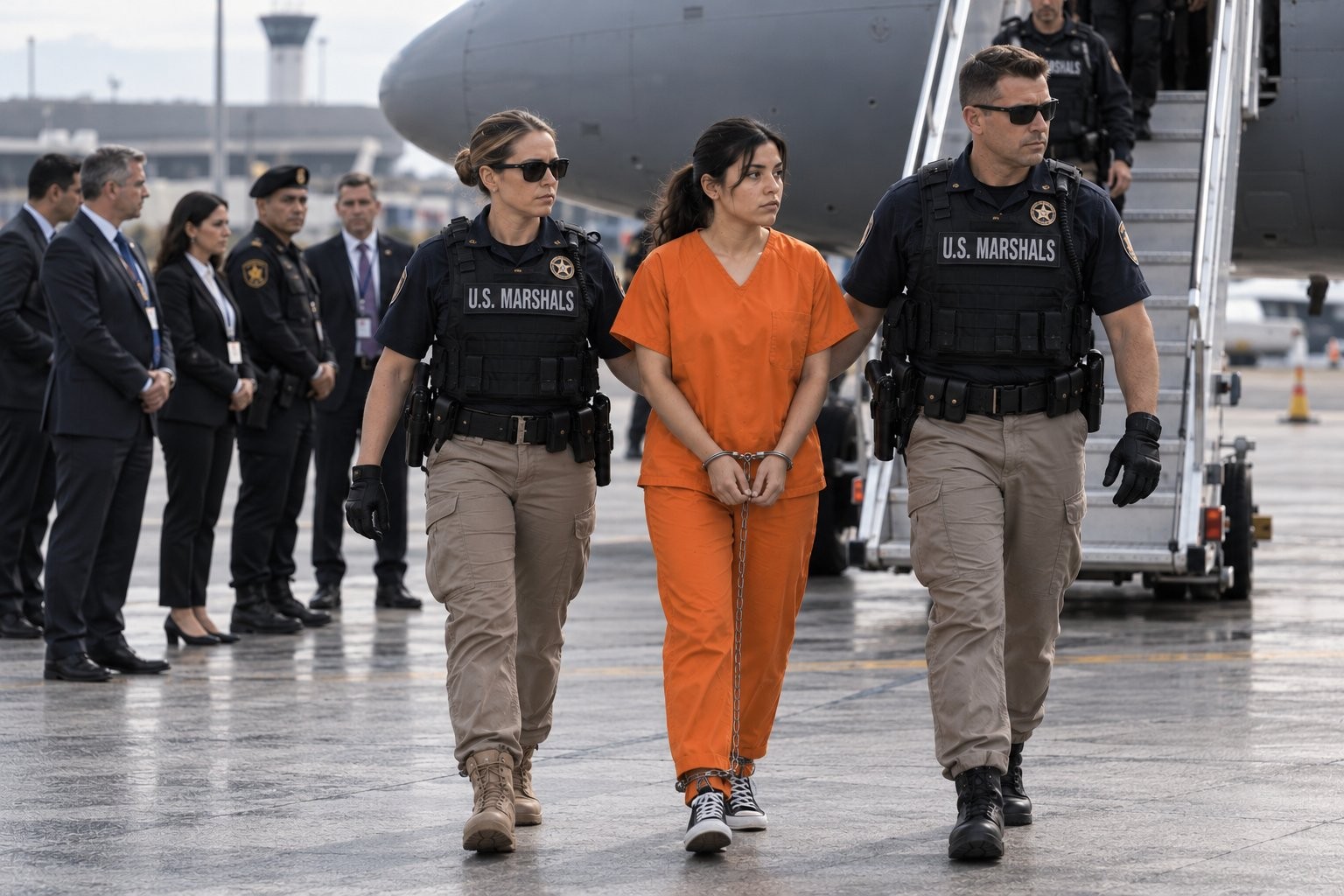
NORTH CAROLINA — Sofia Reyes, the 20-year-old American student sentenced to death in the Republic of Valmera for the killing of a prominent government historian, was transferred to United States custody Friday and transported to the Appalachian Detention Complex (ADC), completing a highly unusual international prisoner-transfer arrangement.
Reyes, whose case has attracted attention in both countries since her conviction in August, arrived at the high-security facility following a coordinated transfer operation involving Valmeran authorities and American federal personnel.
The transfer was conducted under an existing bilateral agreement permitting certain prisoners convicted of capital crimes in Valmera to be transferred to designated American detention facilities when the Valmeran government is unable or unwilling to conduct the execution itself.
Her arrival marks the end of her detention in Valmera but does not alter the death sentence imposed by its courts.
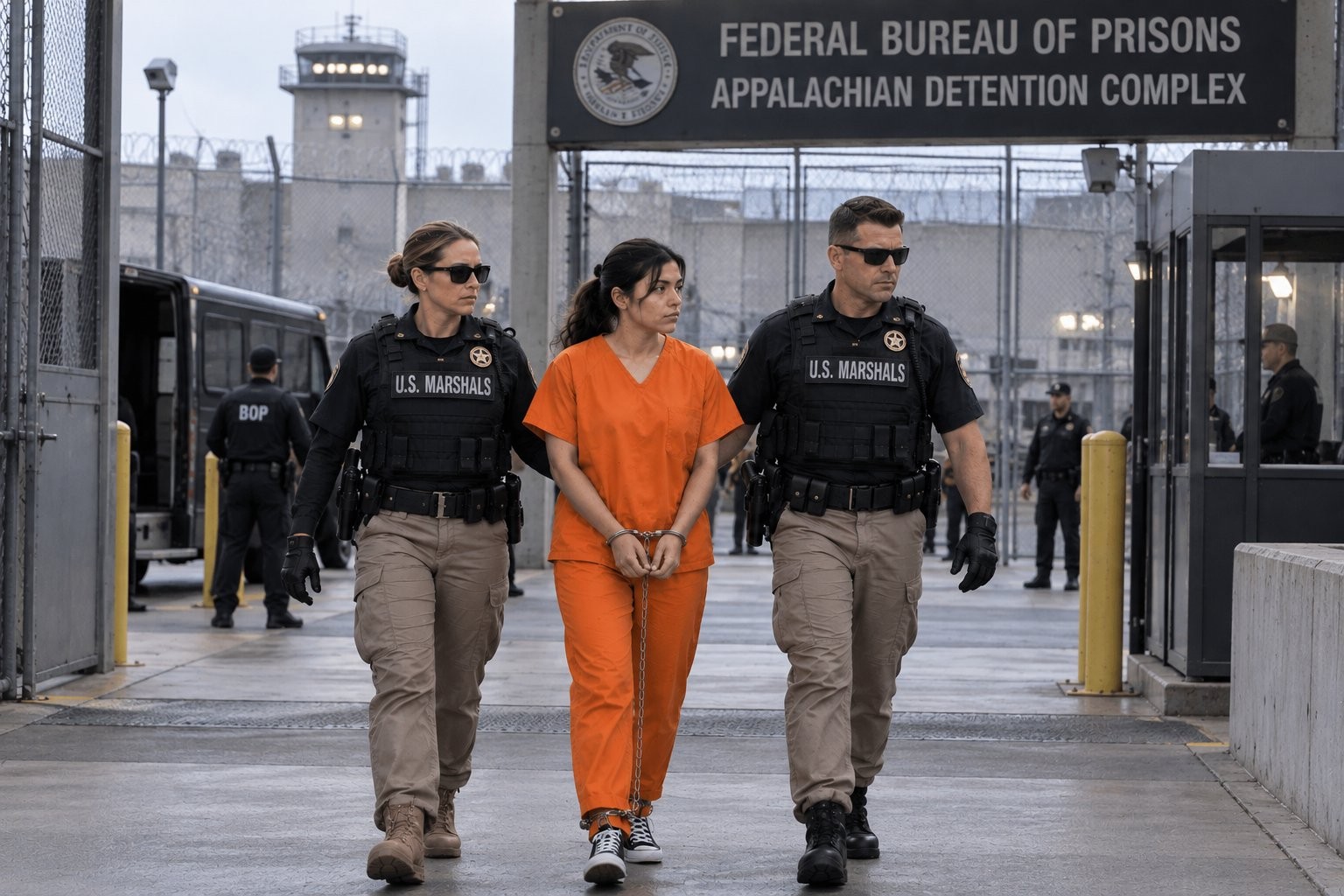
Transfer completed under security arrangements
According to officials familiar with the operation, Reyes was placed in the custody of American personnel following her departure from Valmeran jurisdiction earlier Friday.
The transfer involved security coordination between the two governments, with arrangements made to maintain continuous custody throughout the journey.
Upon arrival in the United States, Reyes was formally received by personnel assigned to the Appalachian Detention Complex. She was subsequently transported to the facility for admission and processing.
The ADC, a high-security American detention facility designated to receive prisoners under the bilateral agreement, will serve as Reyes's place of confinement while she remains subject to the Valmeran capital sentence.
Officials have not announced a specific execution date.
From university student to condemned prisoner
Reyes's case originated in January 2025, when she was working temporarily at the National Historical Archive in Valmera.
An American undergraduate studying history and political science, she had traveled to the country for an academic exchange semester. Her temporary position involved assisting with the digitization of historical records.
During her employment, Reyes accessed restricted historical documents and secretly photographed several of them. The documents were subsequently connected to an investigation involving the unauthorized sale of sensitive archival material.
The confrontation that resulted in the death of Dr. Adrian Velez, a prominent Valmeran historian, occurred inside the archive.
Prosecutors alleged that Velez confronted Reyes after discovering her possession of the photographs and attempted to recover her mobile phone. A physical struggle followed, during which Velez fell down a stone staircase and died from his injuries.
Reyes maintained that she had not intended to kill him.
Investigators later identified deleted messages, additional documents removed from the archive and inconsistencies in her initial statements. The prosecution argued that these actions demonstrated an attempt to conceal a deliberate killing.
The defense disputed that interpretation, maintaining that available security footage did not conclusively establish an intentional push and that Reyes's subsequent conduct reflected panic rather than a calculated cover-up.
Nevertheless, she was convicted of aggravated murder in August 2025 and sentenced to death.
Her subsequent appeals in Valmera were unsuccessful.
What happens to Reyes now?
The transfer raises several questions concerning the legal status of a prisoner sentenced to death by a foreign court but held inside an American detention facility.
The bilateral arrangement provides the legal basis for Reyes's continued confinement in the United States. Her conviction remains a Valmeran judgment, and the transfer does not amount to a pardon or a reversal of the original sentence.
At the Appalachian Detention Complex, Reyes is expected to undergo standard admission procedures, including identity verification, security classification, medical screening and assignment to a designated detention unit.
Her confinement will be subject to the facility's security regulations and the terms governing prisoners received under the international agreement.
Officials have not publicly detailed the precise arrangements for her long-term detention or the procedures that would precede any eventual execution.
It also remains unclear whether additional legal or diplomatic discussions between the two governments will take place before any further action concerning her sentence.
An American citizen in an unusual legal position
Reyes's return has renewed attention to the circumstances of Americans convicted of serious crimes abroad.
Unlike an ordinary prisoner transfer, her case involves a capital sentence that was imposed by a foreign judicial system and remains legally effective following her arrival in the United States.
The arrangement has prompted questions about the responsibilities of American authorities when receiving a citizen whose conviction and sentence originated outside the country.
Supporters of Reyes have continued to question the evidence of intent presented during her trial. Others have emphasized that the Valmeran judicial process concluded with a conviction that survived the available appeals.
The two governments have not indicated that the transfer itself will reopen the criminal proceedings.
For Reyes's family, Friday's arrival represents a return to American territory after months of uncertainty, although under circumstances dramatically different from those surrounding her original departure for an overseas university semester.
Awaiting the next stage
As of Friday evening, Reyes was in the custody of the Appalachian Detention Complex.
The 20-year-old is expected to remain at the facility under the arrangements established by the bilateral agreement. No public timetable has been announced for further proceedings or the enforcement of her sentence.
Her case now enters a new phase, with her physical confinement taking place in the United States while the legal consequences of her Valmeran conviction remain in effect.
For a student who traveled abroad to study history, the journey home has ended inside one of America's most secure detention facilities.
Sofia Reyes is now being held in North Carolina, awaiting the next stage of a case that has crossed international borders and placed two governments at the center of an extraordinary criminal proceeding.