
As Amy Lee Rose faces a high-profile federal trial and an uncertain future, ordinary messages about dogs, rain, music and grocery shopping have become her strongest connection to life beyond the walls of the detention center.
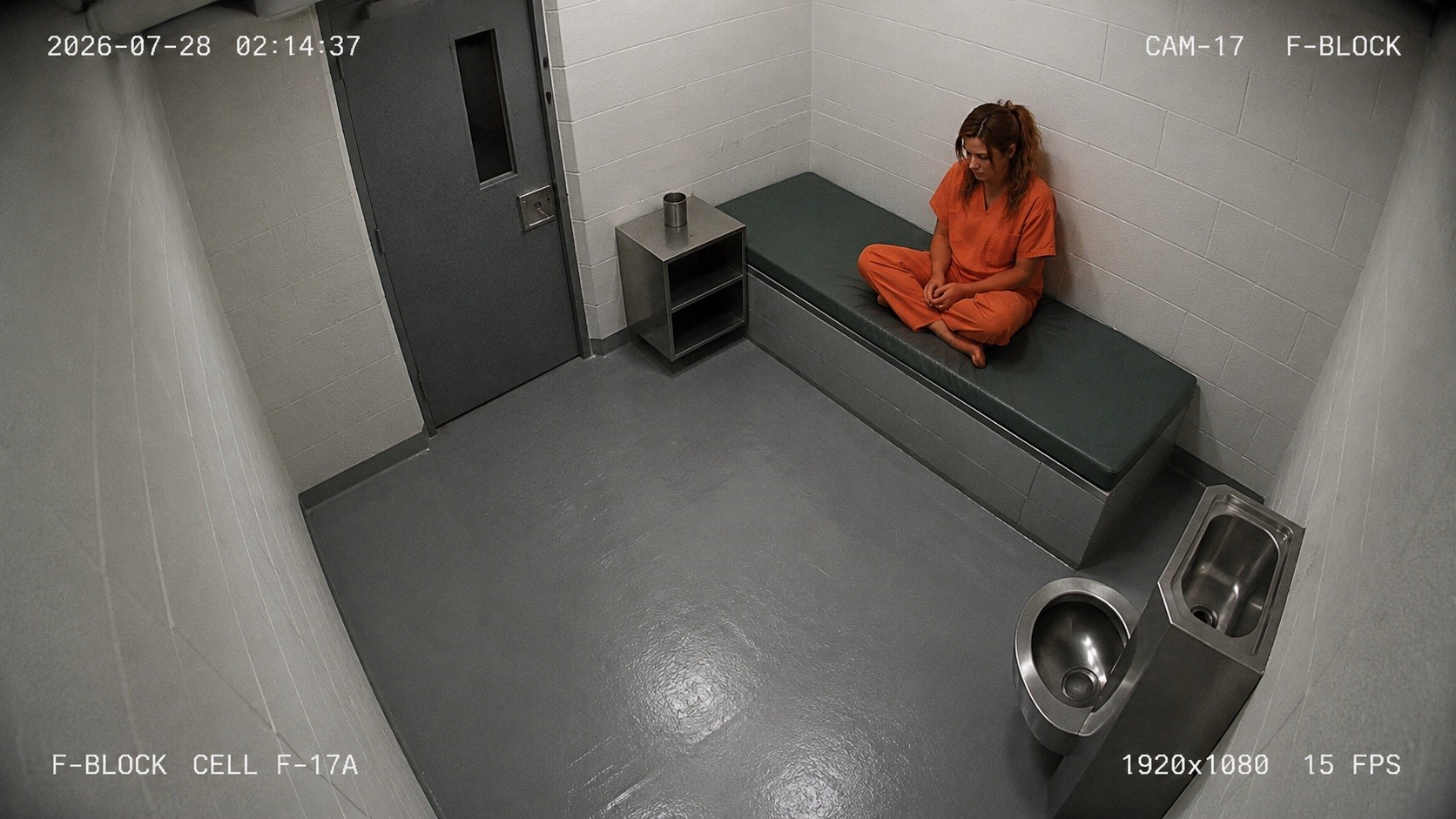
For Rose, mornings begin before she is ready.
The lights come on. Doors open and close. Names are checked. Breakfast arrives, another count follows, and the hours begin to arrange themselves around rules she does not control.
“You learn the sounds before you learn anything else,” Rose said in a recent courtroom statement. “You know which door is opening, when the officers are coming and when everybody has to stop what they’re doing for count.”
Rose, a 23-year-old online creator, has been held in federal custody while facing serious fraud-related charges. Prosecutors accuse her of taking payments for undelivered services, diverting revenue from other creators and participating in misleading cryptocurrency promotions. Her attorneys dispute that account, arguing that poorly documented collaborations and shared access to online accounts are being misrepresented as intentional fraud.
She is presumed innocent unless proved guilty.
Away from the courtroom, Rose’s days are narrower. Her schedule is determined by meal times, security checks, legal visits and the occasional arrival of a message through the prison pen-pal system.
Those messages, she says, have become a way of measuring time.
“Some days there’s nothing, and you tell yourself not to expect anything,” Rose said. “Then a message comes through and, for a little while, your mind is somewhere else.”
Ordinary Details From an Unreachable World
Excerpts from correspondence shared by Rose’s defense team contain no discussion of trial strategy or sensational allegations. Instead, they are filled with small observations from daily life outside.
One writer tells Rose about taking a dog for a long walk after a summer storm. Another describes hearing an old song in a supermarket and remembering where they first heard it. A third complains about standing in a slow checkout line before adding, “I know that sounds like nothing, but I thought you might like hearing about something completely normal.”
Rose said those details are often more comforting than broad assurances that everything will be fine.
“People think they need to say something profound,” she said. “They don’t. Tell me what the weather was like. Tell me your dog refused to come inside. Tell me what song was playing in your car. Normal things remind me the world is still there.”
In one reply, Rose wrote that she missed making unimportant choices: what to wear, when to shower, whether to stay awake for another hour and where to go simply because she felt like leaving the house.
“I used to think freedom meant the big things,” she wrote. “Now I think it might be choosing your own breakfast or walking outside without asking.”
Nights Are the Hardest
Rose has described sleep as one of the most difficult parts of detention. Noise travels through the unit, lights never disappear completely, and anxiety does not follow the institution’s schedule.
“I have nights where I wake up convinced I’m never going to see the outside again,” she told the court during the opening phase of her trial. “For a few seconds, I forget where I am. Then I see the walls and hear the doors, and it all comes back.”
One of Rose’s attorneys said the uncertainty of pretrial detention can be especially destabilizing because a defendant has no fixed release date and no verdict around which to plan.
“Amy is trying to prepare for court while living with the possibility that her life may change permanently,” the attorney said. “Correspondence gives her something beyond the case to think about. It also reminds her that she still has an identity separate from the allegations.”
The attorney declined to identify Rose’s correspondents, citing their privacy and the need to keep personal exchanges separate from the proceedings.
Communication Under Scrutiny
Messages sent to people in custody are not the same as private conversations outside. Correspondence may be screened, delayed, rejected under institutional rules or preserved as part of a record. Access can also be interrupted by lockdowns, court transport, technical problems and routine security procedures.
Dr. Lena Ortiz, a corrections researcher who studies isolation and communication in detention, said those restrictions change how incarcerated people relate to even simple messages.
“A letter that takes two minutes to read can shape an entire day,” Ortiz said. “It offers evidence that someone beyond the institution is thinking about you. At the same time, the person receiving it knows the exchange is limited and may be monitored, so the connection is meaningful without ever being fully private.”
Ortiz said pretrial detention carries a particular tension. Defendants are legally presumed innocent, yet they live under many of the same daily restrictions associated in the public mind with punishment.
“Their future has not been decided, but their present freedom has already been taken away,” she said. “Maintaining relationships and familiar routines, even through correspondence, can help preserve continuity and a sense of self.”
The system can also expose recipients to unwanted attention. Rose’s public profile means that not every message is necessarily supportive or sincere. According to her defense team, she has become cautious about what she reads and how much she shares in return.
Still, she continues to answer some messages when access and court preparation allow.
More Than the Defendant at the Table
During trial, jurors see Rose primarily at the defense table, seated beside her attorneys as witnesses, financial records and recovered messages are presented. Online, her name remains tied to a viral mugshot and allegations that extend beyond the charges the jury has been asked to decide.
Correspondence offers a different space—small and imperfect—in which Rose can talk about books, music, family memories and what she hopes to do if she returns home.
“In here, you become your last name and a number very quickly,” Rose said. “In court, I’m the defendant. Online, I’m whatever strangers have decided I am. When somebody writes to me like I’m still a whole person, I get to feel like Amy again.”
That feeling does not resolve the evidence against her, determine the verdict or shorten the days she spends waiting. But it gives those days a connection to something beyond counts and locked doors.
One recent message ended with a description of evening light falling across a backyard. The writer told Rose there was nothing important about the scene; it was simply peaceful, and they wanted her to be able to picture it.
Rose kept returning to that passage.
“Sometimes imagining the outside is painful,” she said. “But it’s worse to stop imagining it completely.”