
Less than half an hour before prison officials escorted Sarah Mitchell from a waiting room to the execution chamber, she sat quietly across from a reporter, her hands cuffed behind her back. Dressed in a plain athletic personal clothing and speaking in a measured voice, the 21-year-old answered questions for just under 30 minutes.
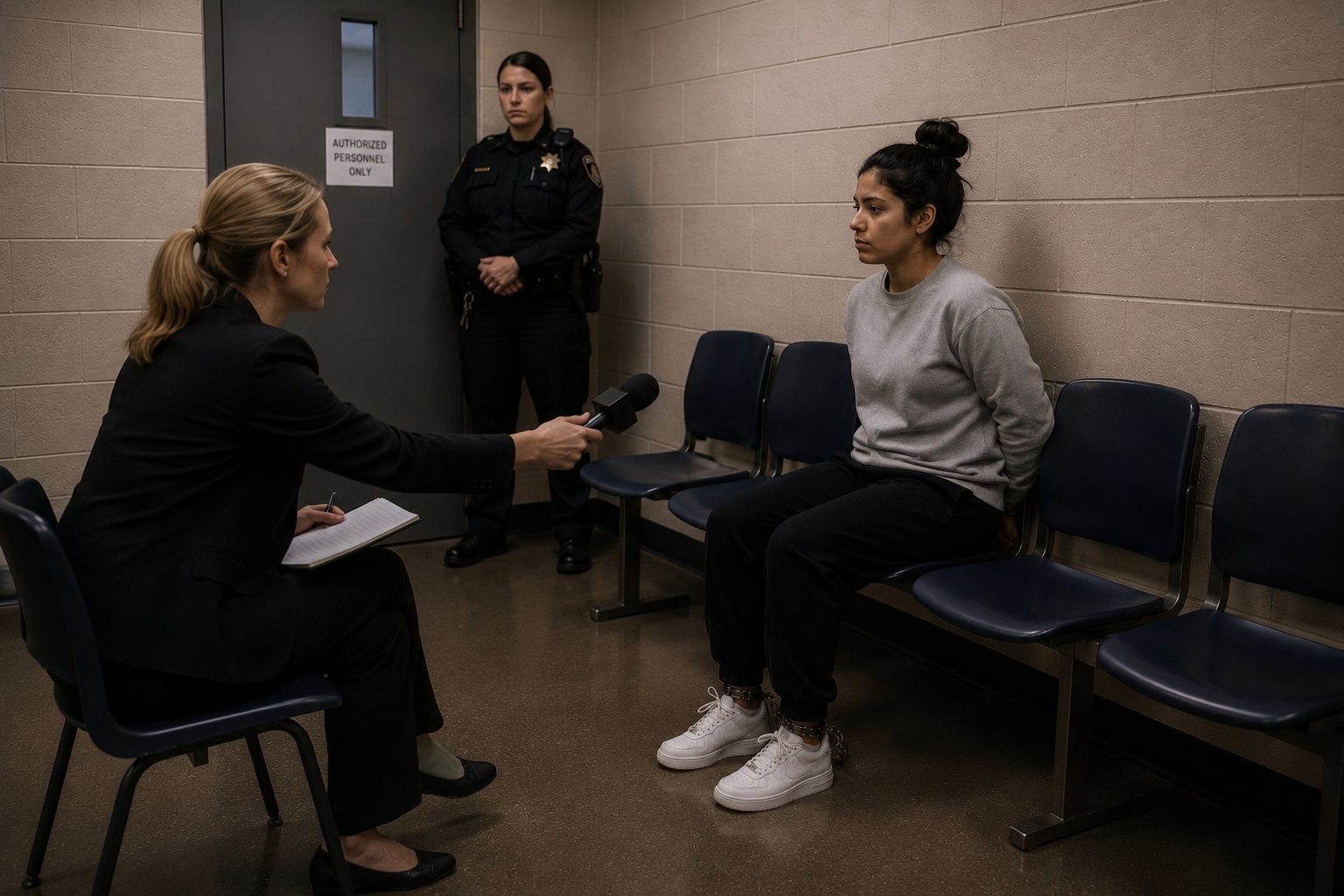
The interview marked her final public remarks.
Mitchell pleaded guilty to six counts of first-degree murder after intentionally setting a fire at a residential apartment building in an attempt to collect insurance proceeds connected to her ground-floor business. Prosecutors said the blaze spread rapidly through the building, killing six residents and injuring thirteen others. Surveillance footage, financial records, and Mitchell's own confession established that the fire had been deliberately planned. The court imposed the death sentence, citing the multiple fatalities and financial motive.
Throughout the interview, Mitchell did not dispute the facts of her conviction or attempt to minimize her responsibility.
Asked what occupied her thoughts in her final hours, she paused before answering.
"Mostly the people whose lives I changed forever. There isn't a day that goes by that I don't think about them."
When asked whether fear or regret weighed more heavily, Mitchell reflected for several seconds.
"Fear is something every person understands. But regret lasts longer. Fear is about what's happening to me. Regret is about what happened to everyone else."
She repeatedly emphasized that no statement could undo the consequences of her actions.
"I know there are no words that can repair what I destroyed. I don't expect forgiveness. I don't expect anyone to feel sorry for me."
The conversation then shifted away from the case itself.
Mitchell described prison life as unexpectedly structured.
"When you're stripped of almost every choice, you learn to value the small routines. Reading. Exercise. Prayer. Letters. Those became the things that kept me grounded."
She said correspondence from strangers had reminded her that people were capable of compassion even toward someone convicted of terrible crimes.
"People wrote to me without excusing what I did. That meant more than they probably realized."
Asked what she would say to young people facing financial pressure or personal setbacks, Mitchell answered without hesitation.
"Ask for help before you convince yourself you're out of options. Pride and desperation are dangerous together."
She also cautioned against believing that one irreversible decision could solve a difficult situation.
"Problems don't disappear because you make a worse choice. They just become tragedies."
During the interview, Mitchell occasionally looked down at the floor before answering difficult questions. Her voice remained steady, though she paused several times to gather her thoughts. She did not raise her voice or become emotional, but moments of silence punctuated several exchanges.
When asked how she hoped victims' families would remember her, she shook her head slightly.
"I don't think they should remember me. They should remember the people they lost."
Toward the end of the interview, Mitchell was asked whether she had any final message for the public.
"Value ordinary days. Tell the people you love that you love them. And don't convince yourself that one terrible decision is worth the price someone else might pay."
The interview concluded after a correctional officer informed Mitchell that it was time to prepare for the next stage of the scheduled process.
She stood, thanked the reporter for speaking with her, and quietly said, "I hope something good can come from people learning what not to do."
Mitchell was then escorted from the room by correctional staff.
For the families of the six people who died, the day remained focused not on Mitchell's final words, but on the lives that were lost. Several relatives issued written statements remembering parents, neighbors, and two young children whose futures ended in the fire, urging the public to keep the victims—not the perpetrator—at the center of remembrance.